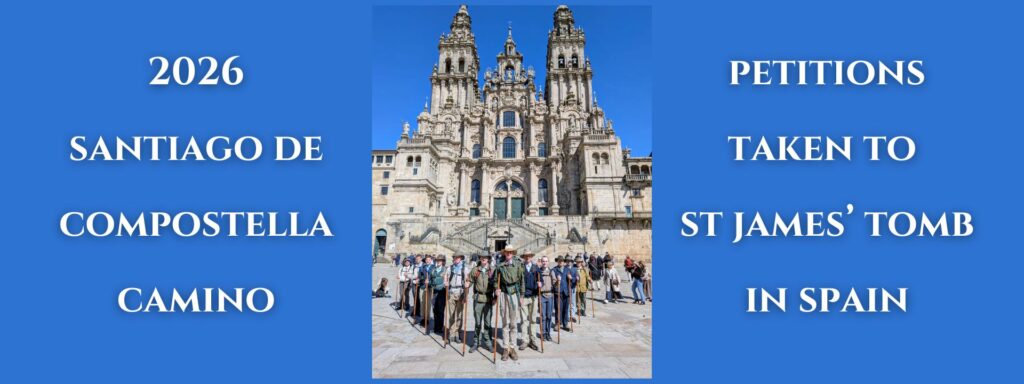
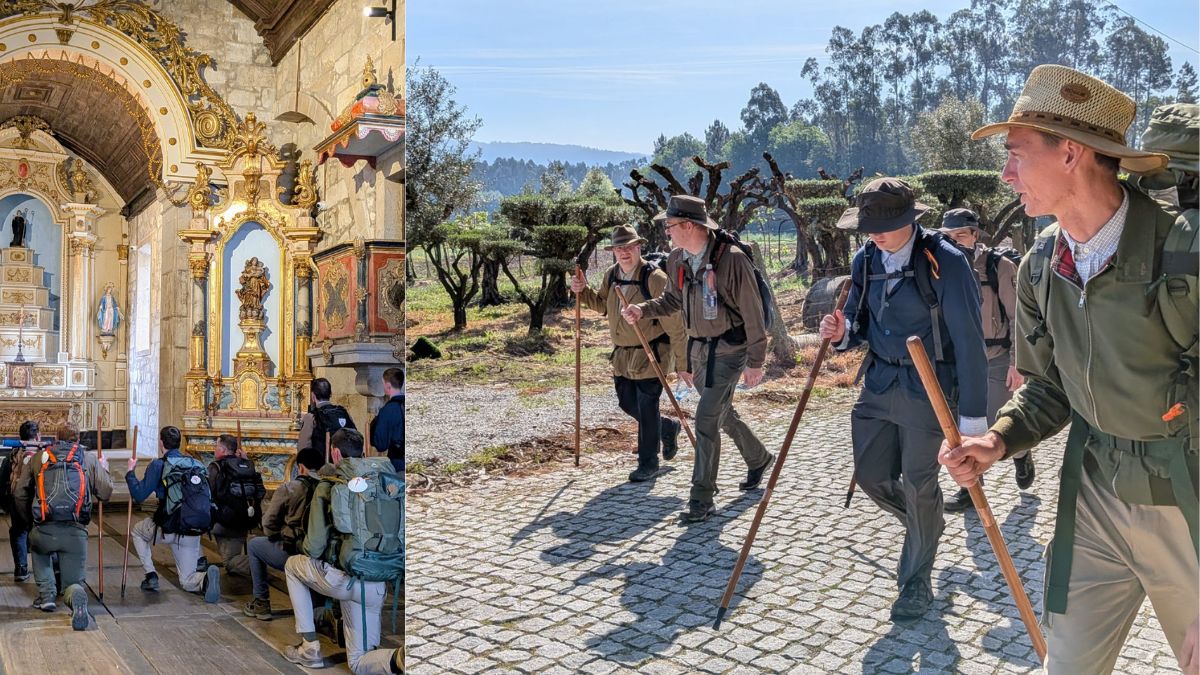
One of the 12 young men who, over Easter 2026, completed the 10-day hike from northern Portugal to Santiago de Compostela – the iconic Cathedral where lie the bones of the great apostle St James – was our very own Dominic Tuffin.
The walk became a marvellous retreat from the modern chaos with lively and elevated conversation, great camaraderie, and countless prayers, visits to beautiful churches, etc. See below a personal testimony of Dominic to the grandeur of this Spanish escapade.
The Camino de Santiago was an absolutely phenomenal experience!
It was a time of prayer, of contemplation, of soul searching, and some suffering! It was a journey back through time, a look at 20 centuries of the Catholic Faith in Spain. It was a journey of following in the footsteps of many Saints, holy people, and fellow Catholics, starting with St James and going through history to the present time.
My fellow pilgrims and I started walking the Camino de Santiago on April 3rd, Good Friday. We had spent nearly a week travelling Spain prior to starting the Camino, admiring the monuments our Catholic brothers built in honour of God’s Glory over the centuries, and visiting holy sites and homes of Saints.
An ornate Holy Week float in preparation for a procession later on. We found it when visiting the church St. Teresa was baptized in.
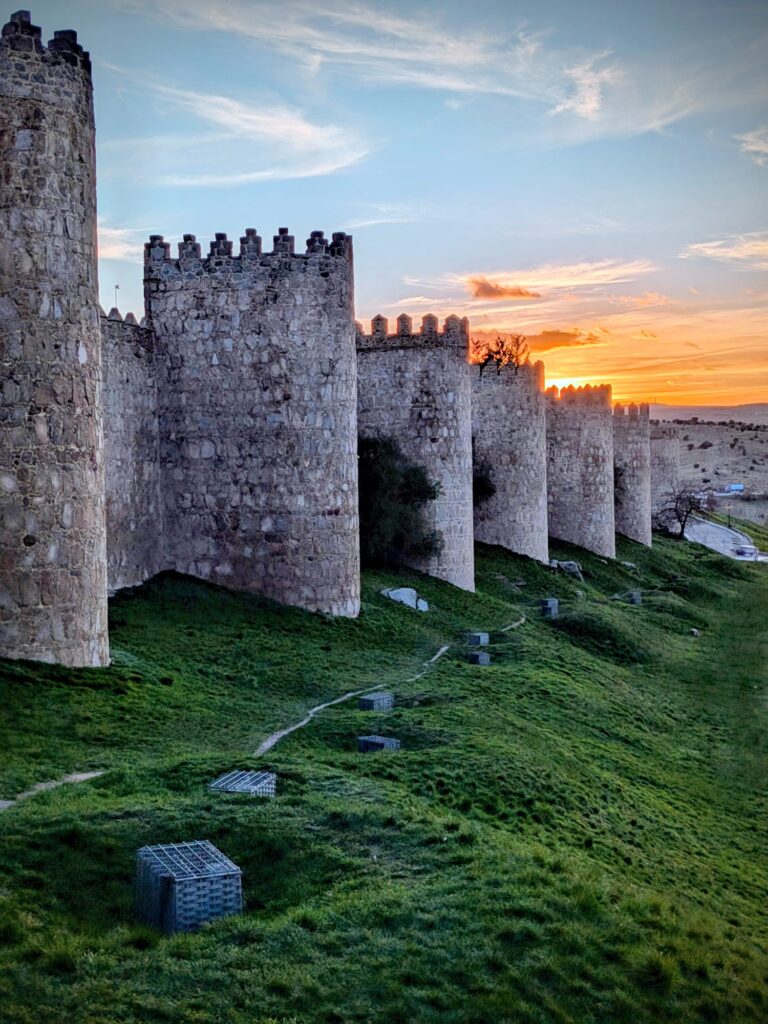
During the Middle Ages, the walls of Avila were an archetypical symbol of strength. Reconstructed in the 11th century and boasting 87 turrets, it was considered one of the safest cities in Europe and was never conquered. Without a doubt, St. Teresa would have walked around its walls. Here, we can imagine part of what she would have been envisioning when she wrote "The Interior Castle."
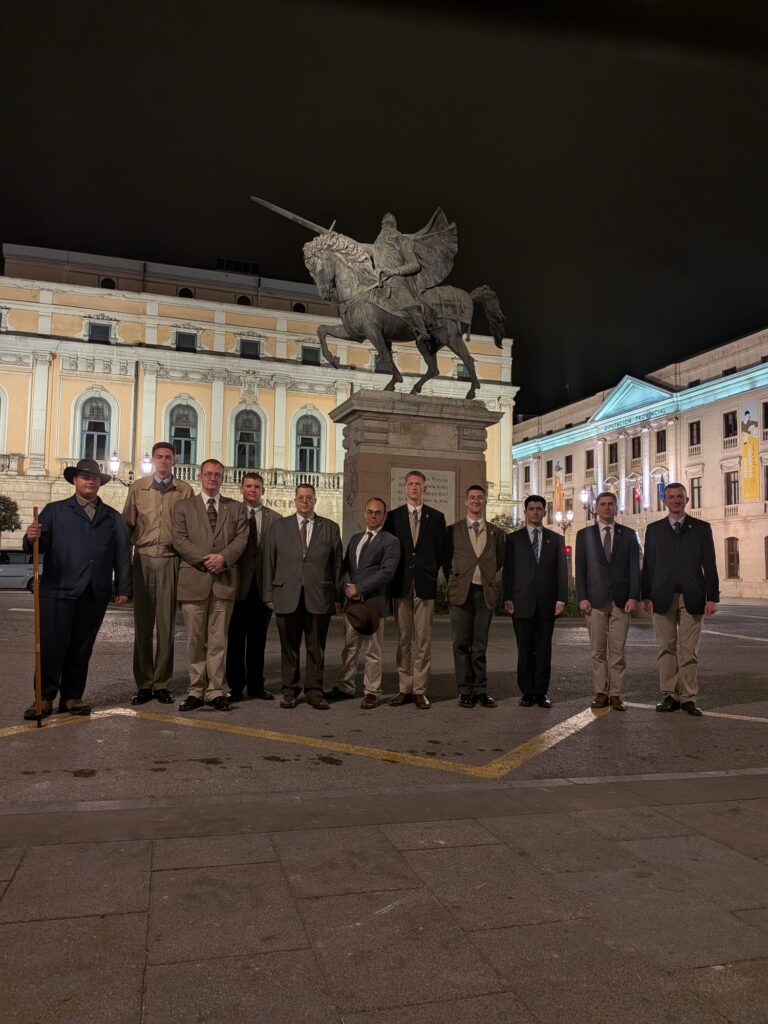
The pilgrims stand by the equestrian statue of "El Cid." His legendary acts of bravery and Crusader idealism have been recounted and passed down through many centuries of history. We pray to be made ever-faithful knights of Mary and serve her even as "El Cid" served his King.
We arrived in Madrid at 6am on a cold early spring morning, and set off immediately to Toledo, traditionally famous for its sword making, spending a few hours there visiting various churches, the Alcazar, and a traditional sword shop.
Then on to Avila, famous as the home of the great St Teresa of Avila. Avila is the best-preserved example of a fortified Medieval city in the world and is truly magnificent. There we witnessed a beautiful Procession through the streets of Avila, with a float of Our Lord Crucified and the Sorrowful Mother, attended Palm Sunday Mass in the Avila Cathedral, and went to all the sites connected with St Teresa.
Leaving on Easter Monday morning, we went to Burgos, to see the magnificent Gothic styled Burgos Cathedral, wherein lies El Cid, one of Spain’s most famous heroes.
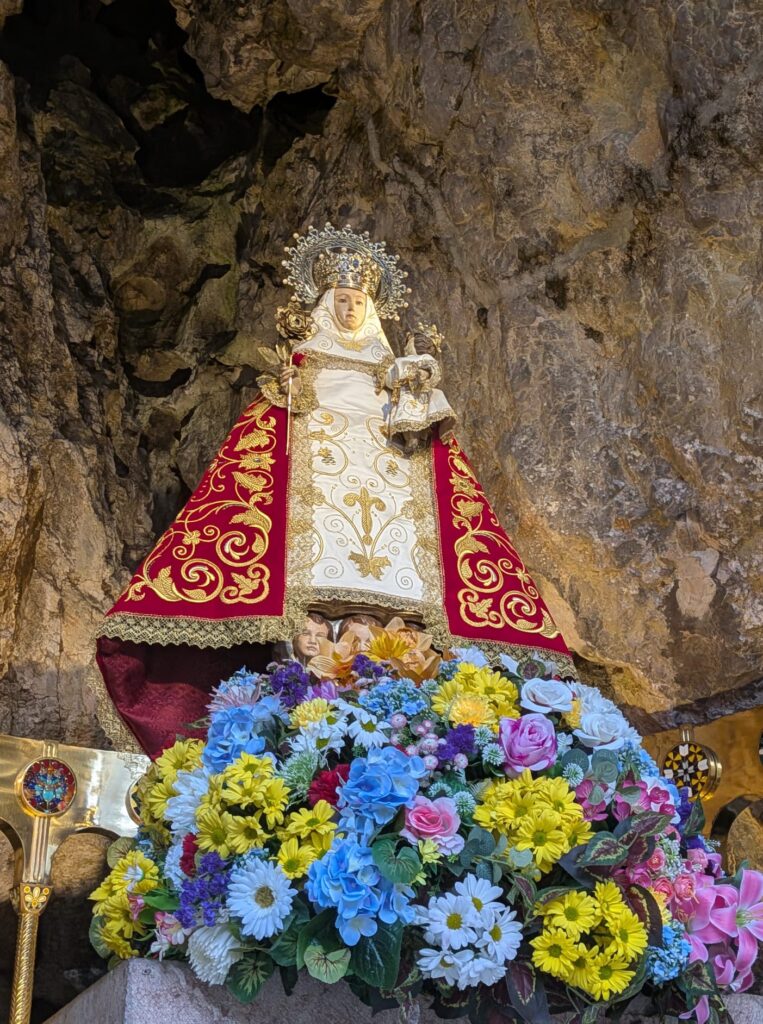
Our Lady of Covadonga in the Holy Cave.
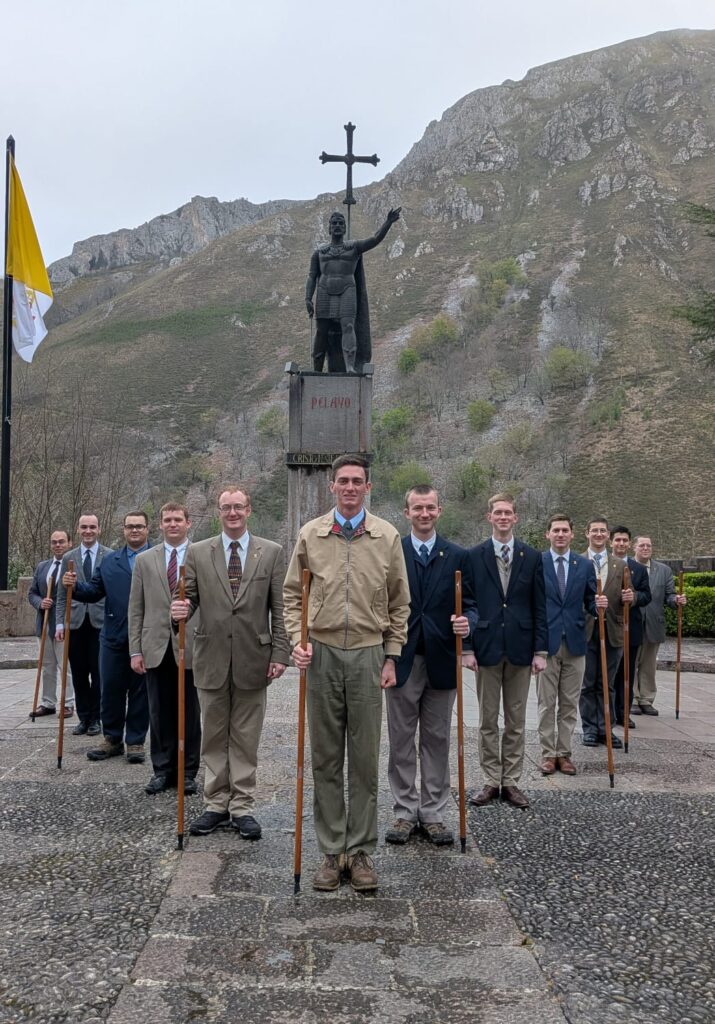
Group photo by the Statue of Don Pelayo, leader of the Catholic army. In the centre front is Dominic from South Africa.
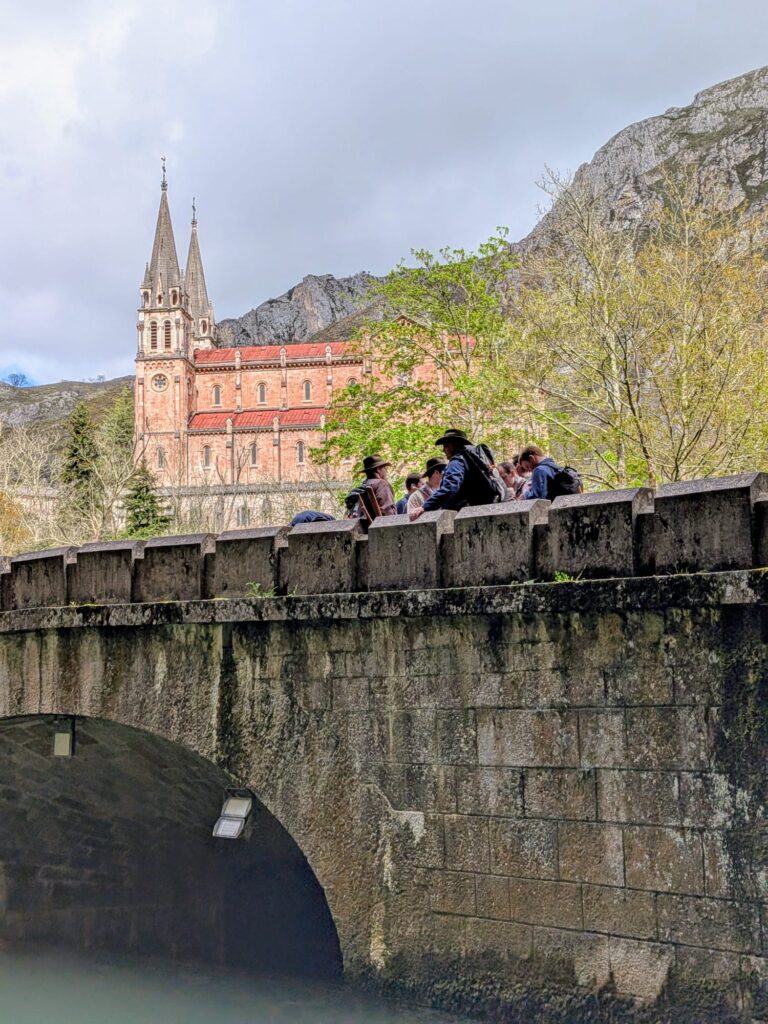
The Cathedral at Covadonga
Tuesday morning found us on our way to Covadonga, the birthplace of the great Spanish Reconquista, the 700-year long war to rid Catholic Spain from the Moslems who had invaded and taken control in 711. It was truly a special place, and a personal highlight of the trip. The sense of peace and grace one senses in that blessed place is indescribable and truly remarkable. We spent two nights there, climbed a nearby peak to get a fantastic view of Covadonga from above, experienced the local cuisine, and prayed the Little Office of Our Lady in the cave of Covadonga, in front of the beautiful statue of Our Lady of Covadonga.
On Holy Thursday we left Covadonga and set off on the 6-hour journey to Porto, Portugal, where we started the Camino! Everyone was very excited to start walking, and I do not think anyone slept very well that night. We started before sunup on Good Friday, and entrusting ourselves to Our Lord, Our Lady, and St James, we set off on our nine day, 230km hike.
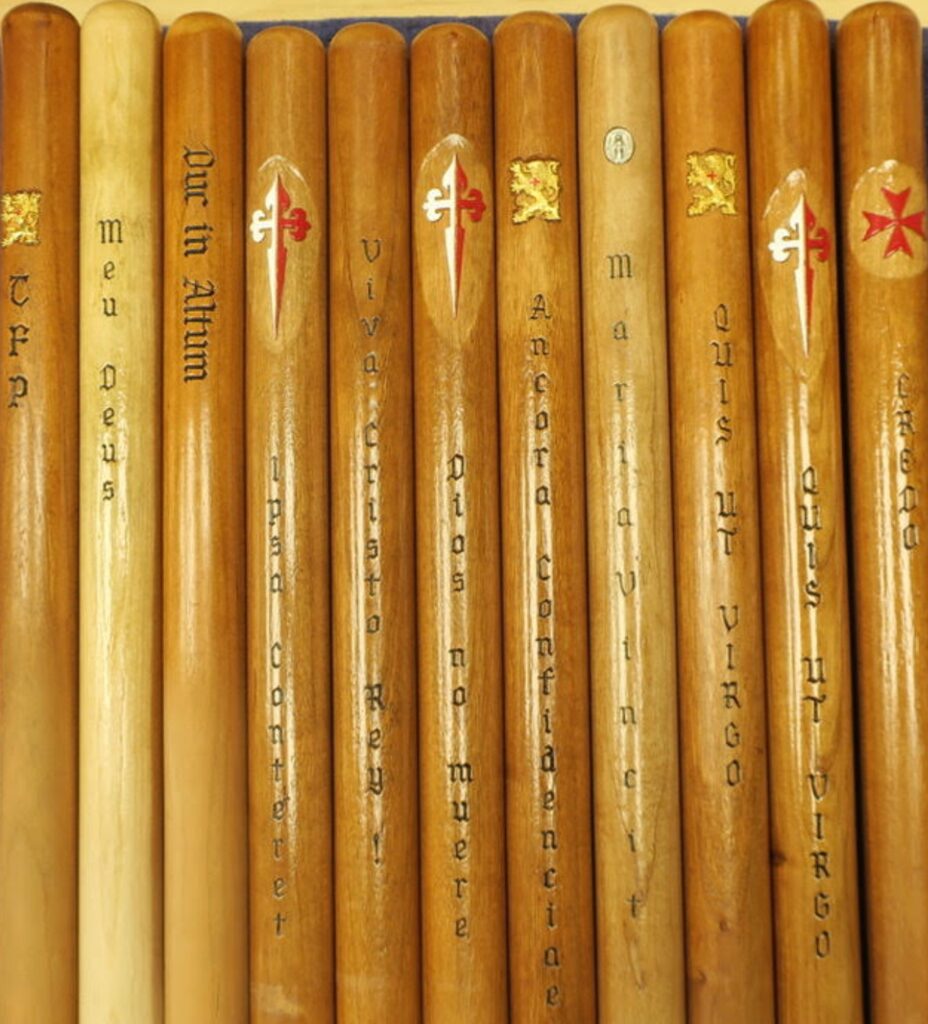
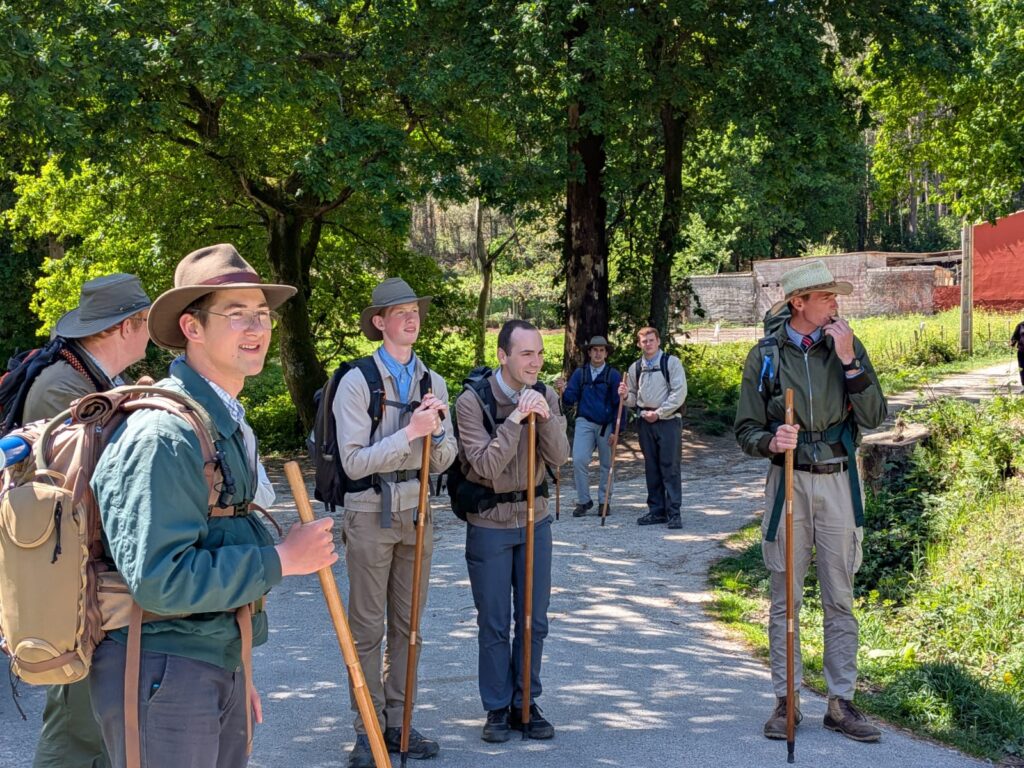
These beautiful staffs were handmade for the pilgrims. They were measured to fit the individual and have hand carved quotes that were chosen by each person.
It can be a curiosity for others to see a group of Catholics venerate relics of saints kept in a museum display or pray in a church considered more historic rather than sacred. Sometimes the simple truths are the ones we most easily forget.
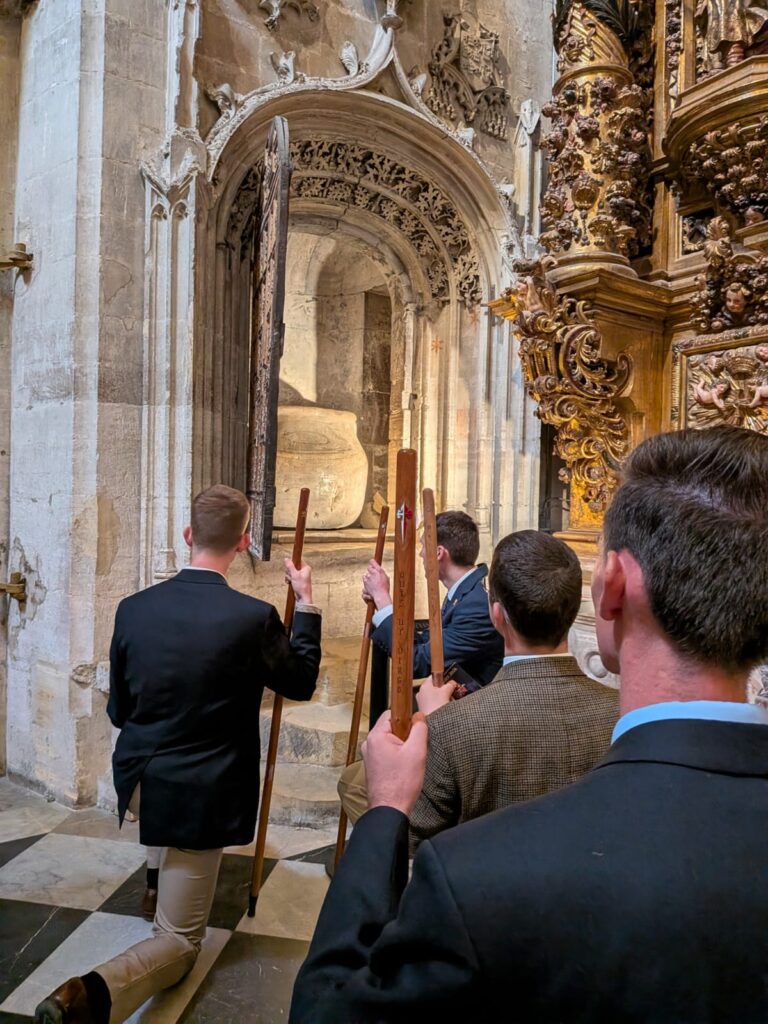
In Oviedo, to the left of the cathedral's main altar, is a niche bearing a large container made of stone. There is no sign or inscription, but this is a relic of the Holy Land. It is one of the water jars from the wedding feast at Cana which Our Lord used to turn water into wine.
We spent the morning walking out of the city and into the countryside, all the time following the beautiful Portuguese coastline north of Porto. We started on a small detour of the main trail, so by mid-morning we arrived on the official main trail heading up from Lisbon to Santiago. There we officially started our Camino by reading our 10 Commandments of the Camino, which were the rules that we would abide by as pilgrims over the next nine days. We also read out all our official intentions, primarily reparation for the sin of abortion in the world, as well as many other prayers, hopes, and intentions we were bringing with us from our various homelands, as well as those of the individual pilgrims on the trail.
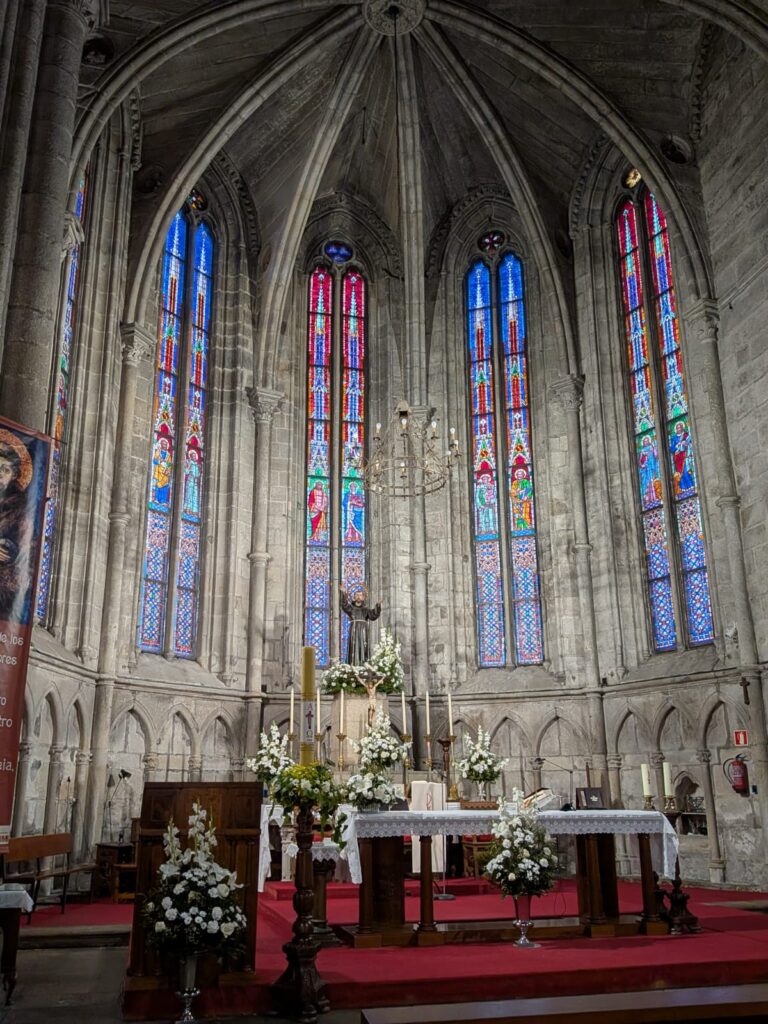
The sixth day of Camino ended in Pontevedra, where we visited the Convento de San Francisco. The Franciscan's vow of poverty was seen as a way of self-perfection. He made sacrifices regarding those things that pertained to his person, but looked towards enrichment when it came to the question of giving homage and worship to God. The sanctuary here reflects this in its Gothic beauty. Though there is something that seems to be missing. Where the statue of St. Francis now stands, there once would have been a beautiful high altar.
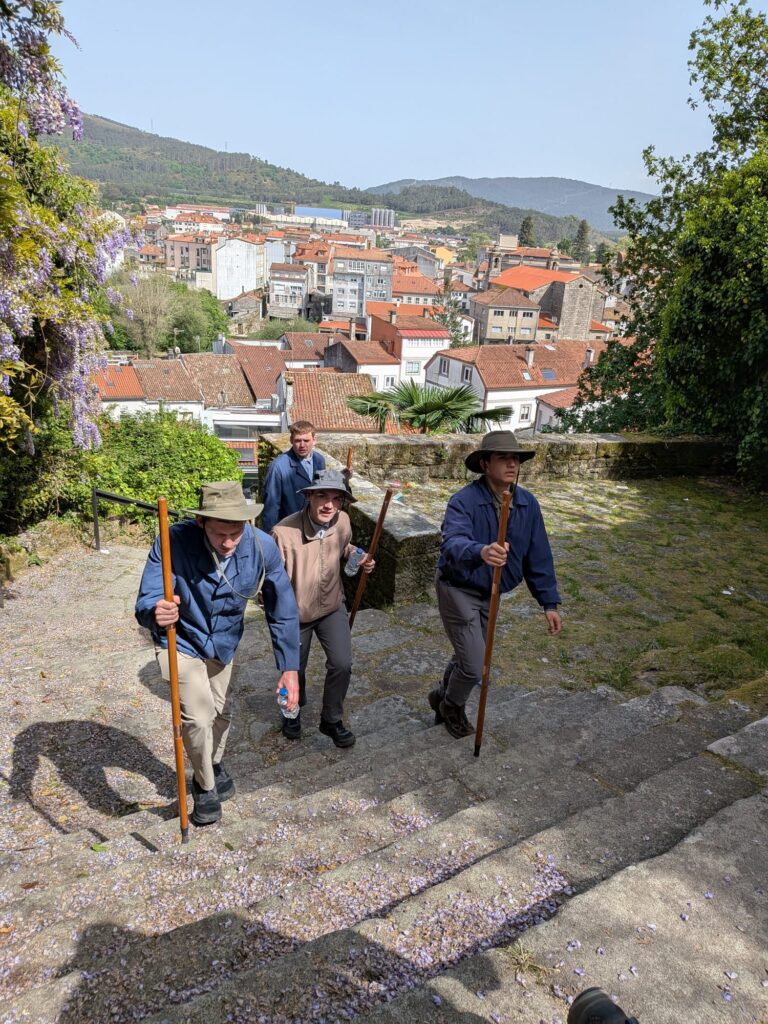
We walked to the very top of the hill where the preaching spot of St. James is found. Below, you can see the town of Padron. We send it a few staircases, and then a few more, and then a few more. Abstracting from the physical discomforts of the climb, it is fitting for such a place to be found on high. To think that St. James chose to ascend this hill to preach without "human respect" is an example of what spirit we should have to proclaim the truth in a pagan world.
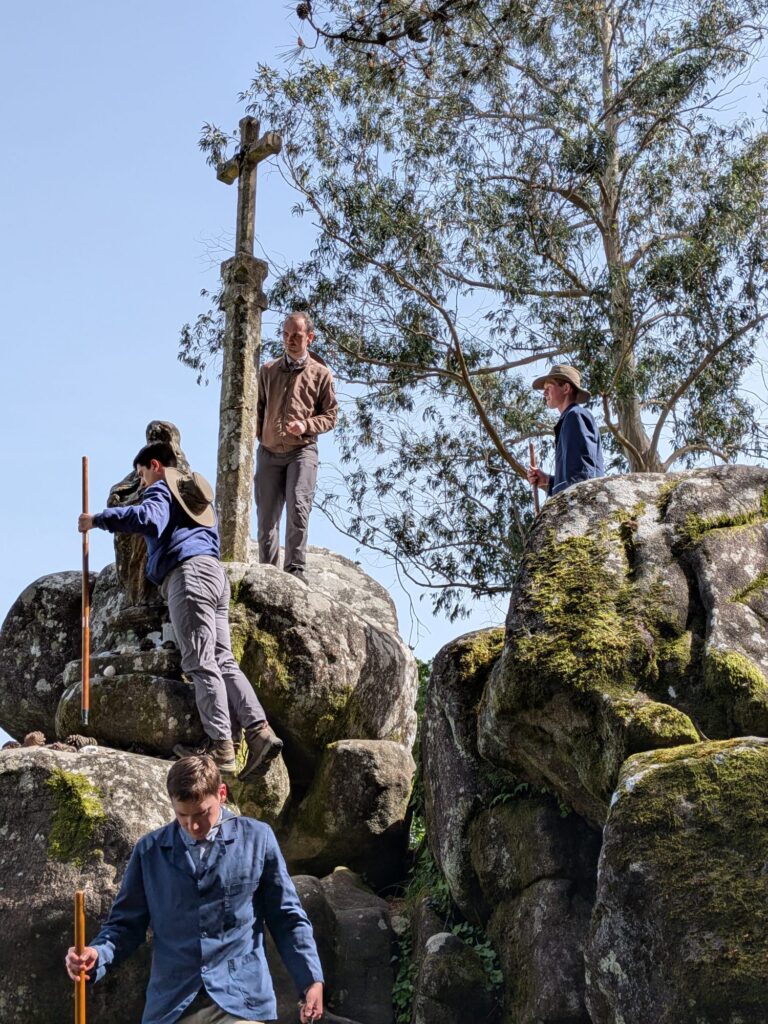
The Cruceiro de Santiaguiño do Monte stands above the piles of rocks on which St. James stood to preach. In a nearby grotto, St. James hid from persecution. After we prayed here, each pilgrim climbed the rocks and gave the statue of St. James an "abrazo."
A Bench and a Berm The pilgrims look out upon the road to Redondela after conquering the final hill of the day.
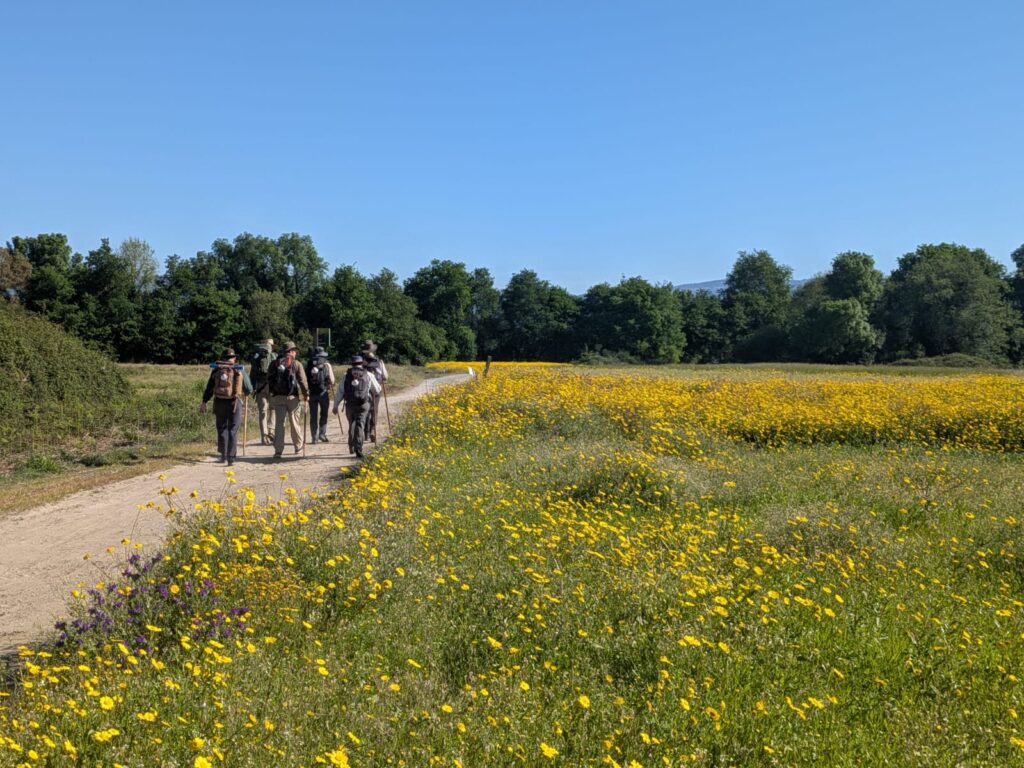
We woke up to a path of stones surrounded by fields of gold and purple flowers celebrating the Resurrection.
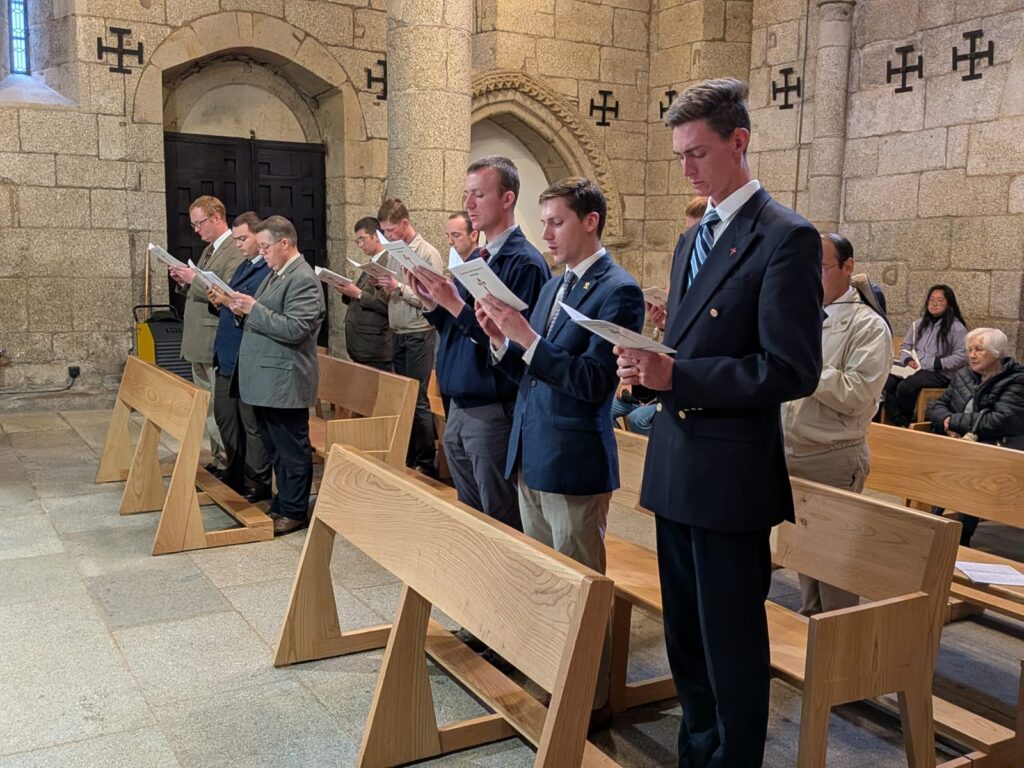
The pilgrims sang the Little Office of the Blessed Virgin Mary
The next nine days on the trail were really meaningful and very blessed. We visited churches, passed through old towns, travelled across the bright sunny Portuguese countryside, crossed the border back into Spain, and learned bits of Portuguese and Spanish. We suffered in the early spring heat and hiked for two days in the rain and cold. We attended Easter Sunday Mass in a church overflowing with Portuguese Faithful. We enjoyed the immense hospitality of the Portuguese who treated us like long-time friends the moment we appeared and were invited to join a house blessing ceremony on Easter Monday, being treated to food and drink at the same time.
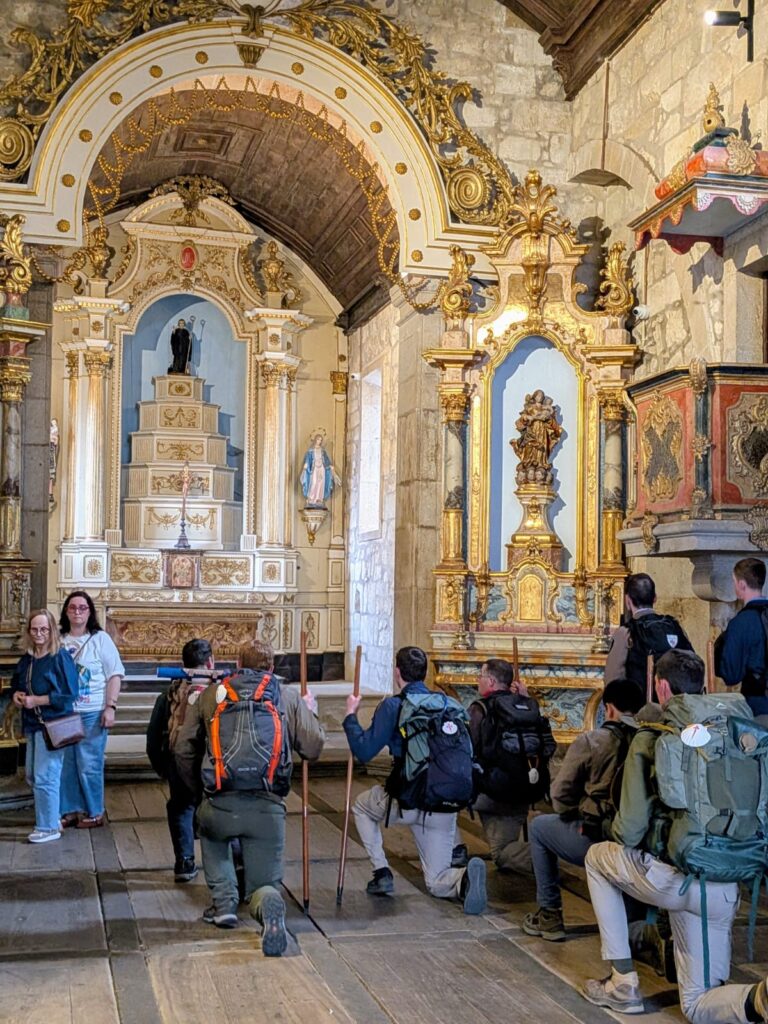
We climbed up mountains, we climbed down mountains, crossed rivers and walked through forests, and hiked an average of 25km per day. Most important of all, we spent each day in prayer, contemplation, and good conversation. We stopped at every road-side shrine to say an Ave Maria or a Salve Regina. We entered every church on the way to visit the Blessed Sacrament and say some prayers. In many churches we sang the Salve Regina, much to the surprise and delight of locals and fellow pilgrims alike. And above all, we kept our focus on the true meaning of the Camino, that we were doing a pilgrimage in reparation for sin and for the betterment of our souls.
For the first time, the pilgrims glimpse the distant steeples of the Cathedral of Santiago de Compostela. After over a week of walking, it was a sight to behold.
We had finished nine full days. Nine days of walking, praying, and sacrificing. What an immense grace to arrive at Santiago de Compostela! After this, we entered to visit the relics of St. James to pray for your intentions. And before leaving the Cathedral, we gave St. James's statue the traditional abrazo.
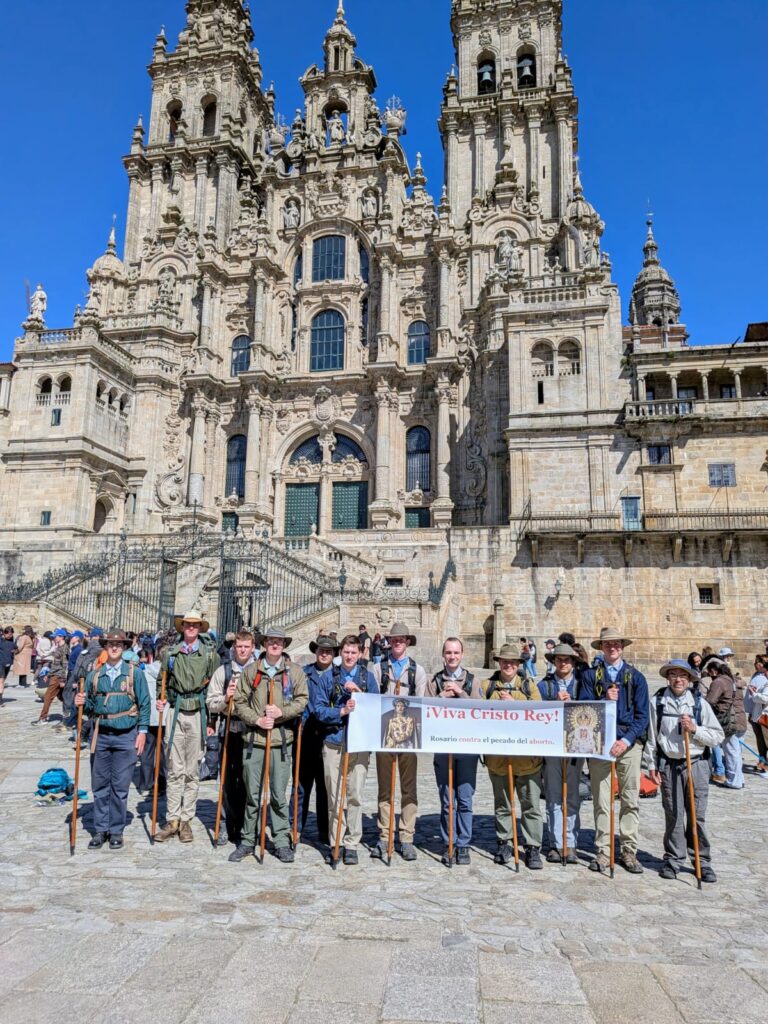
We arrived in Santiago on Saturday, 11 April 2026. We had seen the steeples of the Cathedral of Santiago from several kilometres away earlier in the day, so the anticipation and excitement was at an all-time high as we finally made it into the city, wending our way through the crowded, narrow streets toward the steeples we could see rising up above the other buildings. It was a most incredible feeling to finally arrive in the square in front of the Cathedral, to look up at the impressive facade, and to think back on all nine days of hiking that it took to get here. It was absolutely phenomenal!
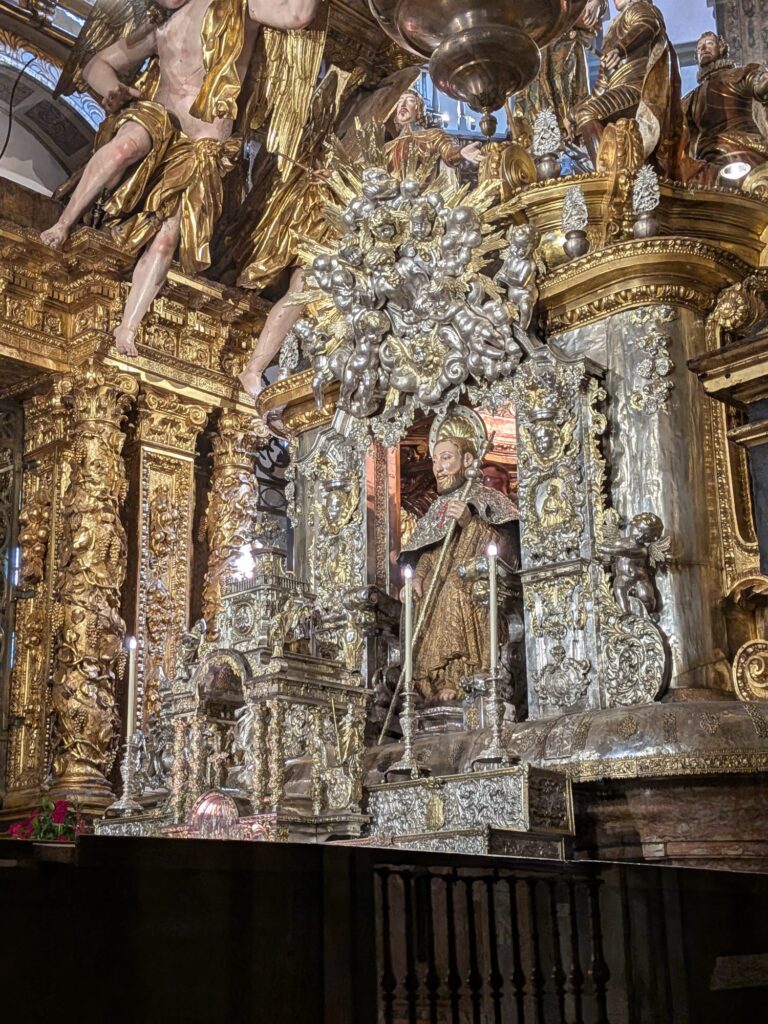
A close up of the main statue of St. James. Made in the Spanish Baroque style, It originally did not have a halo. It was the custom that when pilgrims would embrace St. James, they would also place their own hat on his head. The halo was only added in recent years.
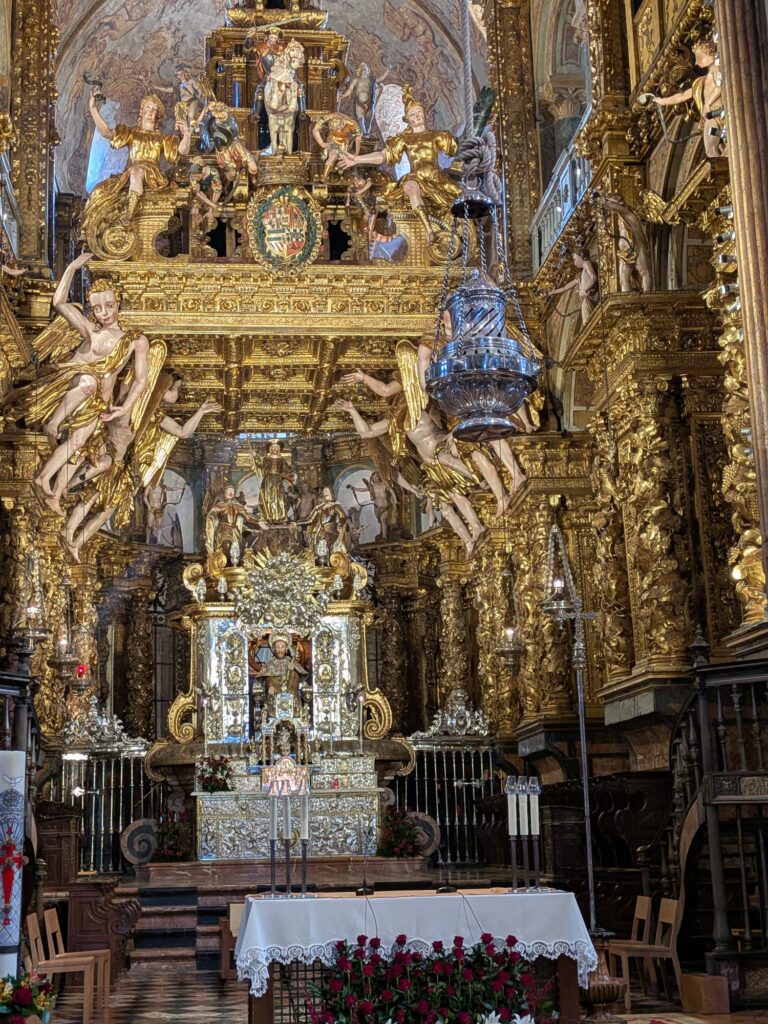
In the same spirit, the sanctuary also has three central statues of St. James: as the apostle, as a pilgrim, and as Matamoros (atop the canopy held by four massive angels).
The intentions sent with the pilgrimage were all put in the hands of St. James. We kept these intentions in our prayers and sacrifices throughout the trip, but especially here!
After dropping our backpacks at our accommodation, we proceeded straight to the Cathedral to visit St James and give him the traditional “abrazo,” where pilgrims climb up behind the statue and give St James a hug. We also went below the main altar where the remains of St James are kept and placed our intentions there. I placed there all the intentions of the SANOL supporters who had sent intentions to be taken along and said a prayer to St James that he would answer the prayers, hopes, and pleas of our Nation, and bountifully bless all those who requested his intercession. We spent two days in Santiago, visiting the Cathedral multiple times and exploring the city.
With a little regret we left early on Monday morning with a 6-hour trip ahead of us to the airport where we would all split up once more and go our different ways back to our respective homes across the globe.
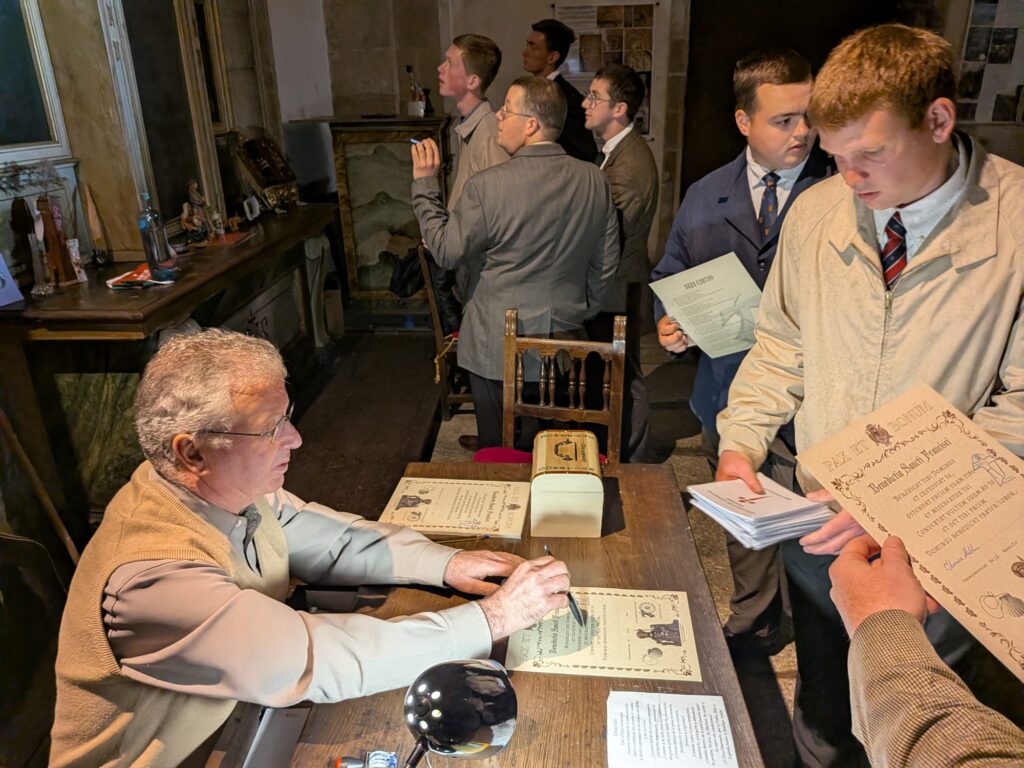
At the Franciscan monastery in Santiago de Compostela, we obtained our "Franciscan Compostela" marking in another way the end of our Camino. According to tradition, St. Francis actually made the Camino himself. Franciscans, and any Catholic from around the world, can receive this document after having walked the Camino in the footsteps of Saint Francis.
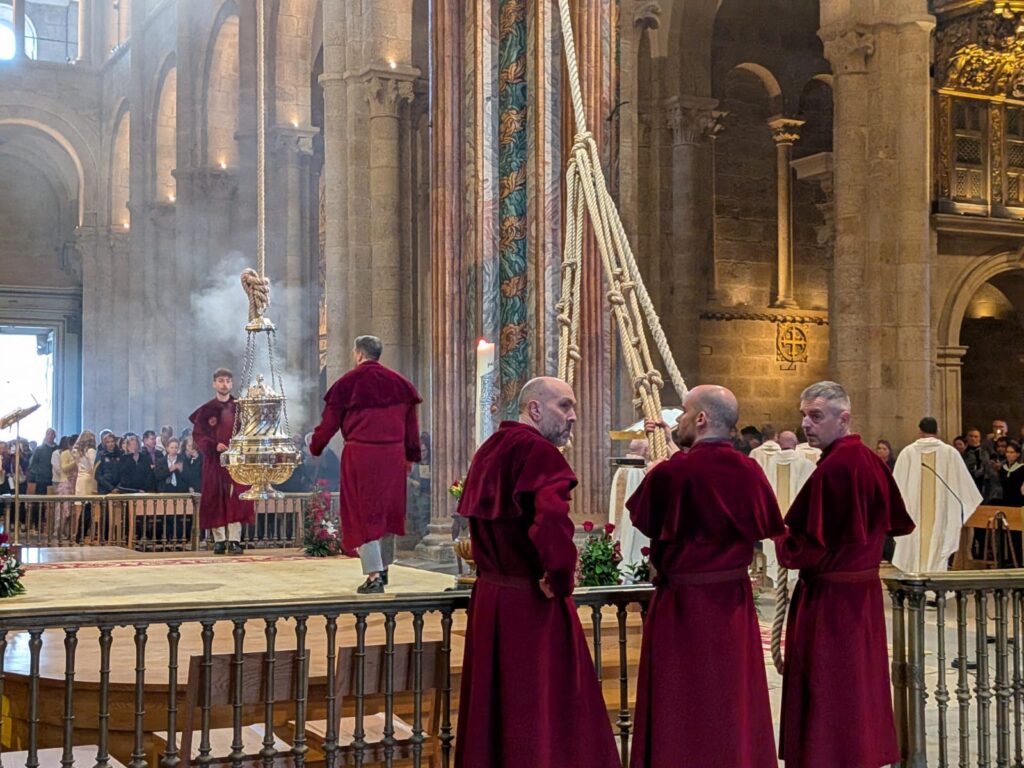
One does not visit the Cathedral of Santiago de Compostela without noticing the Bota Fumeiro hanging from the ceiling. They never publicize the times that this massive thurible is used, but if you befriend one of these men, he might just tell what you are looking to find out.
We were very fortunate to have the privilege of doing the Camino de Santiago. It was a really epic journey through time, and almost a ‘refresher course,’ on what it means to be Catholic and just what a privilege it is to have the Faith. It was highly beneficial to all of us, psychologically, physically, and most important of all, spiritually. We all departed Spain with our spiritual ‘batteries’ recharged and ready to continue the fight for the preservation of Christian Civilization and the Glory of God!
I would like to specially thank everyone who donated toward this journey and helped make it possible. Your support is greatly appreciated, and I prayed a daily Rosary on the Camino especially for your intentions, and that Our Lady would bless you immensely.
Please keep the works of SANOL in your prayers, that we may continue in God’s service to bring the Reign of Christ on our troubled world.
Viva Cristo Rey!
Dominic Tuffin.
Watch a short video below and listen to the prayers and chants the pilgrims sang along the way at various churches and shrines.