Winning the heart and soul of South Africa for Mary by spreading the Fatima Message

Winning the heart and soul of South Africa for Mary by spreading the Fatima Message

Saint Stephen Harding

Harding

St Stephen Harding

One of the Founders of the Cistercian Order

Feast April 17

Stephen Harding was an Englishman of an honourable family, and heir to a large estate. Born in Dorset, he was educated at the monastery of Sherborne and spoke English, Norman, French and Latin.

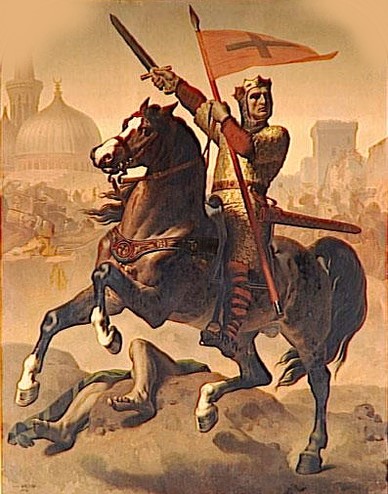
Desirous of seeking a more perfect way of Christian perfection, he, with a devout companion, travelled into Scotland and afterwards to Paris and to Rome. On their return journey, the two travellers chanced upon a collection of huts in the forest of Molesme in Burgundy, where monks lived in great austerity. Struck by their way of life and finding kindred spirits in Robert the Abbot, and Alberic the Prior, he bid his friend goodbye and threw in his lot with the monks.

After some years, finding that religious fervour had waned considerably, Stephen, Robert, Alberic and others went to Lyons and with the support of Bishop Hugh struck a new foundation in the forest of Citeaux sponsored by Rainald, Lord of Beaune, and Odo, Duke of Burgundy.

Later Robert returned to his monks of Molesme who reclaimed him as their abbot, and upon the death of Alberic, in 1109, Stephen succeeded him as Abbot of Citeaux.

He immediately instituted such austere measures to keep the spirit of the world out that he alienated the support of many who had helped to establish the abbey.

Novices ceased applying, and to make matters worse, a mysterious disease decimated his monks to the point that even Stephen’s stout heart began to quiver wondering if he were really doing God’s will.

God answered him dramatically when thirty noblemen knocked at the abbey’s door seeking admittance. They were headed by young St Bernard who in his zeal had convinced his brothers, uncles and a number of his acquaintances to give up the world with him.

Increasing numbers called for additional foundations and the first two were made at Morimond and Clairvaux. To the general surprise, Stephen appointed twenty-four-year-old Bernard as Abbot of Clairvaux. When nine abbeys had sprung from Citeaux, Stephen drew up the statutes of his Charter of Charity which officially organised the Cistercians into an order.

Stephen Harding died in 1134, advanced in age and nearly blind, and having served as Abbot of Cîteaux for twenty-five years.

Send Your Intentions with Dominic to St James in Spain

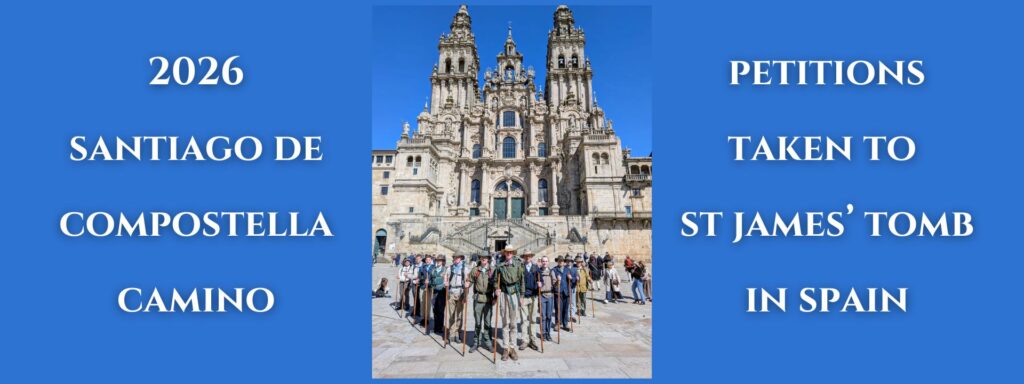
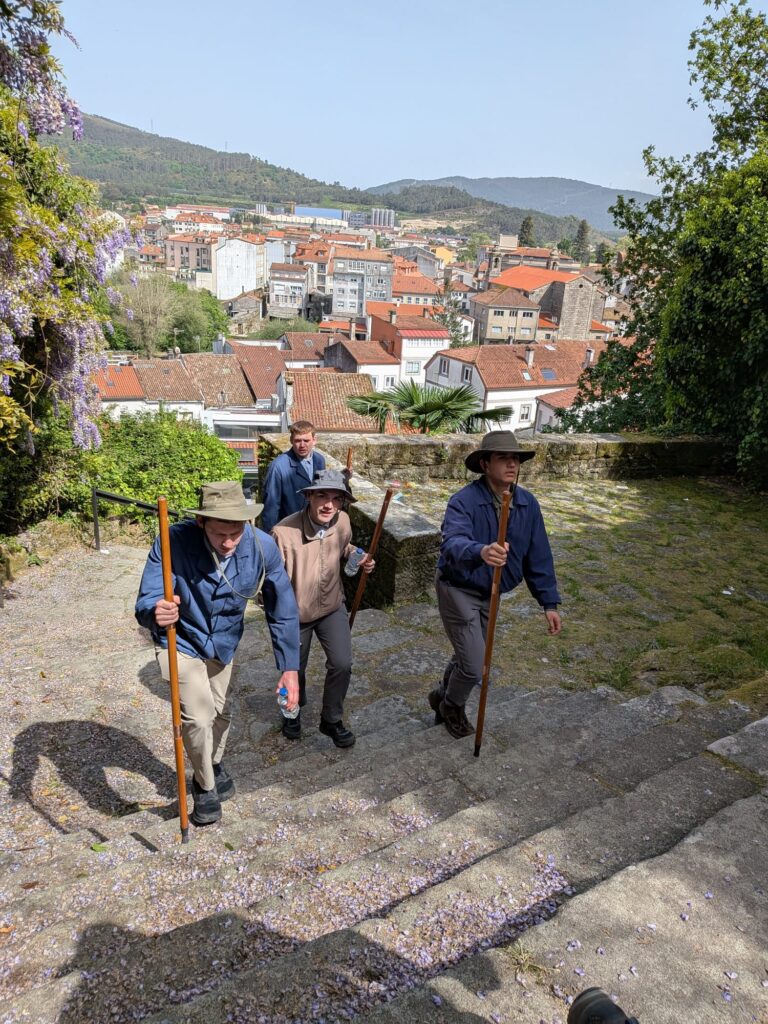
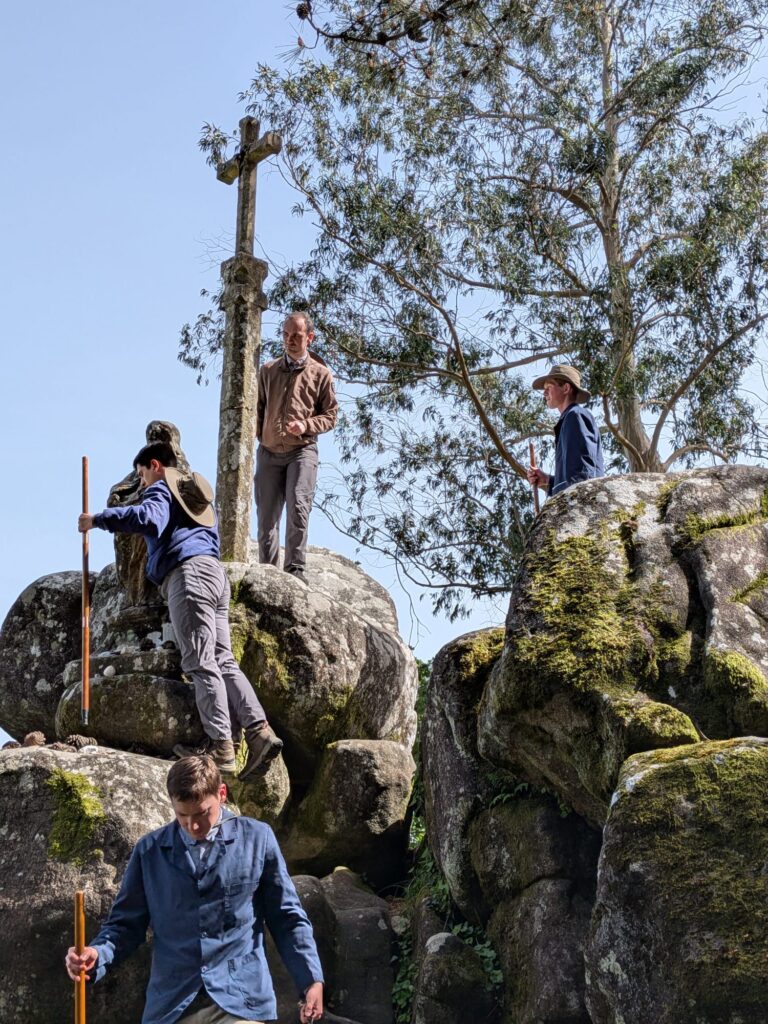
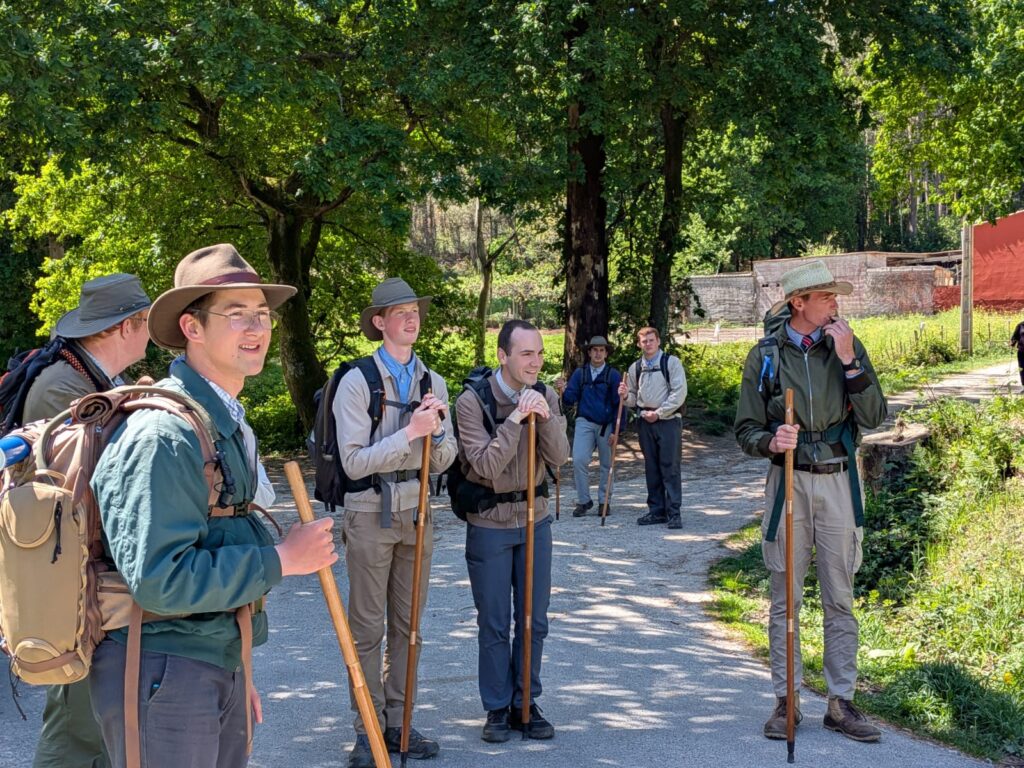
Twelve young men will gather from around the world—Belgium, South Africa, Ecuador, and the United States. They will be going on a pilgrimage over Easter 2026.

Why are they coming from four different countries? Why unite across continents?

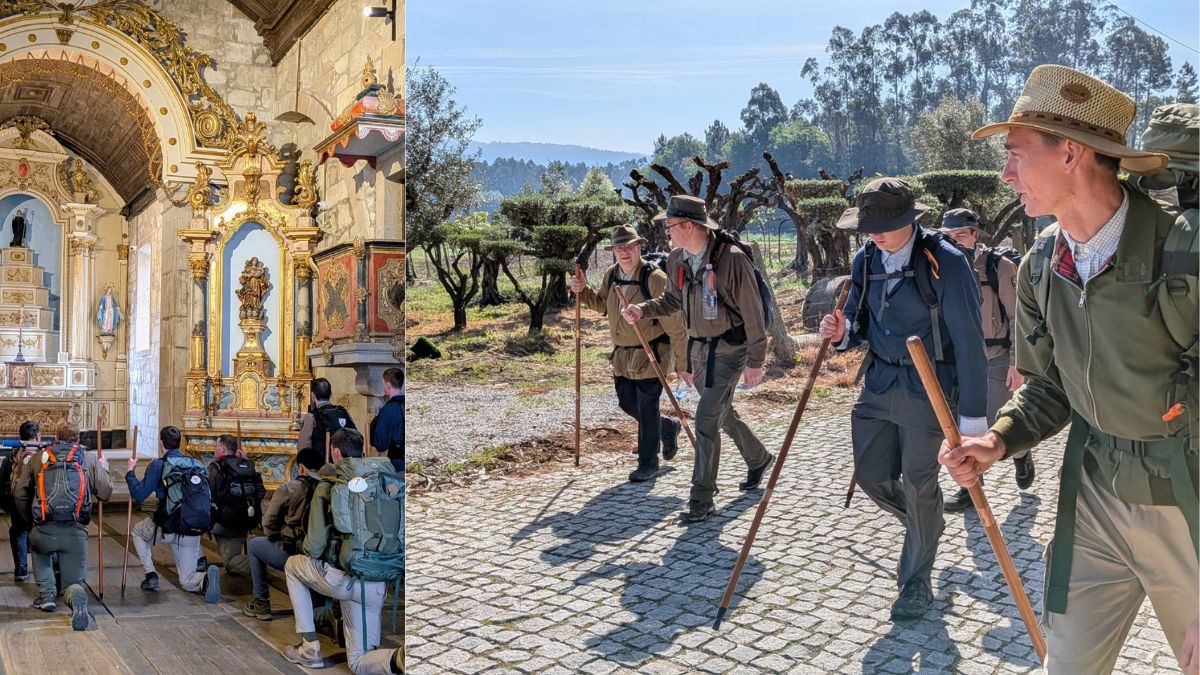
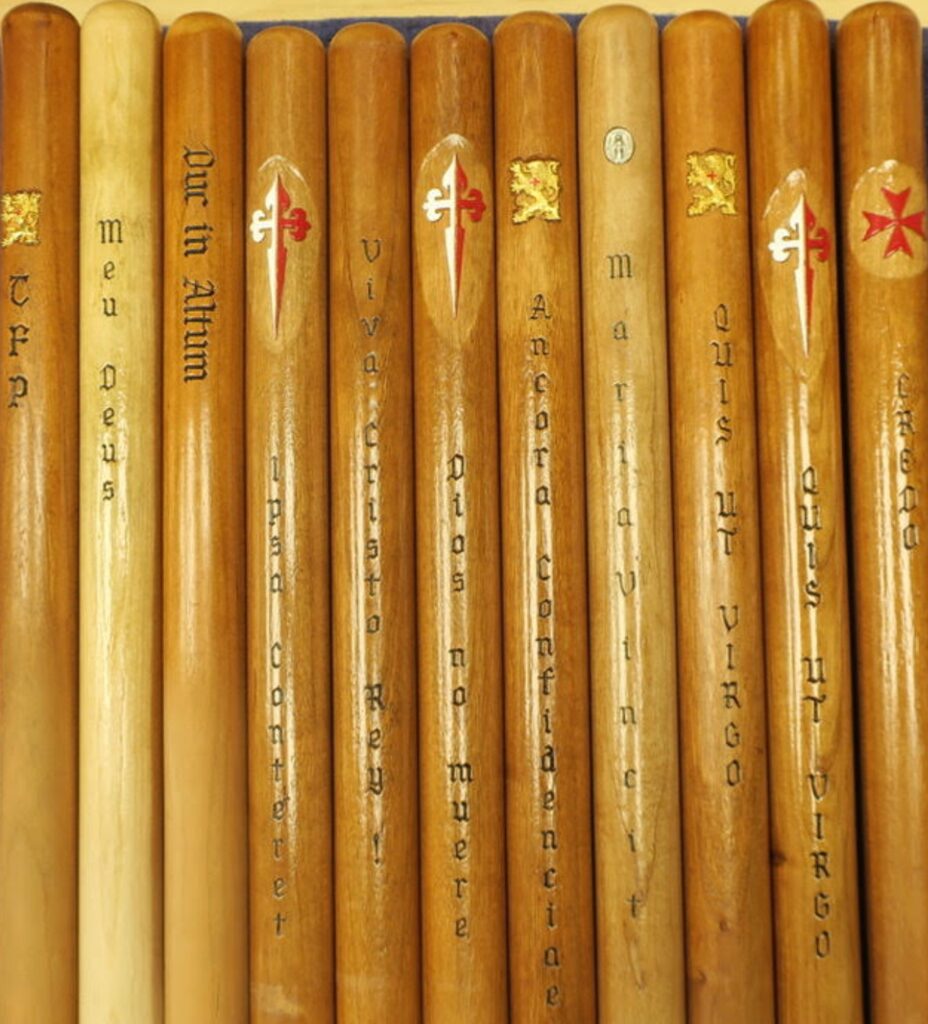
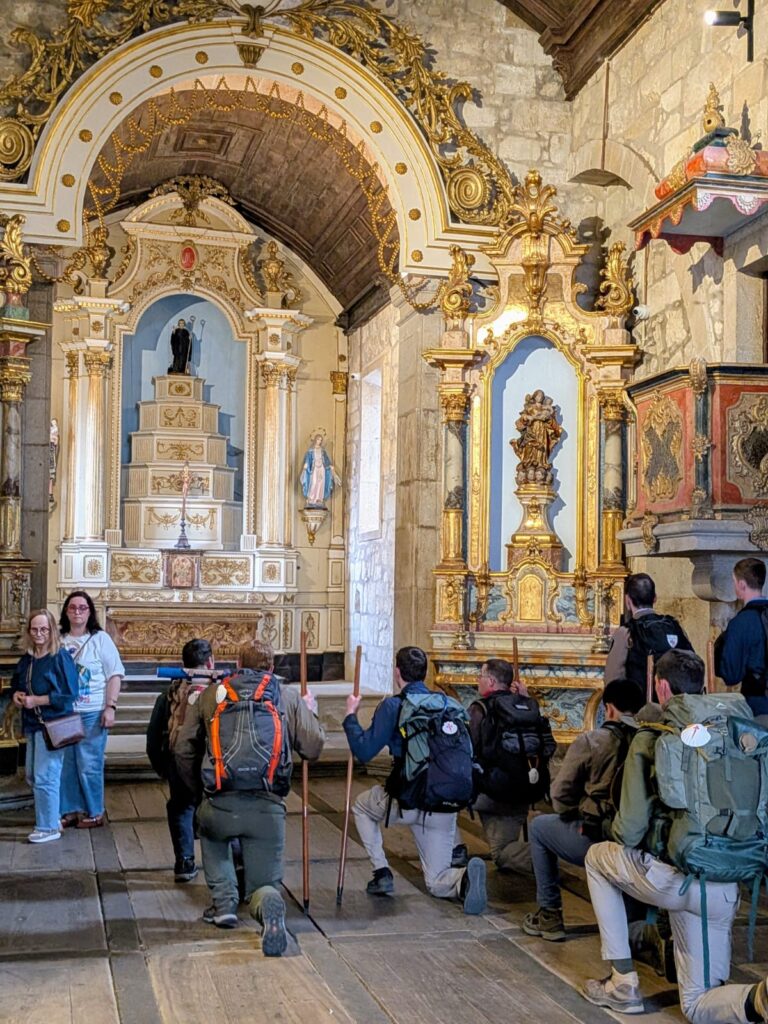
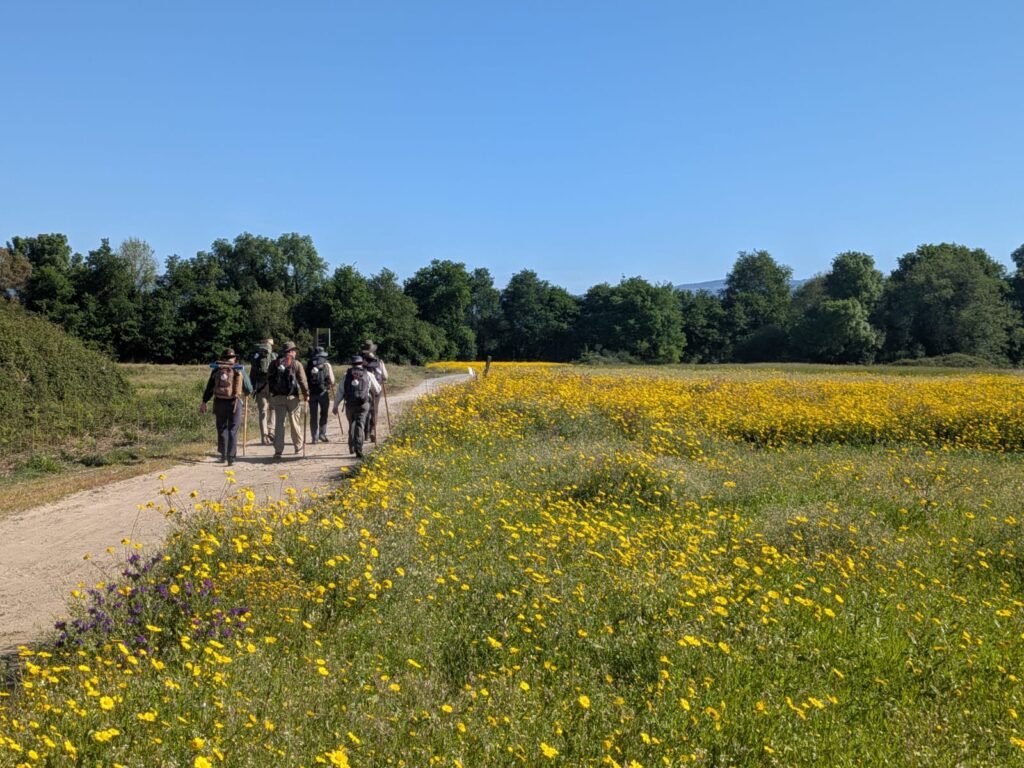
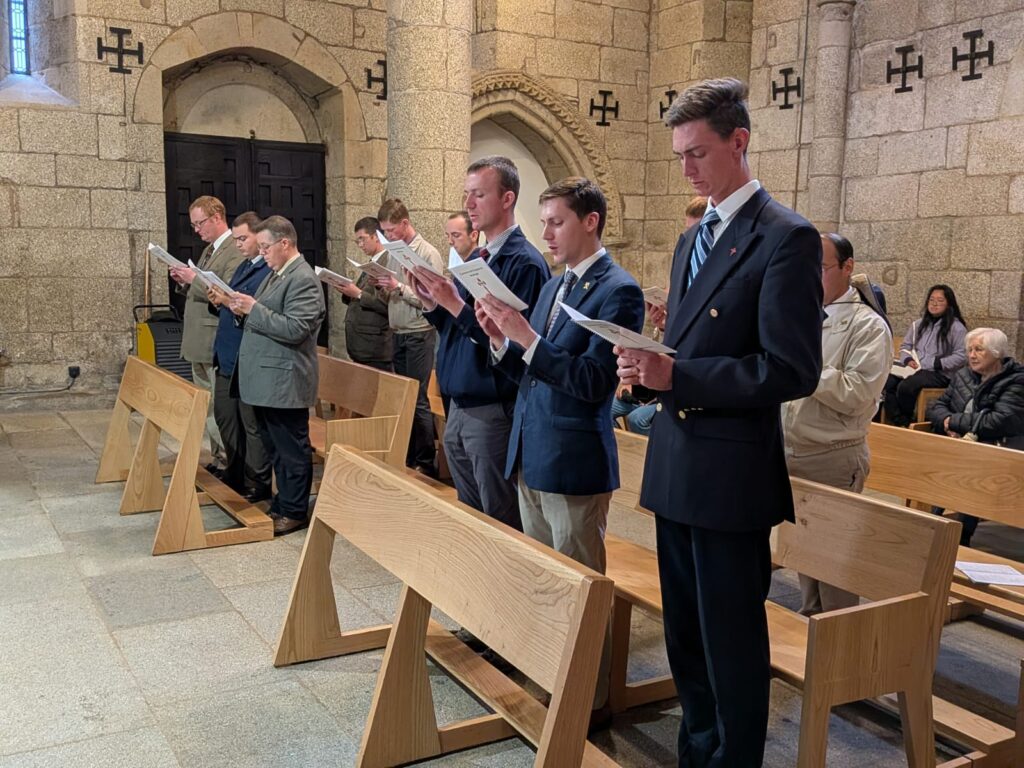
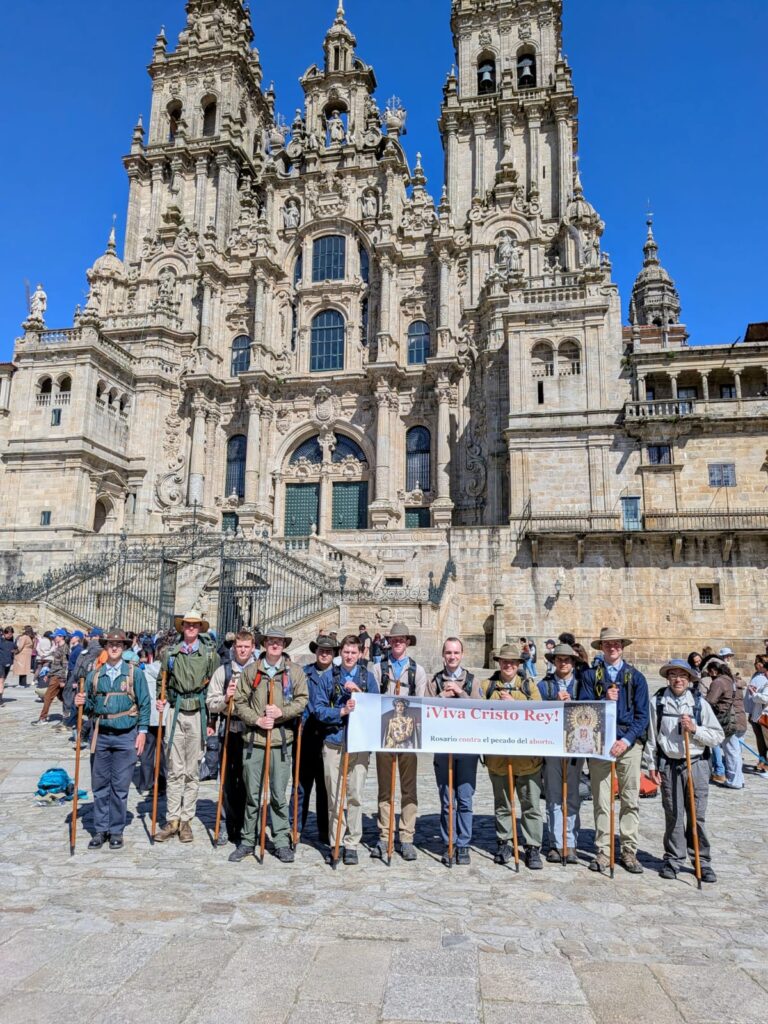
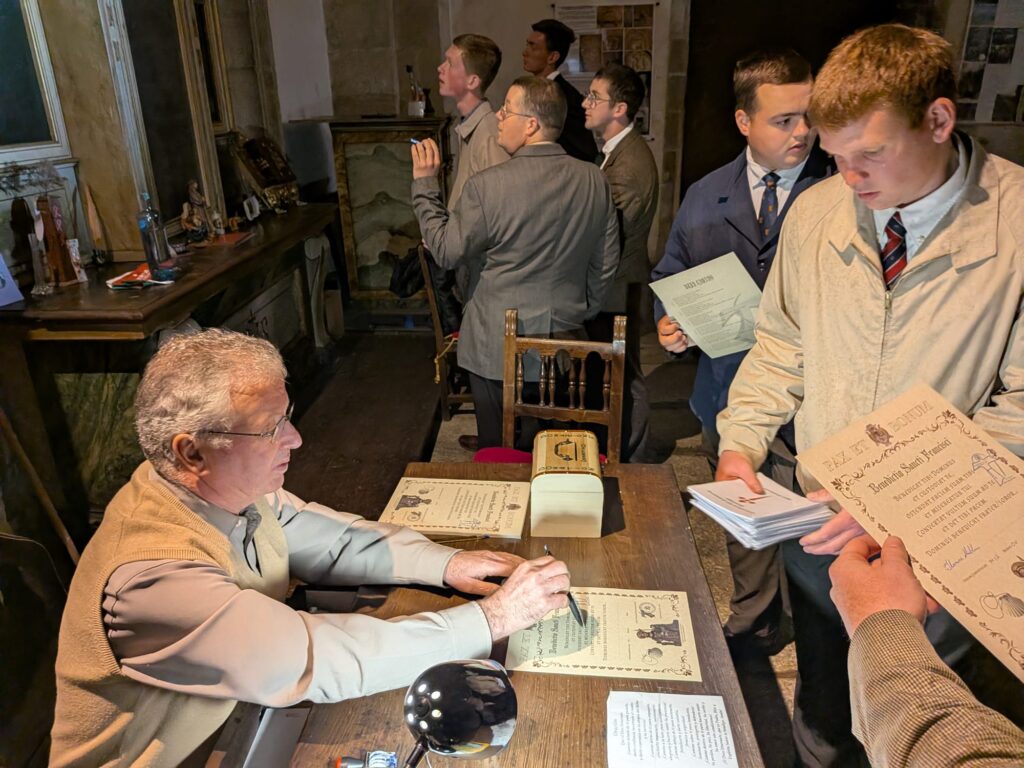
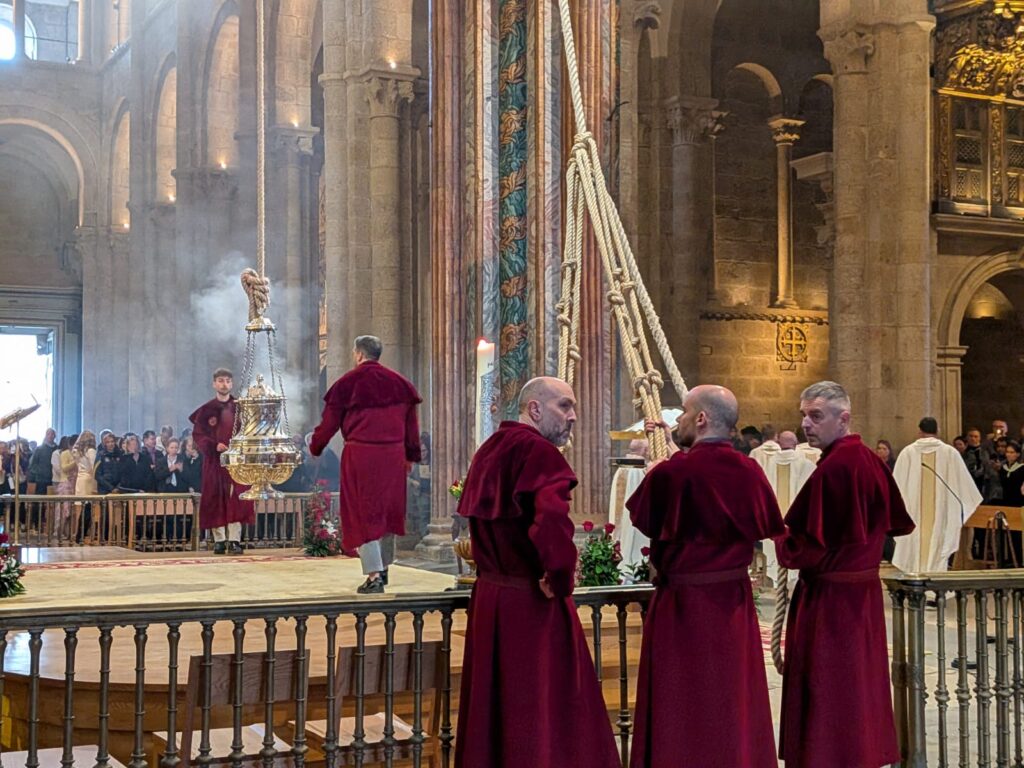
They were invited to join young men from the Society for the Defense of Tradition, Family, and Property (TFP) on a pilgrimage to the relics of the Apostle Saint James at Santiago de Compostela Cathedral. They will walk the historic Camino de Santiago along the ancient routes from Portugal into Spain, covering easily over 190 kilometres on foot before reaching the great cathedral that houses the Apostle’s relics.

It will be long. It will be difficult. It will be far more demanding than anything they had attempted before.

It will be a pilgrimage of reparation—specifically for the grave sin of abortion, which continues to wound souls and devastate families across the world.

There are twelve of them, united by the same ideal. Twelve young men, representing four nations, committed to offering prayer, penance, and physical hardship in reparation for the sin of abortion. In a spirit reminiscent of the twelve Apostles, they will walk together to implore Saint James to intercede for our times.

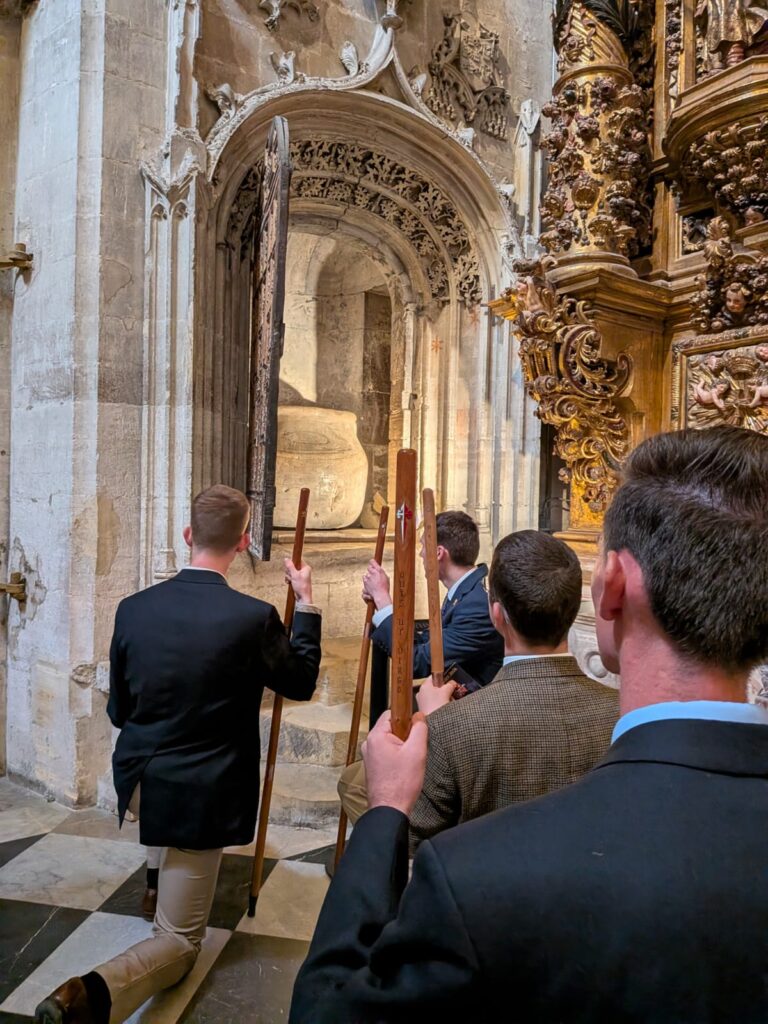
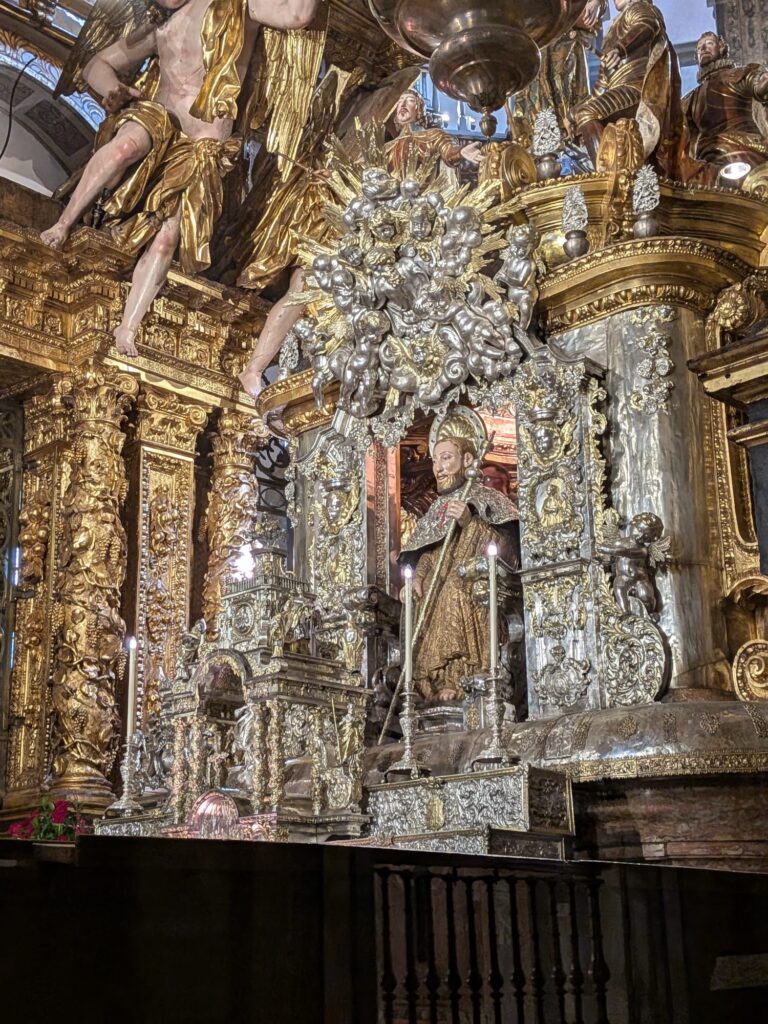
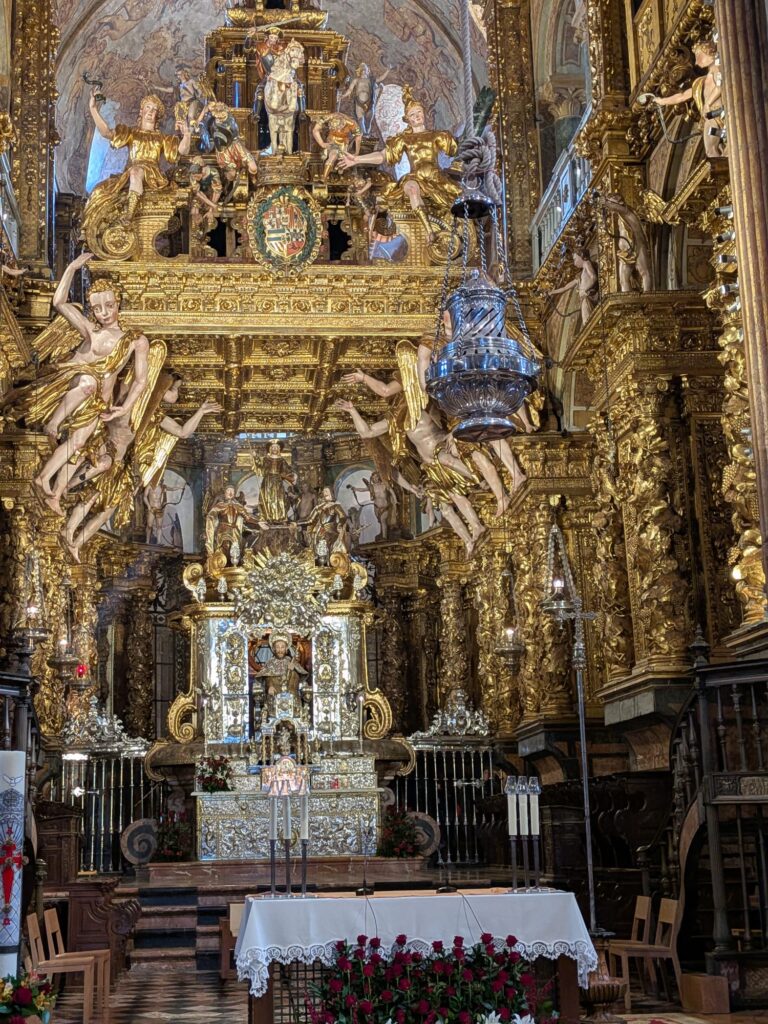
St James' tomb under the main altar
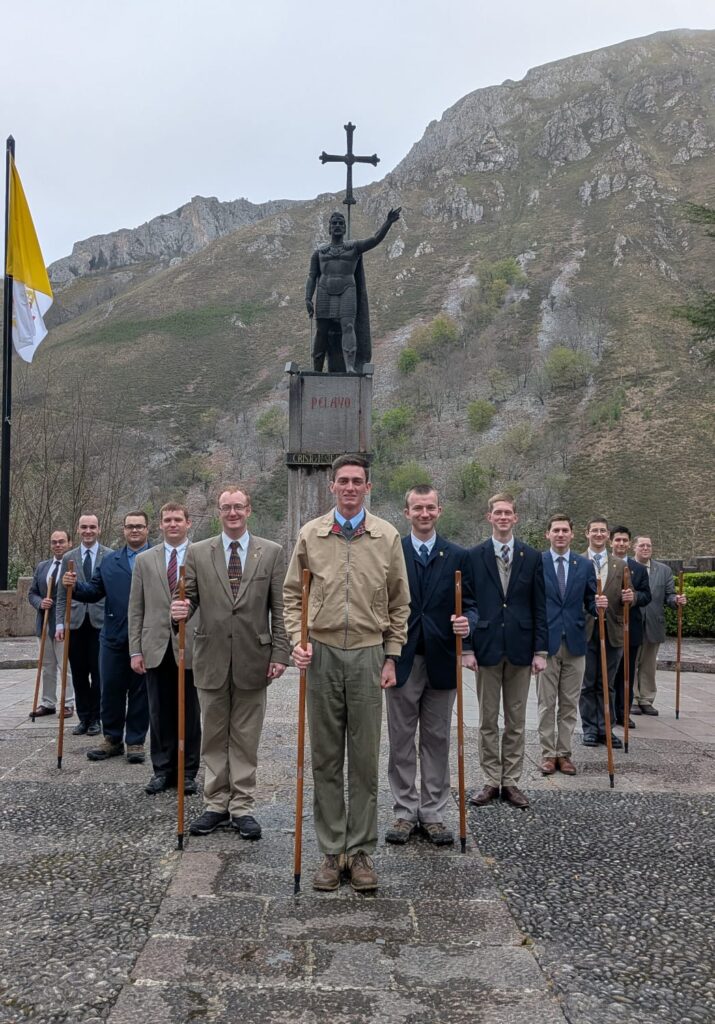
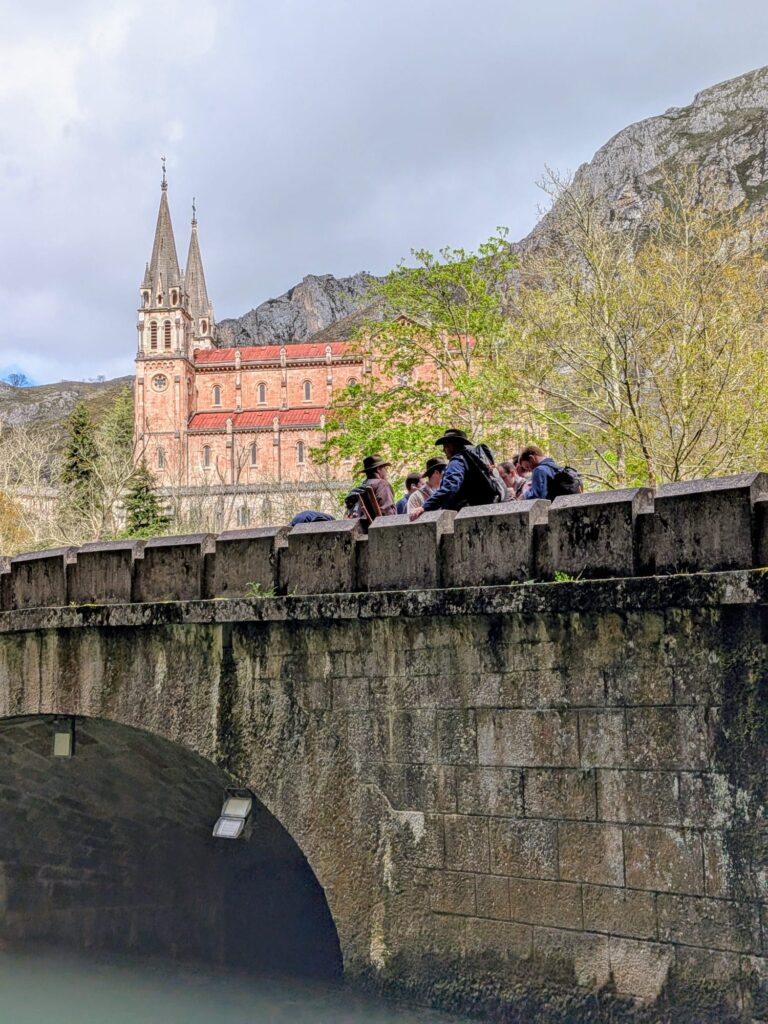
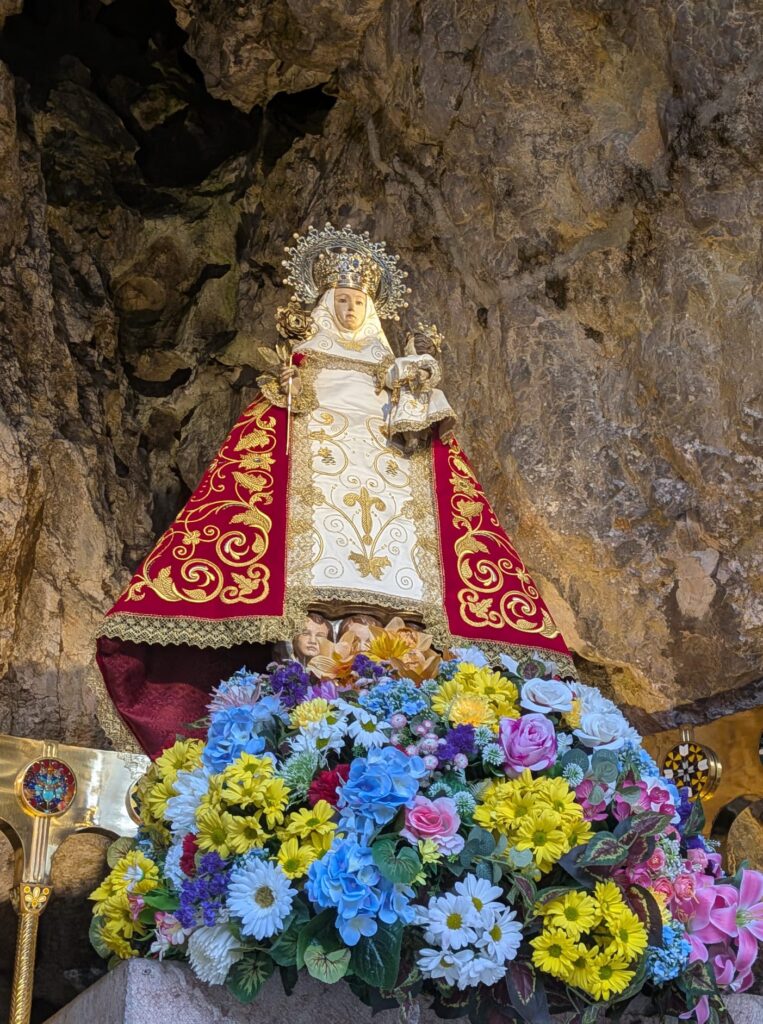
Our Lady of Covadonga.
Characteristic “Saint James Scallop shells” to our backpacks
The pillar with a statue of Our Lady atop in the Basilica of Our Lady of the Pilar, Zaragoza

Dominic Tuffin, from South Africa, was invited to be one of these twelve young men. Here is Dominic’s story:

“My name is Dominic Tuffin – many of the South Africa Needs Our Lady Supporters will know me from the Fatima Visit Program of SANOL, in which a team of Fatima Custodians take a Statue of Our Lady of Fatima (an exact replica of the International Pilgrim Virgin Statue of Our Lady of Fatima), to homes throughout the country, emphasising the importance of the Message of Fatima in our times. We promote the Rosary as the most effective solution to the issues faced by the world today, and also as the surest way of obtaining graces from God through Our Lady’s intercession.

Over Easter, I have the great privilege to be walking the famous Spanish Camino de Santiago – the Pilgrimage of St James which has been frequented by Catholics for centuries, walking from various points in Europe to the tomb of St James the Great in the Cathedral of Compostela. St James, one of the Twelve selected by Our Lord to go and spread the Faith to the corners of the earth, found his way to Spain. This Pilgrimage has been done by Catholics of good heart for centuries, going to the very tomb of the great Saint seeking a multitude of favours, fully trusting that, if it be the Will of God, their requests would be answered.

I will be walking the pilgrimage in the company of members of the American Society for the Defence of Tradition, Family, and Property. It will be a 10 day walk, through approximately 190km of Portuguese and Spanish countryside. The pilgrimage is dedicated to making reparation for the sin of abortion in the United States of America. However, as a South African, I will be walking with the additional special intention of reparation for the sin of abortion in our own dear country of South Africa. I will also be taking with me the prayers, hopes and petitions of my friends and family to lay at the feet of the Great Apostle, to implore his help and intercession for our Land, it’s people and the apostolate of South Africa Needs Our Lady.

South Africa Needs Our Lady has requested that I offer our supporters the opportunity to take with me any intentions they may have and place them in the hands of the great Apostle, Santiago de Compostela, which I will be honoured to do.”

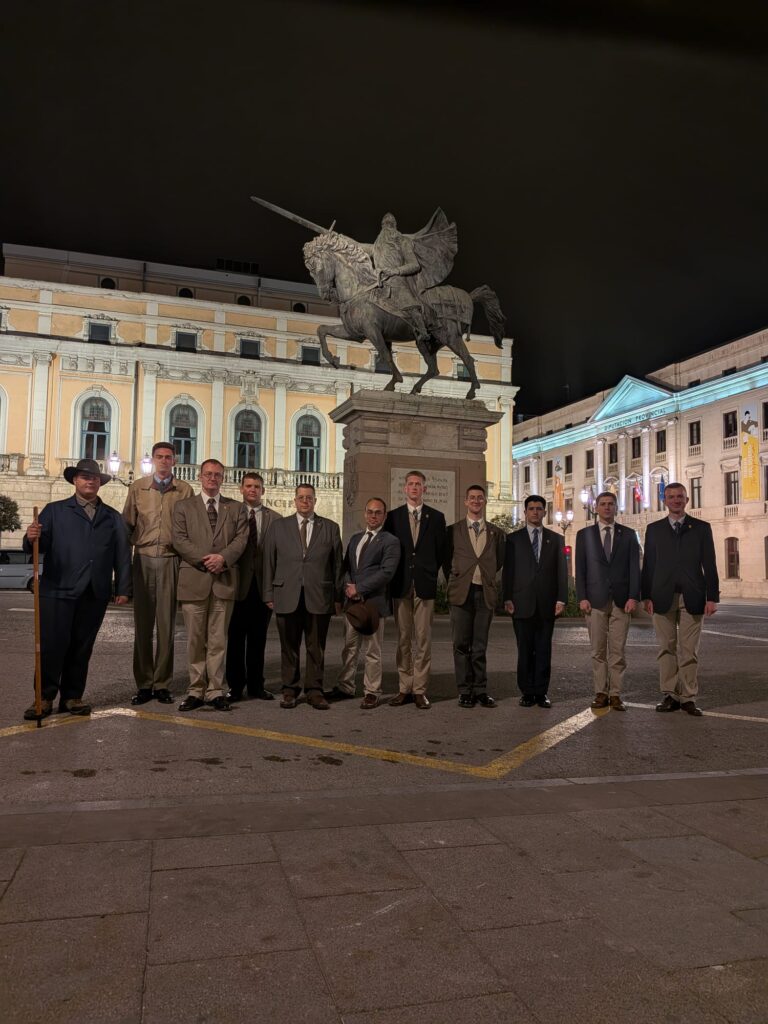
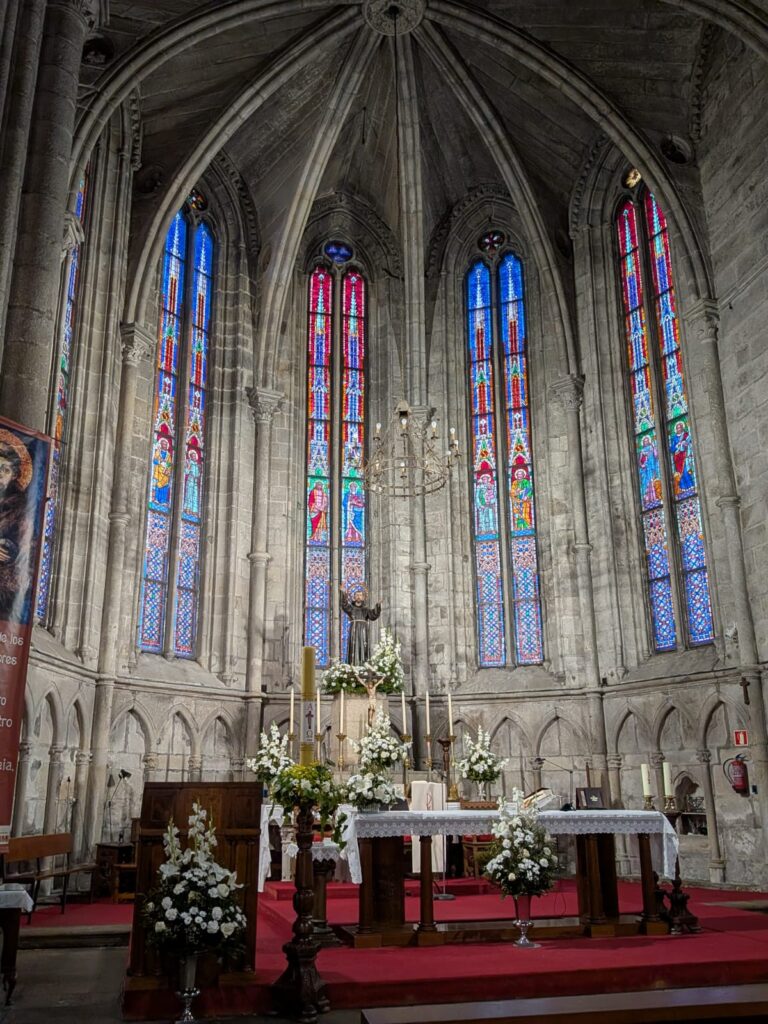
Burgos has a magnificent medieval square and a massive Gothic cathedral. The central nave and side altars are each more beautiful than the next.

Do you care about the tragedy of abortion? Do you want to take part in making reparation for this grave evil?

Do you want them to pray for your intentions while on this pilgrimage?

If so, we invite you to support these twelve young men as they undertake this demanding pilgrimage to ask Saint James to help bring about conversion, renewal, and an end to the scourge of abortion in our time. 

Fill in the form below to become part of this journey and add your intentions.

If you would like to see a video of a previous Camino, you can watch it here. 

If you would like to send a donation towards this cause, please CLICK HERE.

A World In Crisis – Is There Hope?

A World in Crisis – Is it the End of the World? Is There Hope?

Towards the Triumph of the Immaculate Heart

Saturday, 18 April 2026
Southern Sun Newlands Hotel, Cape Town

14h30 for 15h00

No charge – Donations welcome

Why Attend?

At a time when the world seems increasingly troubled, with growing confusion, instability, wars, and challenges facing family and society – CHAOS – we believe this Presentation will offer much insight and hope.

How did we get here—and where do we go from here?

Join us for a thought-provoking presentation exploring these questions in the light of the message of Fatima and within the perspective of Professor Plinio Correa de Oliveira’s masterful study Revolution and Counter-Revolution.

Event Details

Date: Saturday, 18 April 2026
Time: 2:30pm for 3:00pm
Venue: Southern Sun Newlands Hotel, 7 Main Road, Newlands, Cape Town
Dress: Smart casual
Contribution: No charge – donations welcome

Featured International Speaker

Mr Nelson Fragelli

Mr Nelson Fragelli is a speaker and author whose speciality is the study of “Revolution and Counter-Revolution,” understood within the context of the book of the same name by Professor Plinio Corrêa de Oliveira.

He is a lifelong member and activist of the movement founded by Professor de Oliveira — Tradition, Family and Property (TFP) — and its kindred associations. He has travelled and worked extensively in South and North America, as well as in many countries of Europe.

Reserve your seat

Please fill in the form below to reserve your seat for this special presentation.

If you would like to donate towards this event, please feel free to CLICK HERE

71st Miracle to occur in Lourdes

Recent confirmation of the cure, officially recognized as miraculous, of British Royal Navy soldier John Traynor.

Recent confirmation of the cure, officially recognized as miraculous, of British Royal Navy soldier John Traynor. On 8 December 2024, the Feast of the Immaculate Conception, Archbishop Malcolm McMahon of Liverpool (England) announced the miraculous healing of British Royal Navy soldier John Traynor [photo], on the 81st anniversary of his death.

This was the 71st miracle to be approved at Lourdes, after Dr. Alessandro de Franciscis requested a review of the Traynor case last year, which was conducted by the English physician Dr. Kieran Moriarty, a member of the International Medical Committee of Lourdes.

In his research, Dr. Moriarty discovered several folders in the Lourdes archives, which included the testimonies of the three doctors who examined Traynor before and after his cure, along with other evidence.

This led to Traynor’s case being declared inexplicable by medical science and considered miraculous by the Church.

Archbishop McMahon declared: “Given the weight of the medical evidence, the testimony of John Traynor’s faith and his devotion to Our Lady, it is with great joy that I declare that the healing of John Traynor from multiple serious medical conditions should be recognized as a miracle performed by the power of God through the intercession of Our Lady of Lourdes.”

The fact that the Archbishop of Liverpool declared, after so much time, that the cure of the English soldier could be considered miraculous, shows the Church’s rigor in approving a miracle. To get an idea of ​​this, note that the Lourdes Medical Bureau, responsible for analysing possible cures considered miraculous, has registered, since 1905, seven thousand “medically inexplicable” cures. However, of these, only 70 were declared “miraculous” by the Church.

From a deeply Catholic family

John Traynor was born in Liverpool in 1883 to an Irish mother. She passed away when he was still young. In his testimony presented on the sanctuary’s website, Traynor states that “his devotion to the Mass and Holy Communion and his trust in the Blessed Mother remained with him as a fruitful memory and example.” For his mother was, at that time, “a daily communicant when few people were.”

Consequences of the battles

At the start of the First World War (1914-1918), while participating in the siege of Antwerp as a member of the Royal Navy Reserve, John Traynor was hit in the head by shrapnel while trying to carry an officer out of the camp. Recovering quickly, he returned to service.

On 25 April 1915, he participated in an amphibious landing on the shores of Gallipoli, as part of an unsuccessful attempt by British and French troops to capture the peninsula in Ottoman-occupied Turkey. Traynor was one of the few soldiers to reach the shore that first day, despite machine-gun fire from Turkish forces positioned atop steep cliffs along the beach. For over a week he remained unharmed as he attempted to lead the small contingent that had survived the attack.

However, on May 8th, the fearless soldier was hit in the head, chest, and arm by a burst of machine gun fire during a bayonet charge. His injuries left his right arm paralyzed and made him susceptible to epileptic seizures. Doctors attempted several surgeries to repair the damaged nerves in his arm and treat the head injuries believed to be the cause of his epilepsy, but without success.

Having been deemed “completely and incurably incapacitated,” eight years after the battle Traynor was assigned to be admitted to a hospital for the incurably ill. He, however, ignoring the pleas of his wife, doctors, and priests, insisted on participating in his parish’s pilgrimage to Lourdes from 22 to 27 July 1923.

John Traynor in his wheelchair

Effect of bathing in the baths

During the first three days of the trip, Traynor was seriously ill. Once in Lourdes, despite the resistance of his caregivers, as he states in his testimony, he “managed to be bathed nine times in the water of the grotto’s baths”.

On his second day in Lourdes, the soldier suffered a severe epileptic seizure while being taken to the bath. He says: “Blood was running from my mouth, and the doctors were very alarmed.”  But when they tried to take him back to his quarters, Traynor refused, pulling the wheelchair brakes with his good hand. Then, he states in his testimony, “they took me to the bath and bathed me in the usual way. I never had another epileptic seizure after that.”

When he was at the bath the next day, he felt that his right leg, which had been paralyzed until then, became “violently agitated,” and he felt as if he had regained the use of it. As he was due to return to the Eucharistic procession, his caregivers, believing he was having another epileptic seizure, rushed him to the Rosary church.

There, when the Archbishop of Reims passed by him with the Blessed Sacrament, his right arm was also “violently shaken.” Then he broke his bandages and made the Sign of the Cross, for the first time in eight years.

Feeling healed, the next morning Traynor jumped out of bed and ran to the grotto. Before the image of the Virgin, he said:

“My mother always taught me that when someone asks Our Lady for a favour or wishes to show Her some special veneration, they must make a sacrifice.” Then, he continues, “I had no money to offer, as I had spent my last shillings on rosaries and medals for my wife and children. But, kneeling before the Blessed Mother, I made the only sacrifice I could think of: I decided to quit smoking.”

John Traynor pushing his wheelchair after his cure at Lourdes

Madalaine Elhabbal concludes in the article on which we based our study:

“On the morning of 27 July, Traynor was examined by three doctors, who found that he had regained his ability to walk perfectly, as well as the full use and function of his right arm and leg. The wounds on his body had healed completely and his epileptic seizures had ceased. An opening in his skull, created during one of his surgeries, had also decreased considerably.”

“One of the official reports issued by the Lourdes Medical Bureau on 2 October 1926 — later discovered by Moriarty — states that ‘Traynor’s extraordinary cure is absolutely beyond and above the powers of nature’.”

Traynor had three children after his healing; he named one of his daughters Bernadette. John Traynor is believed to be the first British Catholic to be healed at Lourdes, according to the sanctuary’s website.

John Traynor

written by: Afonso de Sousa

Source: Catolicismo Magazine, February 2025

What should we ask Our Lady of Lourdes for?

As Our Lady of Lourdes wished to be known as supremely beneficent – but evidently this is merely a suggestion that should only be heeded if one has the inclination – I suggest the following: on Her feast day, think of a great grace to ask of Our Lady.

We must be bold in our prayers.

We should ask for bold things, but not foolish ones. Sensible and difficult graces, we should ask for them. And, at the same time, ask Our Lady with great insistence. Let each of us think of a spiritual grace and a temporal grace on this special Feast. A grace that pertains to sanctification and then something else that we may desire temporally, if it is for the good of our soul.

This leads to some reflection on life. It leads us to broaden our perspective on our spiritual life and, in this way, to have a more precise view of ourselves, our activities, and our paths, and to offer a grateful prayer to Our Lady. Therefore, I suggest that you do just that.

Lourdes Grotto at Marianhill, KZN

…However, we must never forget that in the Gospel, physical illnesses are treated as symbols of illnesses of the soul. Just as some suffer from physical paralysis, others suffer from spiritual paralysis; some suffer from physical blindness, others from spiritual blindness; deafness, muteness, and other things.

If we have defects of the soul that we would like to correct, this would be the appropriate time for us to bring them to the feet of Our Lady and ask Her to heal us. It is a request that has much validity, because if Our Lady so desires to heal perishable, mortal bodies, how much more will she desire to heal imperishable and immortal souls!

Our Lord Jesus Christ did not come to earth to save bodies; He came to earth to save souls, and therefore our requests cannot fail to be very pleasing to Him.

We should ask for ourselves or for someone we care about, someone for whom we do apostolate; for a soul whose difficulties frighten us; for a friend whose afflictions or temptations and dangers constitute a source of concern for us.

This is an extract of a talk given by Plinio Corrêa de Oliveira on 10 February 1965, on the  “Saint of the Day.” 

Footnotes:

  1. Source: https://www.pliniocorreadeoliveira.info/DIS_SD_650204_Lourdes_e_a_Mediacao_Universal.htm#.Y-b8XHbMJPY

A Cry for Life

In our beloved South Africa, the silent tragedy of abortion continues year after year, leaving untold harm in its wake. Since the legalisation of abortion in 1997 under the Choice on Termination of Pregnancy Act, a massive number of pre-born children have been eliminated. It is estimated that more than 2 million babies have been legally aborted in South Africa since that law came into effect — a number that, according to some political and pro-life sources, surpasses the total deaths from crime and road fatalities over the same period.1

A Nation of Lost Potential

Official health data shows that over 1.4 million abortions have been recorded in public health facilities alone between 2014 and 2024.2

These figures do not include the number of terminations that take place in the private sector or those in the “back-street.”

Each year, tens of thousands of children never take their first breath. Attitudes among South Africans vary profoundly. It would appear that generally speaking, a majority oppose liberal abortion access. Nevertheless, outlandish figures are always trotted out to indicate support for “reproductive autonomy,” an international euphemism for abortion.

At the same time, data suggests that only a small percentage of registered health facilities actually perform abortion procedures.3 In fact, the resistance on the part of many institutions and doctors since the liberalisation of the laws, has been very encouraging. Abortion always stops a beating heart and is a sin that cries out to God for vengeance!

The Human Faces Behind the Numbers

Statistics can numb us, but each number represents a real, hard fact of life:

  • Pre-born children intentionally destroyed.
  • Grief and depression affecting countless souls.
  • Far-reaching societal consequences, especially for the family institution.

Although official South African mortality statistics don’t count legal abortions as a cause of death, the sheer number reflects profound moral questions facing our nation. Compared with other tragic causes of death – such as murders or road accidents – the loss of unborn lives over decades is a catastrophe, whose ultimate consequence are yet to be seen!4

The Catholic Teaching on Life and Dignity

The Catholic Church teaches that every human life is sacred, from conception to natural death. The Catechism of the Catholic Church calls abortion “a grave moral evil” and urges us to defend the most vulnerable and dependent among us. Every aborted child, no matter the stage of development, is created in the image and likeness of God. We are called to zealously defend the prerogatives of God Almighty while being compassionate with all those caught up in the fear, coercion, loathing and horror of this abominable practice.

Our Lady of Guadalupe, Patroness of the Unborn, stands as a powerful intercessor for life. In her beautiful image, indelibly printed on St Juan Diego’s tilma, she reveals the dignity of every human being, especially the most vulnerable in the womb.

Sending Roses to Our Lady of Guadalupe

On the South Africa Needs Our Lady website, we invite you to join a special and deeply spiritual act of intercession this February:

🌹🌹🌹 Send a rose to the Shrine of Our Lady of Guadalupe in Mexico 🌹🌹🌹

Each rose represents an earnest prayer for:

  • An end to abortion in South Africa
  • Healing for women, families and others wounded by abortion
  • Your personal intentions and petitions

Our Lady of Guadalupe is beloved as the Patroness of the Unborn, and we entrust to her maternal care all those affected by abortion. When we send roses with love and reverence, we join a prayerful petition for mercy, conversion, and protection of life.

Your name and intentions will be placed at the foot of the shrine in Guadalupe alongside the bouquet of roses. This is a beautiful and visible expression of faith and hope, uniting South African hearts with the Blessed Virgin’s maternal intercession.

🌹 Click here to send your rose 🌹

Joining Hearts and Hands for Life

We also encourage you to support and pray for all the pro-life organisations active in South Africa – groups of men and women who tirelessly serve mothers in need, those who protest outside abortion facilities, student groups, those educating in schools and communities, and everyone standing up for the dignity of the unborn.

May Our Lady of Guadalupe inspire renewed enthusiasm for the culture of life in every corner of our nation. May her gentle eyes look lovingly upon every mother in doubt and fear, and may her loving presence bring calm, courage and confidence!

A Prayer for Life

O Mary, Mother of the Unborn,

You who protected life in the womb of your Most Holy Son,

Look with mercy on the children lost to abortion.

Turn our hearts toward life,

That every womb may be a place of love,

Every future may be nurtured,

And every soul may be welcomed in joy.

Intercede for us, O Mother of Guadalupe,

That abortion may cease in our land

And that we may cherish all life,

At every stage and in every circumstance. Amen.

FOOTNOTES:

  1. https://gatewaynews.co.za/as-legal-abortion-death-toll-passes-2-million-acdp-vows-to-fight-for-pre-born-babies/
  2. https://www.citizen.co.za/news/south-africa/abortions-pregnancy-termination-healthcare-motsoaledi/
  3. https://www.news24.com/citypress/voices/voices-a-look-at-new-abortion-guidelines-20210928
  4. https://gatewaynews.co.za/as-legal-abortion-death-toll-passes-2-million-acdp-vows-to-fight-for-pre-born-babies/

Saint Michael Febres Cordero

Patron Saint of Brothers of the Christian Schools, Ecuador, Teachers & Writers

Feast February 9

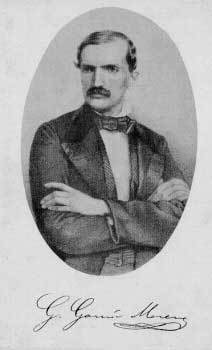
Michael was born in Cuenca, Ecuador in 1854 to a wealthy family. From birth he had a deformity that disabled him and prevented him from walking.

One day, as he sat in his wheelchair, he saw a rose in the garden. Above the flowers, he saw a beautiful lady wearing a white and blue dress, calling his name. His family, who could see nothing other than the rose, were astonished when he proceeded to get up and walk. From then on, Michel spoke with Our Lady and Jesus on a regular basis.

When the De LaSalle Brothers arrived in Ecuador in 1863 and set up a seminary, Michael enrolled, though his parents objected to his plans to become a lay brother rather than a priest.

Instead, they sent him to the seminary where his father taught, but within a few months he became seriously ill and had to return home.

His mother finally agreed to let him become a lay brother. In 1868, Michael entered the order of the De LaSalle Brothers and a year later was assigned to the Beaterio, a congregation of lay sisters dedicated to prayer and charitable work in Quito, where he specialized in preparing children for their First Communion for the next 26 years.

Transferred to Spain to assist in the translation of sacred documents, he caught a cold that developed into pneumonia, and he died on 9 February 1910. His body was returned to Ecuador, and his tomb in Quito soon became a shrine and place of pilgrimage.

The Ecuadorian government issued stamps bearing his likeness and erected a bronze and marble monument to him in Quito’s central park.

Upon the statue’s dedication in June 1965, there was a huge parade in which 30 000 school children participated.

Heaven, the Hope of Our Souls

Hope is deserting the earth more and more…

Everything is complicated; life grows more difficult and heavy, with an increasingly sombre economic outlook.

“But our citizenship is in heaven,” Saint Paul reminds us (Philippians 3:20)

And Saint Peter, Prince of the apostles, exhorts us to hope for our heavenly inheritance: “an inheritance that is imperishable, undefiled, and unfading, kept in heaven for you.” (1 Peter 1:3-4).

It is when we turn our eyes to Heaven that the shadows of this earth vanish and confidence and the joy of living are reborn in us.

Obviously, we are not referring to the blue skies (at times grey and fraught with threats) that envelop us. We are talking about heavenly Paradise, the place of eternal happiness where the just enjoy the vision of God, the company of the Blessed Mother, and of the angels and saints.

A Beacon That Illuminates Christian Life

The thought of Heaven is like a beacon that illuminates the whole Christian life. It reminds us of our ultimate end and gives us our bearings. Heaven is our ultimate end. This end should direct all our activity, and we must relate everything to it if we want to understand things properly.

Developing a desire for Heaven is obviously a way to more firmly assert the victory of one’s will when it is wavering between good and evil. The more the esteem of heavenly goods grows in the soul, the more despicable the delights of sin appear to be. Particularly at times of moral depression and serious temptation, we must strengthen all the energies of our soul and especially our attraction for eternal goods, which alone can counter our fascination with creatures.

Largely a Mystery

Heaven, however, remains largely a mystery to us.

Revelation only provides an idea of eternal happiness through images and symbols but does not describe what the heavenly Paradise is like. This is why, in His infinite mercy, God not only gave us through Revelation the essential elements to nourish our faith but also took steps to fulfil this need of human psychology.

Visions and Revelations

Thus, He granted certain souls private visions and revelations which, though not enjoying an official status and not adding anything to the deposit of the faith, do help enliven men’s devotion and increase their confidence. Evidently, such visions and revelations must be taken with the prudence and circumspection recommended by the Church so as to avoid the illusions of one’s own fantasy and the tricks of the devil.

In regard to Heaven, God has lifted a bit this mysterious curtain that separates us from the beyond by showing some privileged souls, in symbolic terms, some marvellous aspects of the heavenly Paradise. He wanted us not only to have the truths we must know about the Heavenly Mansion but also, as it were, to relish a taste of the boundless and endless happiness we will enjoy there.

A Vision of Saint John Bosco

Saint John Bosco had a vision of Heaven in the form of a dream, which he related to his boys during one of his famous “bedtime talks.”

In 1876, his recently-deceased disciple Saint Dominic Savio appeared to him in a dream. Saint John Bosco told his pupils:

As you know, dreams come in one’s sleep. So during the night hours of December 6, while I was in my room – whether reading or pacing back and forth or resting in my bed, I am not sure – I began dreaming.

Marvellous Garden

It suddenly seemed to me that I was standing on a small mound or hillock, on the rim of a broad plain so far-reaching that the eye could not compass its boundaries lost in vastness. All was blue, blue as the calmest sea, though what I saw was not water. It resembled a highly polished, sparkling sea of glass. Stretching out beneath, behind and on either side of me was an expanse of what looked like seashore.

Broad, imposing avenues divided the plain into grand gardens of indescribable beauty, each broken up by thickets, lawns, and flower beds of varied shapes and colours.

None of the plants we know could ever give you an idea of those flowers, although there was a resemblance of sorts. The very grass, the flowers, the trees, and the fruit – all were of singular and magnificent beauty. Leaves were of gold, trunks and boughs were of diamonds, and every tiny detail was in keeping with this wealth. The various kinds of plants were beyond counting.

Each species and each single plant sparkled with a brilliance of its own. Scattered throughout those gardens and spread over the entire plain I could see countless buildings whose architecture, magnificence, harmony, grandeur and size were so unique that one could say all the treasures of earth could not suffice to build a single one. If only my boys had one such house, I said to myself, how they would love it, how happy they would be, and how much they would enjoy being there! Thus ran my thoughts as I gazed upon the exterior of those buildings, but how much greater must their inner splendour have been!

An Enchanting Melody

As I stood there basking in the splendour of those gardens, I suddenly heard music most sweet – so delightful and enchanting a melody that I could never adequately describe it. A hundred thousand instruments played, each with its own sound, uniquely different from all others, and every possible sound set the air alive with its resonant waves.

Blended with them were the songs of choristers.

In those gardens I looked upon a multitude of people enjoying themselves happily, some singing, others playing, but every note, had the effect of a thousand different instruments playing together. At one and the same time, if you can imagine such a thing, one could hear all the notes of the chromatic scale, from the deepest to the highest, yet all in perfect harmony. Ah yes, we have nothing on earth to compare with that symphony.

Deepest Pleasure

One could tell from the expression of those happy faces that the singers not only took the deepest pleasure in singing, but also received vast joy in listening to the others. The more they sang, the more pressing became their desire to sing. The more they listened the more vibrant became their yearning to hear more…

As I listened enthralled to that heavenly choir I saw an endless multitude of boys approaching me. Many I recognized as having been at the Oratory and in our other schools, but by far the majority of them were total strangers to me. Their endless ranks drew closer, headed by Dominic Savio, who was followed immediately by Father Alasonatti, Father Chiali, Father Guilitto and many other clerics and priests, each leading a squad of boys…

A Most Radiant Joy

Once that host of boys got some eight or ten paces from me, they halted. There was a flash of light far brighter than before, the music stopped, and a hushed silence fell over all. A most radiant joy encompassed all the boys and sparkled in their eyes, their countenances aglow with happiness. They looked and smiled at me very pleasantly, as though to speak, but no one said a word.

Dominic Savio stepped forward a pace or two, standing so close to me that, had I stretched out my hand, I would surely have touched him. He too was silent and gazed upon me with a smile…

At last Dominic Savio spoke.

“Why do you stand there silent, as though you were almost devitalized?” he asked. “Aren’t you the one who once feared nothing, holding your ground against slander, persecution, hostility, hardships and dangers of all sorts? Where is courage? Say something!”

Loving Warmth

I forced myself to reply in a stammer, “I do not know what to say. Are you Dominic Savio?”

“Yes I am. Don’t you know me anymore?”

“How come you are here?” I asked still bewildered.

Savio spoke affectionately.

“I came to talk with you. We spoke together so often on earth! Do you not recall how much you loved me, or how many tokens of friendship you gave me and how kind you were to me? And did I not return the warmth of your love? How much trust I placed in you! So why are you tongue-tied? Why are you shaking? Come ask me a question or two!”

Abode of Happiness

Summoning my courage, I replied, “I am shaking because I don’t know where I am.”

“You are in the abode of happiness,” Savio answered, “where one experiences every joy, every delight.”

“Is this the reward of the just?”

“Not at all! Here we do not enjoy supernatural happiness but only a natural one, though greatly magnified.”

“Might I be allowed to see a little supernatural light?”

“No one can see it until he has come to see God as He is. The faintest ray of that light would instantly strike one dead, because the human senses are not sturdy enough to endure it.”

Beatific Vision: The Exceedingly Great Reward

Here ends the narrative of Saint John Bosco’s dream.

In this vision, through symbols, the saint was only shown natural aspects of heavenly happiness. He was not able to contemplate the essence of heavenly happiness, which is the beatific vision. Even the most beautiful material things are only symbols of spiritual things; and the pleasure they procure us cannot compare with spiritual pleasures.

Saint Paul said that on earth we see God as in a mirror, however in heaven we will see Him face to face (1 Corinthians 13:12).

Since “God is charity” (1 John 4:8) we cannot know Him in the degree and intensity of the beatific vision without loving Him to the greatest degree and capacity of our perfected nature.

Participating in His essence, through this intuitive knowledge, we participate in the Love that is His very nature. God Himself promised Abraham that He would himself be his “reward exceedingly great” (Gen. 15:1).

The desire for Heaven orients our lives to attain this happiness that our souls long for. This is the reason why Holy Mother Church, in one of the rogations of the Litany of All Saints, has us beg for a desire of celestial things: “Raise our minds to desire the things of heaven, Lord, hear our prayer.”

An Anchor for Our Souls

Furthermore, the desire of heaven increases our hope, the theological virtue whereby we desire and expect to attain eternal bliss. This virtue is so important that Saint Paul presents it as an essential part of one’s armour to face great struggles: “the helmet that is hope for salvation” (1Tess. 5:8). And he calls it “an anchor of the soul” (Heb. 6:19).

Amid the thick clouds that figuratively cover the earth, let us think more about Heaven and thus enkindle our hope.

Written by: Luiz Sérgio Solimeo

Our Lady of Hope of Pontmain

Feast Day January 17


It was in the winter of 1871 in the village of Pontmain, France, Eugene Barbedette was busy in his father’s barn helping prepare the animal feed. He stood briefly in the open doorway, admiring the beautiful evening. Suddenly the gaze of the 12-year-old was held there, for opposite the barn and in a framework of stars, stood a beautiful lady – motionless – smiling at him.

“Do you see anything?” he shouted to the others, “Look, over there!”

“Yes,” cried his brother Joseph, “a beautiful lady dressed in a blue robe with golden stars, yes, and blue shoes with golden buckles…and, she has a golden crown which is getting bigger, and a black veil.”

Since the father did not see her, he told the boys to get on with their work; then curiously, he asked, “Eugene, do you still see anything?”

“Yes, she’s still there,” the boy answered and ran to fetch his mother; she saw nothing, but with a woman’s intuition, she thought it might be the Blessed Virgin and assembling the family gently, all prayed five Paters and Aves in honour of the Mother of God. She called for a nun at the convent next door, who brought her two little charges with her, the later, Francoise and Jean Marie, reaching the door of the barn, called out, “Oh, look at that lovely lady with the golden stars!” and clapped their hands with delight.

The news spread quickly, people gathered, with them the cure, M. Guerin. The Magnificat was intoned, and Eugene shouted, “Look what she is doing!”

Slowly a great white streamer unfolded and in large letters they read: “Pray, my children, God will answer your prayers very soon. He will not allow you to be touched.”

The cure then intoned the hymn: “My Sweet Jesus…” At that a red cross with the wounded body of Christ appeared before the Virgin, who held it. At the top in large red letters was written, “Jesus Christ.”

The crowd burst into tears, while the cure ordered night prayers to be said; a white veil hid the vision, while our Lady smiled at the children, a smile which haunted them all through life with its beauty. Something of the sorrow of farewell was depicted on the faces of Eugene and Joseph, for the cure said quickly, “Can you still see anything?”

“No, it is quite finished,” they answered.

At the moment the message was being written in the sky, a messenger passing in front of the crowd had shouted, “You may well pray, the Russians are at Laval.” But they never entered it.

On the 17th of January, at six o’clock at night, the very hour the Virgin appeared to the children of Pontmain, the division of soldiers, without apparent reason, received the order to retire.

On the 28th of January, the armistice was signed at Versailles. After long and searching inquiry, Mgr. Wicart, the Bishop of Laval, proclaimed the authenticity of the vision, and at the very spot where Our Lady had appeared, a basilica was erected in honour of Our Lady of Hope of Pontmain. There the Queen of Heaven receives her countless children and gives them fresh hope in their trials, as she gave France peace in her hour of need.

The basilica is a magnificent structure in the 13th century style, and one may still see the barn where Eugene and Joseph worked when Mary appeared.

*From The Woman in Orbit

As seen on www.roman-catholic-saints.com
Pope St Damasus I

Patron Saint of Archaeologists and Against Fever

Feast 11 December 

Damasus is said to have been of Spanish origins, though he was born in Rome. Never married, he was a deacon until the death of Pope Liberius in 366 when his name was put forth for bishop of Rome.

Although his nomination was violently opposed, he was elected. As late as 378 he still had to clear himself of malicious slanders levelled at him by the opposition. He did so before Emperor Gratian and the Roman Synod.

Pope Damasus had to fight many heresies, but in 380 he had the satisfaction of seeing Theodosius I of the East and Gratian of the West proclaim Christianity, as professed by the bishops of Rome and Alexandria, the religion of the Roman State.

Gratian, on the petition of the Christian Senators, and with the support of the Pope, had the altar of Victory removed from the senate. The young Emperor also laid aside the title of “Pontifex-Maximus” bestowing it upon Pope Damasus I, who became the first Pope in history to hold this title of “Supreme Pontiff.”
St. Damasus is also remembered for his special care of the relics of the martyrs and of the catacombs of Rome that housed those relics.

St Jerome was appointed secretary to St Damasus in 382.

Dying on 11 December 384, he was at first laid to rest in the cemetery of St. Callixtus. He had an epitaph placed on his tomb which ends thus:

I, Damasus, wished to be buried here, but I feared to offend the ashes of these holy ones.