Winning the heart and soul of South Africa for Mary by spreading the Fatima Message

Winning the heart and soul of South Africa for Mary by spreading the Fatima Message

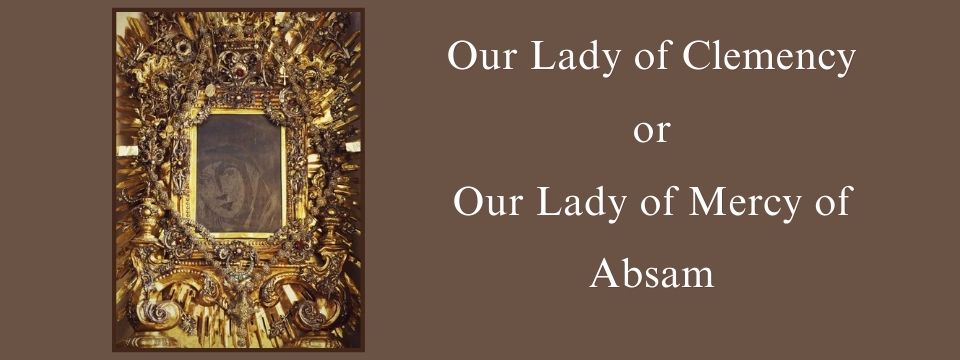
Our Lady of Mercy of Absam

Feast Day: 9 January


The shrine is probably the only one in the world where Our Lady’s shrine is enclosed in glass. It dates from the late 18th century.

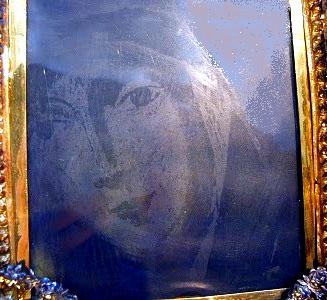
On a dark snowy day in 1797, Rosina Bucher, a young girl of the village of Absam near Innsbruck, was sitting by the window sewing in her farmhouse. It was between three and four in the afternoon and the light was just beginning to fade. Rosina looked up and saw a face in the window pane. She looked closely, not sure that she saw right, and finally called her mother.

Others, including the parish priest, were called in to observe the strange happening. All agreed that it was a face, the face of the Mother of Sorrows. It was turned slightly and there was a strange expression on it.

The window was made up of several small panes of glass quite dark in colour. They removed the pane of glass with the picture on it, which was on the inside of the double window. After they had examined the glass, it was sent to experts in painting and glasswork. Here it was discovered that the face disappeared when water was put on the glass, but came back as soon as the glass was dry. They analysed it chemically, and could not discover by what process the picture had been placed there.

Rosina’s mother thought it was an omen of trouble. The parish priest, on the contrary, felt that Our Lady’s blessing must rest on the house. He asked her to let him have the picture for the Church. It can now be seen at St. Mary’s Basilica Absam, which quickly became a popular shrine and the most important site of Marian pilgrimage in the Austrian federal state of Tyrol.

Many miracles have been recorded from the pilgrims who prayed there. The church was raised to the status of a Minor Basilica in June of 2000 by Pope John Paul II due to its popularity as a site of pilgrimage.

Our Lady of Clemency of Absam is still a popular place of pilgrimage, but the most popular date is the anniversary of the discovery of the picture, January 17th. On the 17th of each month there is a celebration of the discovery of the image. The picture is quite small, the size of a small pane of glass. It is not at all pretty, and popularly known as Our Lady of Mercy and Clemency of Absam – clemency, because Mary’s heart is filled with love and kindness to those who pray at this shrine and implore her help.
Our Lady of Mercy Absam


As seen on https://www.roman-catholic-saints.com/our-lady-of-clemency.html
Our Lady of the Bowed Head

Our Lady of the Bowed Head

Feast Day: 7 February


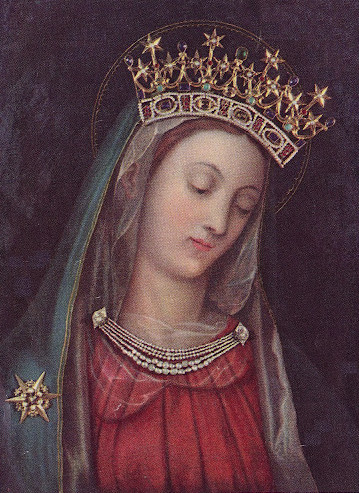
Among the many miraculous images of the Mother of God through which she deigns to grant her favours, there is one in the monastery church of the Carmelites in Vienna, entitled the Mother of Grace, or Our Lady of Grace, also known also as Our Lady of the Bowed Head.

In 1610 a Carmelite, Dominic of Jesus-Mary, found among the votaries of an old altar in the monastery church of Maria della Scala in Rome, an oil painting of the Mother of God, dust-covered and somewhat torn, which grieved him. Taking it into his hands, he shook the dust off it, and kneeling down venerated it with great devotion.

He had the picture renovated and placed it on the shelf in his cell, where he made it the object of his love and supplications in favour of those who came to him in their necessities and afflictions.

One night while he was praying fervently before the picture, he noticed that some dust had settled on it. Having nothing but his coarse woollen handkerchief he dusted it with that and apologized,

“O pure and holiest Virgin, nothing in the whole world is worthy of touching your holy face, but since I have nothing but this coarse handkerchief, deign to accept my good will.”

To his great surprise, the face of the Mother of God appeared to take on life, and smiling sweetly at him, she bowed her head, which thereafter remained inclined.

Fearing he was under an illusion, Dominic became troubled, but Mary assured him that his requests would be heard: he could ask of her with full confidence any favour he might desire. He fell upon his knees and offered himself entirely to the service of Jesus and Mary, and asked for the deliverance of one of is benefactor’s souls in purgatory. Mary told him to offer several Masses and other good works; a short time after when he was again praying before the image, Mary appeared to him bearing the soul of his benefactor to Heaven. Dominic begged that all who venerated Mary in this image of Our Lady of Grace might obtain all they requested. In reply the Virgin gave him this assurance:

“All those who devoutly venerate me in this picture and take refuge to me will have their request granted and I will obtain for them many graces; but especially will I hear their prayers for the relief and deliverance of the souls in purgatory.”

Dominic soon after placed the image into the church of Maria Della Scala so that more devotees of Mary could venerate it. Many wonderful favours were obtained by those who honoured and invoked Mary here. Reproductions were made of Our Lady of Grace and sent to different parts of the world.

After the death of Dominic, the original painting was lent to Prince Maximilian of Bavaria. He gave it to the discalced Carmelites in Munich in 1631; they gave it to Emperor Ferdinand II of Austria and his wife Eleanore. After Ferdinand’s death, Eleanore entered the Carmelite convent in Vienna and took the picture with her. During the succeeding years the image was transferred to various places.

Today it is in the monastery church of Vienna Doabling. On 27 September 1931 it was solemnly crowned by Pope Pius XI – its 300th anniversary of arrival in Vienna.

From: The Woman in Orbit