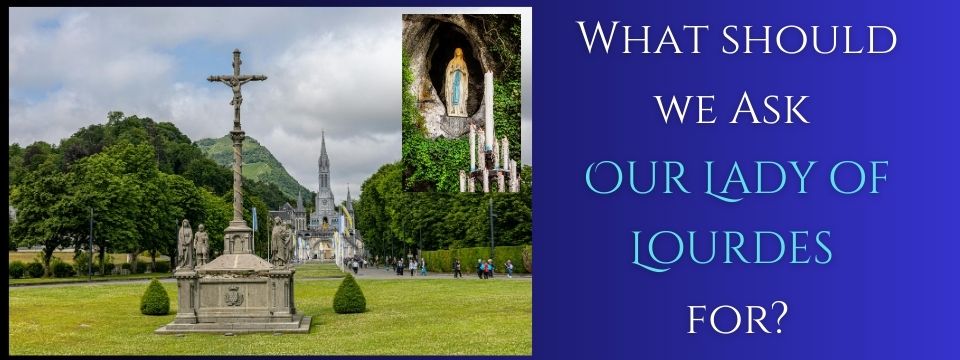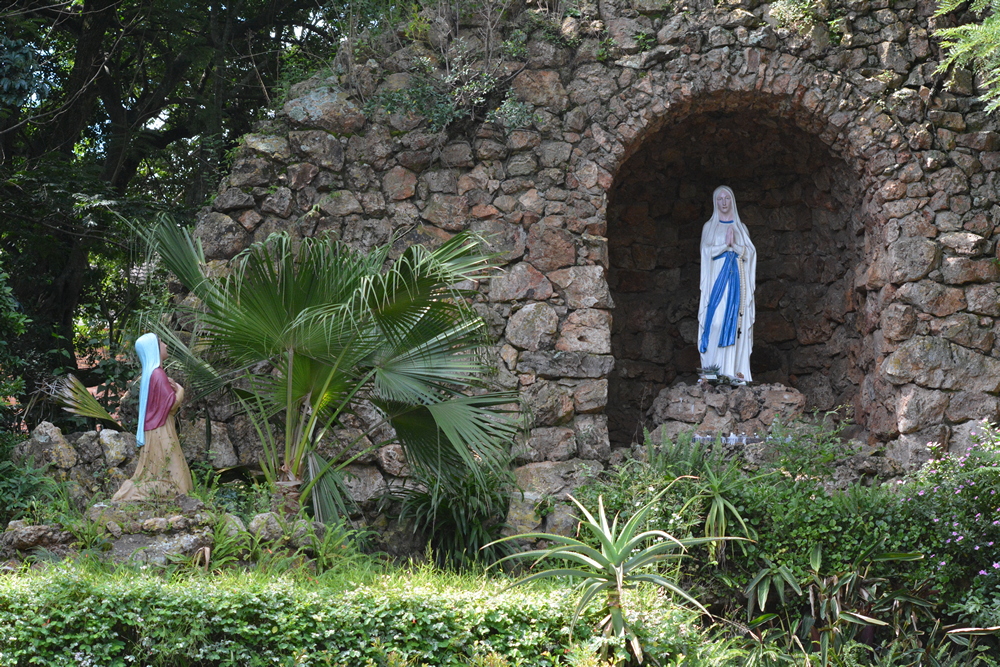
Recent confirmation of the cure, officially recognized as miraculous, of British Royal Navy soldier John Traynor.
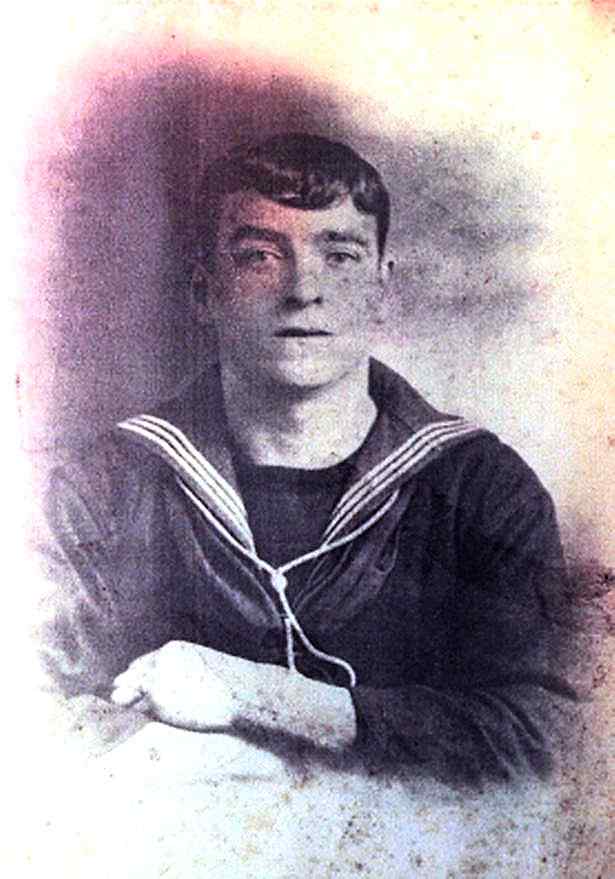
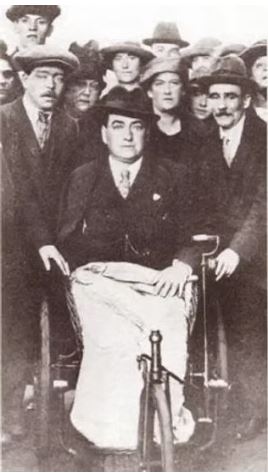
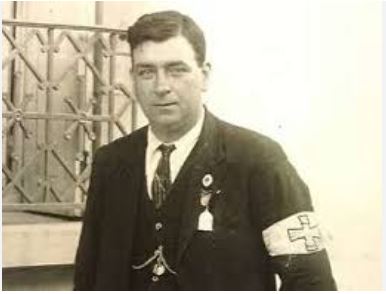
Recent confirmation of the cure, officially recognized as miraculous, of British Royal Navy soldier John Traynor. On 8 December 2024, the Feast of the Immaculate Conception, Archbishop Malcolm McMahon of Liverpool (England) announced the miraculous healing of British Royal Navy soldier John Traynor [photo], on the 81st anniversary of his death.
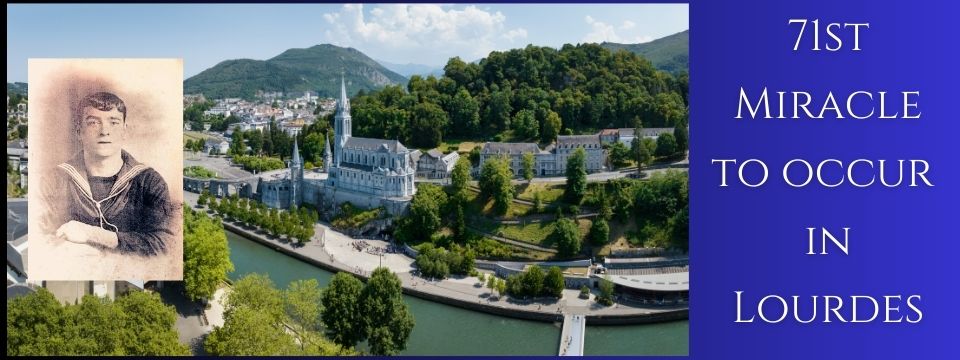
This was the 71st miracle to be approved at Lourdes, after Dr. Alessandro de Franciscis requested a review of the Traynor case last year, which was conducted by the English physician Dr. Kieran Moriarty, a member of the International Medical Committee of Lourdes.
In his research, Dr. Moriarty discovered several folders in the Lourdes archives, which included the testimonies of the three doctors who examined Traynor before and after his cure, along with other evidence.
This led to Traynor’s case being declared inexplicable by medical science and considered miraculous by the Church.
Archbishop McMahon declared: “Given the weight of the medical evidence, the testimony of John Traynor’s faith and his devotion to Our Lady, it is with great joy that I declare that the healing of John Traynor from multiple serious medical conditions should be recognized as a miracle performed by the power of God through the intercession of Our Lady of Lourdes.”
The fact that the Archbishop of Liverpool declared, after so much time, that the cure of the English soldier could be considered miraculous, shows the Church’s rigor in approving a miracle. To get an idea of this, note that the Lourdes Medical Bureau, responsible for analysing possible cures considered miraculous, has registered, since 1905, seven thousand “medically inexplicable” cures. However, of these, only 70 were declared “miraculous” by the Church.
From a deeply Catholic family
John Traynor was born in Liverpool in 1883 to an Irish mother. She passed away when he was still young. In his testimony presented on the sanctuary’s website, Traynor states that “his devotion to the Mass and Holy Communion and his trust in the Blessed Mother remained with him as a fruitful memory and example.” For his mother was, at that time, “a daily communicant when few people were.”
Consequences of the battles
At the start of the First World War (1914-1918), while participating in the siege of Antwerp as a member of the Royal Navy Reserve, John Traynor was hit in the head by shrapnel while trying to carry an officer out of the camp. Recovering quickly, he returned to service.
On 25 April 1915, he participated in an amphibious landing on the shores of Gallipoli, as part of an unsuccessful attempt by British and French troops to capture the peninsula in Ottoman-occupied Turkey. Traynor was one of the few soldiers to reach the shore that first day, despite machine-gun fire from Turkish forces positioned atop steep cliffs along the beach. For over a week he remained unharmed as he attempted to lead the small contingent that had survived the attack.
However, on May 8th, the fearless soldier was hit in the head, chest, and arm by a burst of machine gun fire during a bayonet charge. His injuries left his right arm paralyzed and made him susceptible to epileptic seizures. Doctors attempted several surgeries to repair the damaged nerves in his arm and treat the head injuries believed to be the cause of his epilepsy, but without success.
Having been deemed “completely and incurably incapacitated,” eight years after the battle Traynor was assigned to be admitted to a hospital for the incurably ill. He, however, ignoring the pleas of his wife, doctors, and priests, insisted on participating in his parish’s pilgrimage to Lourdes from 22 to 27 July 1923.
Effect of bathing in the baths
During the first three days of the trip, Traynor was seriously ill. Once in Lourdes, despite the resistance of his caregivers, as he states in his testimony, he “managed to be bathed nine times in the water of the grotto’s baths”.
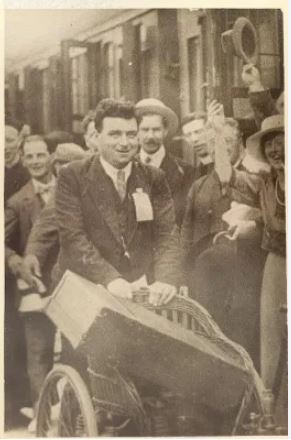
On his second day in Lourdes, the soldier suffered a severe epileptic seizure while being taken to the bath. He says: “Blood was running from my mouth, and the doctors were very alarmed.” But when they tried to take him back to his quarters, Traynor refused, pulling the wheelchair brakes with his good hand. Then, he states in his testimony, “they took me to the bath and bathed me in the usual way. I never had another epileptic seizure after that.”
When he was at the bath the next day, he felt that his right leg, which had been paralyzed until then, became “violently agitated,” and he felt as if he had regained the use of it. As he was due to return to the Eucharistic procession, his caregivers, believing he was having another epileptic seizure, rushed him to the Rosary church.
There, when the Archbishop of Reims passed by him with the Blessed Sacrament, his right arm was also “violently shaken.” Then he broke his bandages and made the Sign of the Cross, for the first time in eight years.
Feeling healed, the next morning Traynor jumped out of bed and ran to the grotto. Before the image of the Virgin, he said:
“My mother always taught me that when someone asks Our Lady for a favour or wishes to show Her some special veneration, they must make a sacrifice.” Then, he continues, “I had no money to offer, as I had spent my last shillings on rosaries and medals for my wife and children. But, kneeling before the Blessed Mother, I made the only sacrifice I could think of: I decided to quit smoking.”
Madalaine Elhabbal concludes in the article on which we based our study:
“On the morning of 27 July, Traynor was examined by three doctors, who found that he had regained his ability to walk perfectly, as well as the full use and function of his right arm and leg. The wounds on his body had healed completely and his epileptic seizures had ceased. An opening in his skull, created during one of his surgeries, had also decreased considerably.”
“One of the official reports issued by the Lourdes Medical Bureau on 2 October 1926 — later discovered by Moriarty — states that ‘Traynor’s extraordinary cure is absolutely beyond and above the powers of nature’.”
Traynor had three children after his healing; he named one of his daughters Bernadette. John Traynor is believed to be the first British Catholic to be healed at Lourdes, according to the sanctuary’s website.
written by: Afonso de Sousa
Source: Catolicismo Magazine, February 2025
Notes:
Healing at Lourdes of British World War I soldier declared ‘miraculous’ By Madalaine Elhabbal Catholic News Agency Dec 10, 2024. https://www.catholicnewsagency.com/news/260945/healing-at-lourdes-of-british-world-war-i-soldier-declared-miraculous?utm_source=newsletter&ut m_medium=email&utm_campaign=catholic_news_healing_at_lourdes_of_british_world_war_i_soldier_officially_declared_miraculous&utm_term=2024-12-10