Winning the heart and soul of South Africa for Mary by spreading the Fatima Message

Winning the heart and soul of South Africa for Mary by spreading the Fatima Message

Abbot Franz Pfanner & Devotion to Our Lady

Abbot Franz Pfanner, a man of indomitable spirit, imbued with an incisive knowledge of the human soul and leaving in his wake a vast legacy of Missions, churches, schools and convents, is rightly called “The Apostle of South Africa.” His zeal was limited by neither time nor distance as he established an incredible network of Missions spanning Kwa-Zulu Natal and eventually also further afield.

The scope and depth of his apostolic outreach not only speaks volumes about the man, but the sheer speed at which he moved and his vast accomplishments are perhaps unsurpassed in the rich Missionary annals of Church history…

Who knows what further enormous successes might have been his legacy had history taken a different turn?

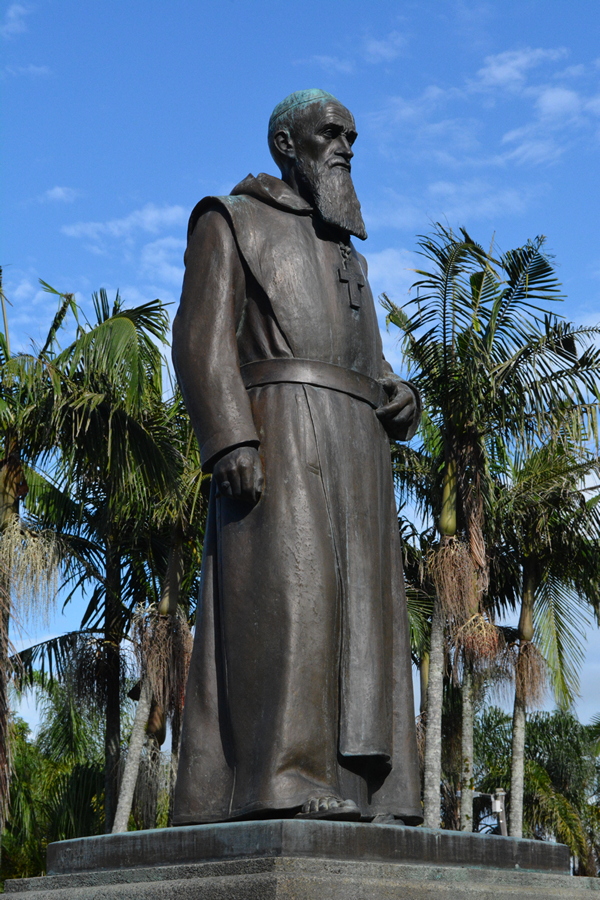
How many pious souls have prayed and pleaded before the bronze bust, which adorns his tomb at Mariannhill? How many sighs have touched heaven imploring recognition for his extraordinary zeal and innumerable achievements?

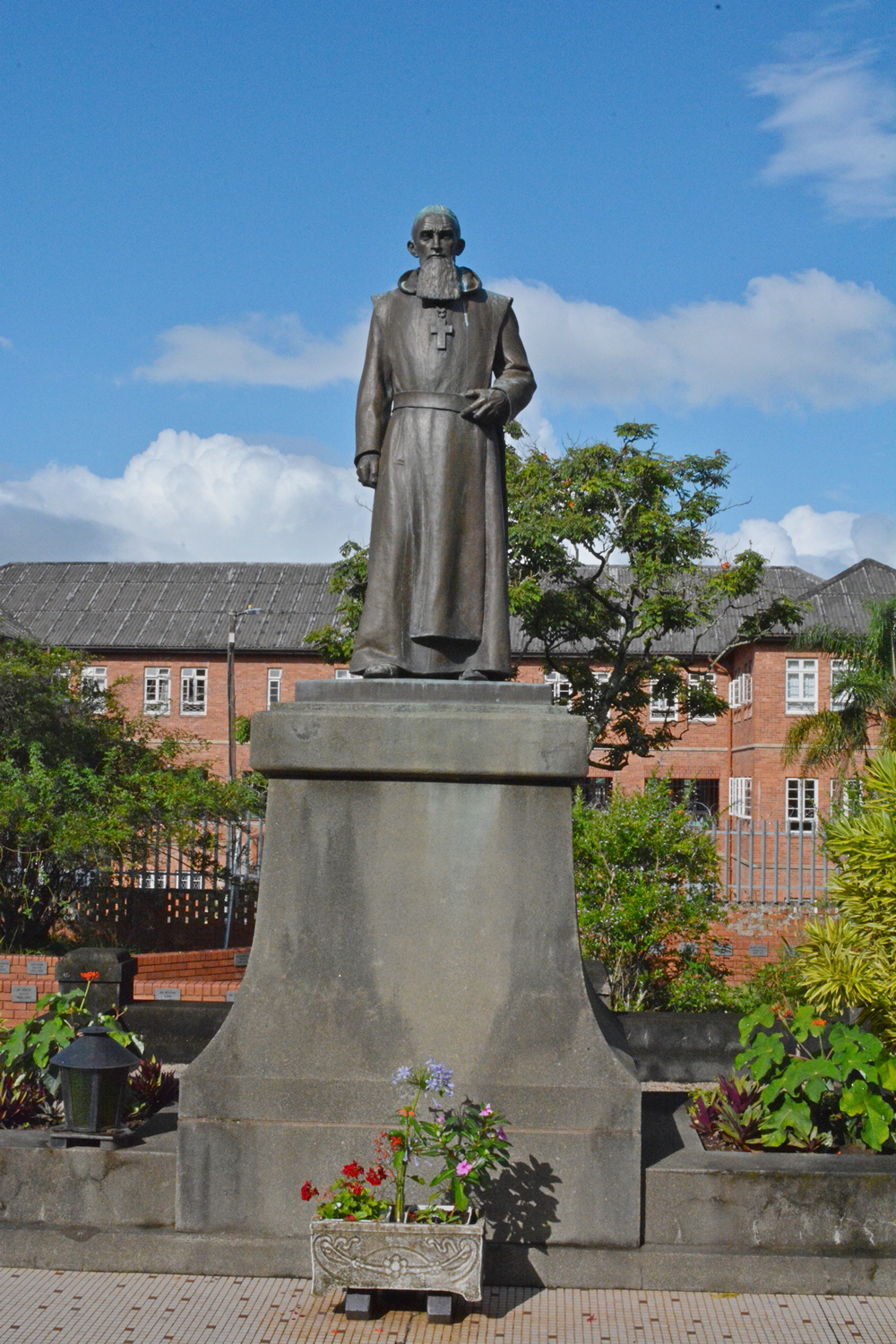
Abbot Pfanner statue in graveyard Mariannhill KZN

Mariannhill, deriving its name from that of Mary and St Anne, is where the story begins and has remained the focal point of devotion for those convinced of this Servant of God’s sanctity.


The stones, however, could remain silent no more and by the grace of Almighty God the process by which the Cause for his Canonization could be accepted by Rome, is well established.


The future Abbot was born a twin on 21 September 1825 of parents Franz Anton Pfanner and Anna Maria Fink. He was baptized Wendelin Pfanner and his childhood was characterized more by pranks and rascally actions than piety. Nevertheless, he was determined to become a priest and despite many challenges and ill health, was eventually ordained on 27 July 1850. He held a number of positions, including parish priest, but set his heart on joining a monastic order. In 1863, he made a pilgrimage to the Holy Land in search of guidance.


On returning from this pilgrimage and with his Bishop’s blessing, he “departed” the world for the Trappist Monastery, Mariawald, in Germany. Here he received the name which he would henceforth carry – Father Franz Pfanner! He had joined the Reformed Cistercians (Trappists), sons of Saint Bernard who was an ardent devotee of the Blessed Virgin Mary and author of the Memorare. In the tradition of St Bernard’s Cistercians, the monks honoured Mary in the most exalted way. They sang her praises, signed with her name, dedicated all their houses to her, and endeavoured to imitate her virtues. Fr Pfanner, developed a deeply Marian spirituality. Mary taught him to “do whatever He tells you,” (John 2:5). She guided him in unexpected ways.


Father Franz Pfanner excelled in this Monastery, becoming proficient and thoroughly adept at all sorts of occupations like tree felling for timber, road making, irrigation, etc. He also rose quickly to positions of authority. Fr Pfanner never claimed any refined diplomatic skills and was inclined to a somewhat volatile temperament. He could also be a trifle brusque and abrasive. He was generally a man in a hurry – he would run, not walk and soon became Sub-Prior, exacting from his fellow monks only as much as he would do – which was impossible to emulate! All these character traits played out in different ways and were to bedevil some of his actions and status in later life. He was a workaholic and tireless in enduring prolonged physical labour.

However, due to his somewhat impetuous nature, he was not long at Mariawald and soon found himself seeking a new home… It was then that he was sent to establish a Monastery in Turkish Bosnia in 1869, which chapter in his life would alone require a book…

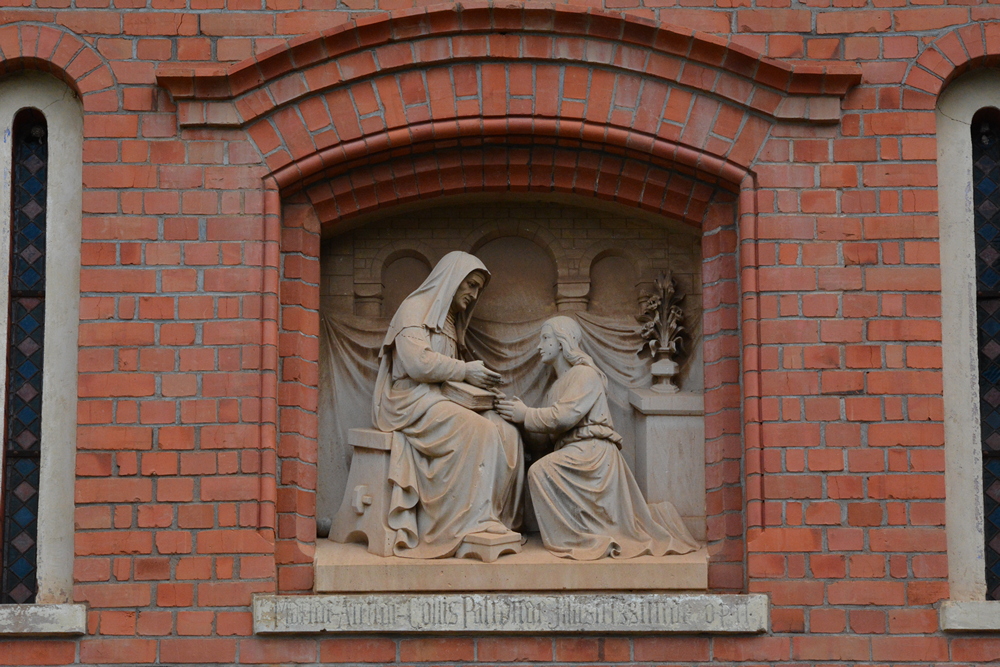
St Anne and Mary at Entrance to Mariannhill
Mariastern Abbey
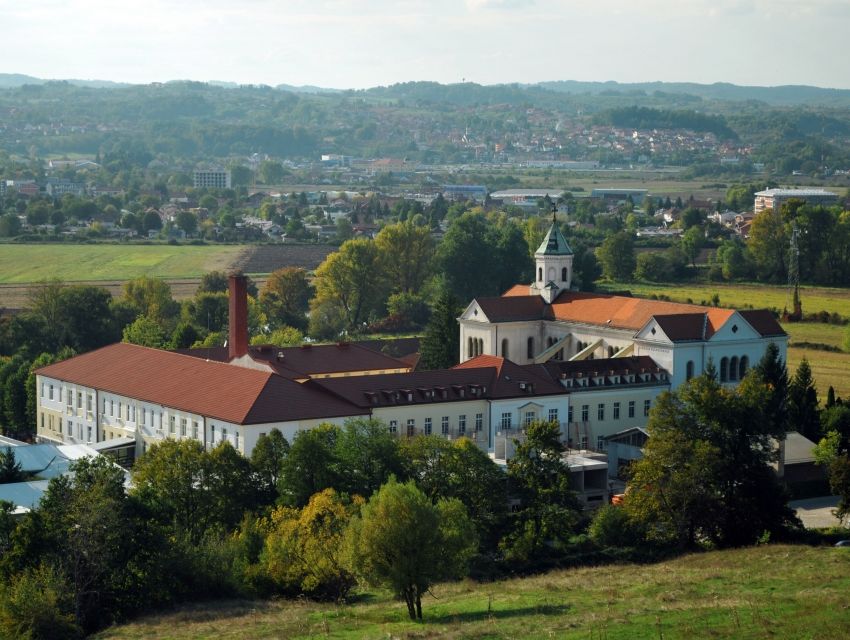
Mariastern Monastery built by Abbot Franz Pfanner in Bosnia

This was perhaps providential, because the absolutely magnificent Monastery called Mariastern, which he built from scratch, was perhaps the blueprint and invaluable pre-history for the work which would later be his crowning legacy in South Africa. It took ten years to establish a thriving monastery with all that this encompasses. 1872 saw the solemn profession and appointment of Fr Franz Pfanner as titular Prior of Mariastern.


Prior Pfanner later became aware of a peculiar event: It was reported that a seer in the Alsace region of Germany, though ignorant of his identity, told him that she saw the Mother of God blessing him with a star and holding a most beautiful crown above his head. He immediately understood that Mary was blessing Mariastern and inviting him personally to strive for the crown she offered. Prior Pfanner stated, “It seemed as if I had heard for the first time that our future reward will be a glorious crown. My resolution…never to spare myself but give even my blood… became like iron and steel.” If this story was indeed true (and Prior Pfanner had every reason to accept its authenticity), the crown for which he strove was destined to be a heavy one and marked with all kinds of trials, misunderstandings, deprivations and eventual exile…

In September 1879, at the General Chapter of the Trappist Order, he was informed that Mariastern was to be made an Abbey and he the first Abbot. It was also revealed that a South African Bishop, James David Ricards, would attend the Chapter in search of Trappist monks for the South African mission fields.

Franz Pfanner’s thoughts of mission work had long faded – his entire energy, focus and future was now fixed on his beloved Monastery, Mariastern. Bishop Ricards’ stirring plea at the Chapter was greeted by the assembled monks with silence; the distance, uncertainty and fear of the unknown was intimidating and inhibited a positive response. Then one voice broke the silence with an enigmatic “If no one is willing to go, I will go.” It was the clear quiet voice of calm, certainly inspired by the Holy Ghost, and evidencing the smile of Providence on the fertile mission soil of our dear country. These few words would undoubtedly haunt the great Abbot many times down the line when his actions, aspirations and intentions were misconstrued and misunderstood, resulting in rejection and exile – and that long, dark night of the soul to which so many of the Elect are subjected…

Thus it was that these few words catapulted Abbot Franz Pfanner into South Africa on an odyssey that would rightly see him considered the “Apostle to the Zulus.”

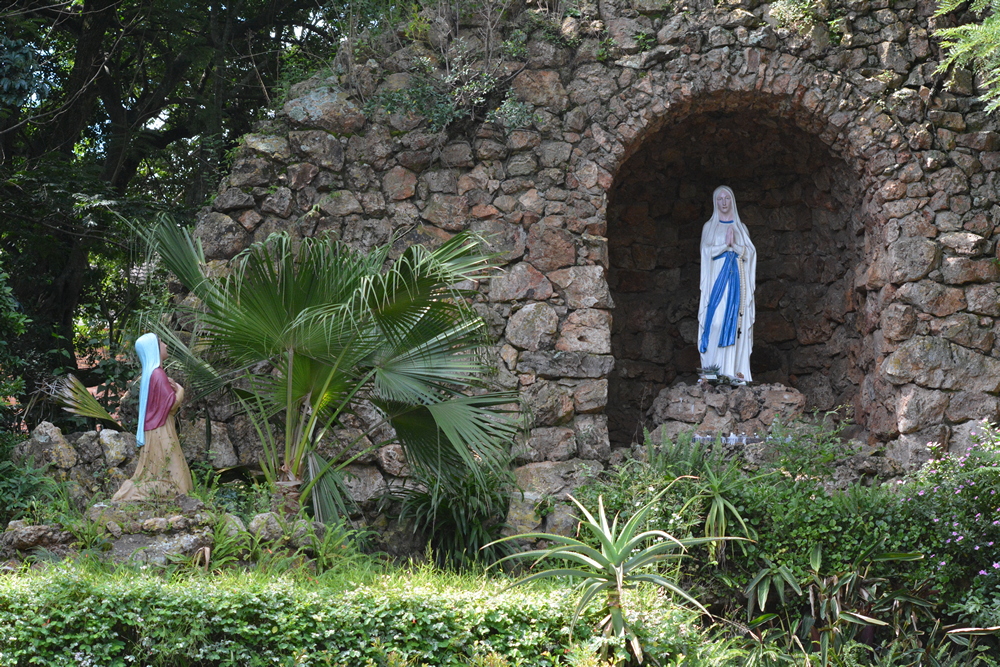
Our Lady of Lourdes Shrine at Mariannhill
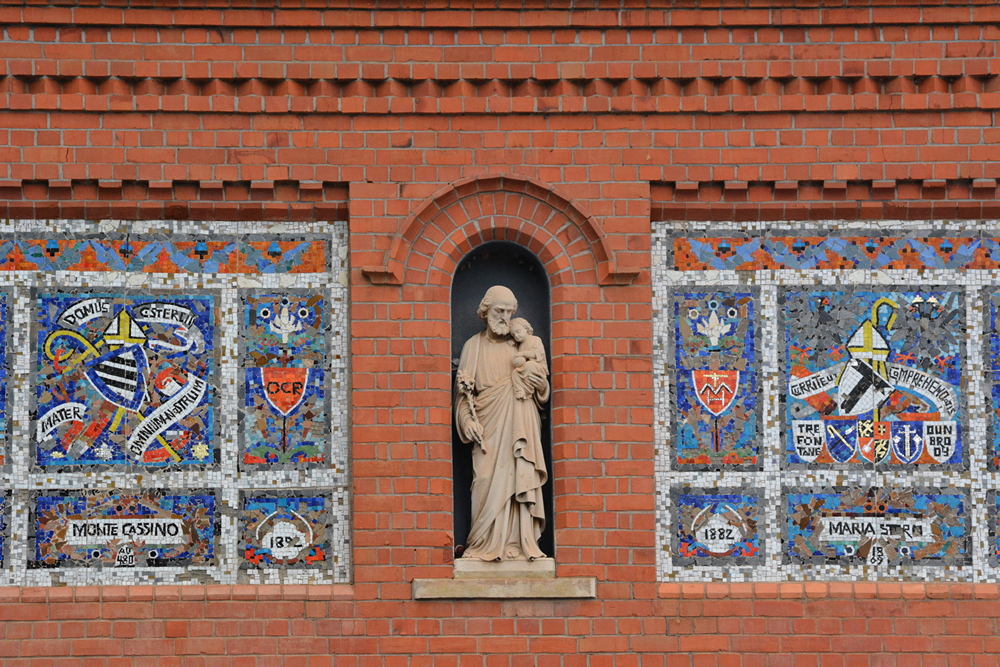
St Joseph at the entrance to Mariannhill


Besides the evidently extraordinary natural capacities with which Abbot Pfanner was endowed, we can surmise that he had some other great spiritual sustenance which nourished his zeal for the spread of God’s Kingdom. Much seems to suggest that the great drive he evidenced for the conversion, education and salvation of those whom Providence placed in his path, stemmed from his great devotion to the Sacred Heart of Jesus Christ and a tender devotion to Our Lady, St Joseph and St Anne.

Indeed, amongst his cherished devotions, the love for the sweet Mother of Christ was prominent. It was a deep, childlike and profound love, one of admiration and also gratitude – a love he was not afraid to share. He was a lifelong devotee of the Holy Rosary, having grown up with this as a family devotion. Sister Pacifica, a pioneer sister, testifies, “I always saw him praying the Rosary.”

He also enjoyed frequent excursions to the various European Marian Shrines near and far. Indeed, before entering the Seminary the young man paid a visit to Our Lady of Einsiedeln, asking her to make him a good priest. Many of these shrines and Marian places of interest would later see their names adopted in dedicating new Missions in South Africa to the service of God under the protection of Our Lady. In Haselstauden he acquired and nourished a profound love of Our Lady of the Visitation; He made his vows on the Feast of the Presentation; volunteered to go to Africa on the Feast of the Most Holy Name of Mary; and died under the protection of Mary, Help of Christians. In addition, the faithful Spouse of Our Lady, St Joseph, was everything to him: treasurer, building supervisor, pilot, novice director, and guardian. Like the Egyptian Pharaoh to Joseph in the Old Testament: “he entrusted his entire household to him.”

It was a Trappist custom to dedicate all their establishments to Mary with the ardent desire of St Bernard’s “De Maria numquam satis.” (Of Mary, never enough.) Indeed, turning to Our Lady in his every need and urging others to love her, was a direct result of Abbot Pfanner’s profound love for Our Blessed Mother. In his early years as a regular parish priest, he would encourage the mothers to model their lives on Mary and tried to inculcate in the youth a real devotion to Our Lady. Indeed, his efforts culminated in a real and vibrant rejuvenation of parish life for which success he credited the maternal intercession of Our Lady…

This period of history was marked by a beautiful Marian revival which was short-lived, but nevertheless had ramifications in many countries. It was the time of the great 1854 proclamation of Pius IX which declared the Immaculate Conception a dogma of our Faith. This dogma was shortly afterwards confirmed by the apparitions of Our Lady of the Immaculate Conception at Lourdes in 1858!

In Abbot Pfanner’s own words: “That Mary was immaculately conceived was not her merit, but pure grace. That she kept this grace spotless was her virtue and her personal merit. She preserved the grace of being immaculate with her unblemished love.

“When tempted by bad thoughts, impatience or anger, one should immediately renew one’s awareness of the presence of God or picture Our Lady. This helps one to think and act differently. If we were to live now as if we would actually see her, we would do nothing to displease her. She will surely come to us in the last decisive hour. What a blessing it would be, if on the verge of death Mary entered one’s last thought.”
Reichenau Mission
Oetting Mission
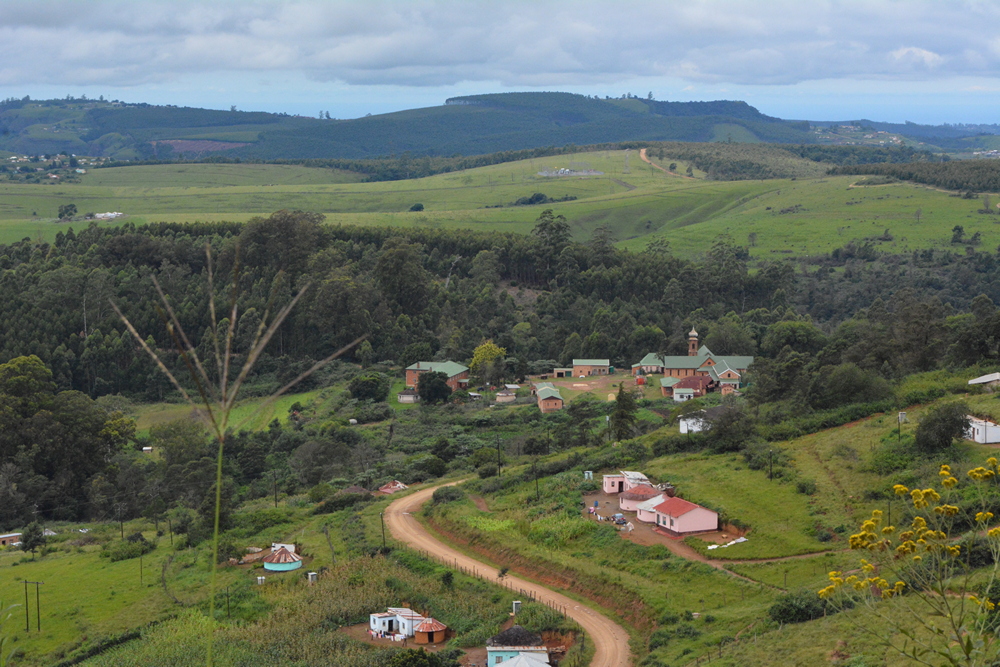
Centecow Mission

Abbot Pfanner named all the missions he founded after Mary, many of which derived in turn from miraculous shrines in various parts of Europe. These found their origin in the massive legacy and wealth of titles and attributes given to Our Lady over the course of history: Maria Hilf (Mary Help), Maria Trost (Mary Comfort), or from the names of shrines built in her honour: Kevelaer and Reichenau (Germany), Einsiedeln (Switzerland), Mariazell (Austria), Lourdes, Clairvaux, Citeaux (France) and Centocow (Poland), to name but a few. The establishment of this vast complex of Missions in South Africa, dedicated almost entirely to the local people, initiated a major breakthrough in the evangelization of South Africa and imprinted a Catholic stamp on parts of our country which would never be erased. It also established a major part of the pioneering Church in our country on Trappist foundations and, therefore, rooted entirely in Marian spirituality. May this foundation be rediscovered and reignited, opening the road to the conversion of our country to the Immaculate Heart of Mary – from whence all good will flow!


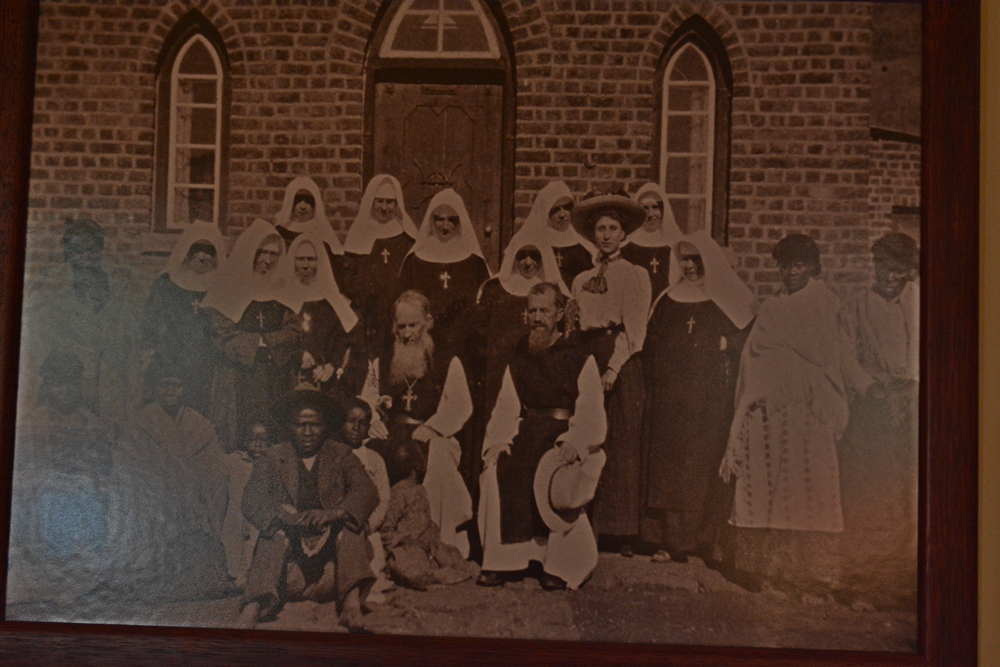
Sr Angela Michel and Sr Euphrosine Rothacker, who lived with the Founder at Emaus during his long exile, witnessed his spiritual life grow in depth at the hand of Our Lady. They record for example that returning from praying his beloved Stations of the Cross it was his custom to spend time at the Grotto dedicated to Our Lady of Lourdes – his eyes filling with tears while meditating on the Way of the Cross or the Sorrowful Mysteries of the Rosary. The sisters could tell the subject of his meditation from his facial expression: “Oh, how his eyes shone when he meditated on the Glorious Mysteries!”

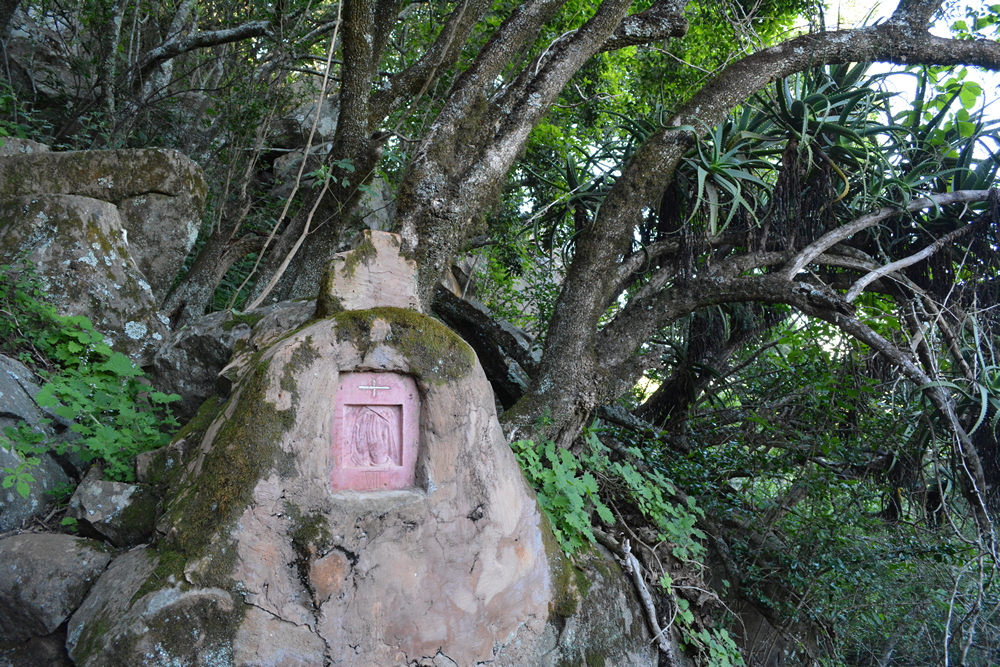
One of Abbot Pfanner's Stations of the Cross on the hill at Emaus

Having striven for the crown that was promised him, it would be a pious thought to imagine Our Lady awaiting him at the Heavenly Gate… Abbot Pfanner once remarked to the same Sr Angela, “Oh, how glad I am that the Good Lord allowed me to be humiliated, disgraced, misjudged and relieved of all responsibilities! Oh, how much I must thank God for being despised and slandered by all!” In his last days his eyes remained closed, but at the moment of his death, as Sr Angela records, a change came over him. “For a few moments Reverend Father looked heavenwards with devoutly attentive gaze, as if the Queen of Heaven and the many souls he had helped to save were inviting him in.”


Abbot Pfanner died at two o’clock in the morning on 24 May 1909, the Feast of Mary, Help of Christians. He left behind an incredible legacy – a veritable monument to his zeal, love of the Cross and faithful devotion to the Blessed Virgin. This Work continued its growth and perfection after his death and today counts in his crown of glory a thriving and dedicated Congregation of Mariannhill Missionaries and the Missionary Order of Sisters of the Precious Blood, of which he is the Founder.


May his words and example spur us to emulate his apostolic and missionary zeal for the greater glory of God and the conversion of our dear land. And may the prayers of the Faithful hasten the Cause for this great apostle’s sublime virtue to be officially recognized – and Abbot Pfanner raised to the altars for our veneration!

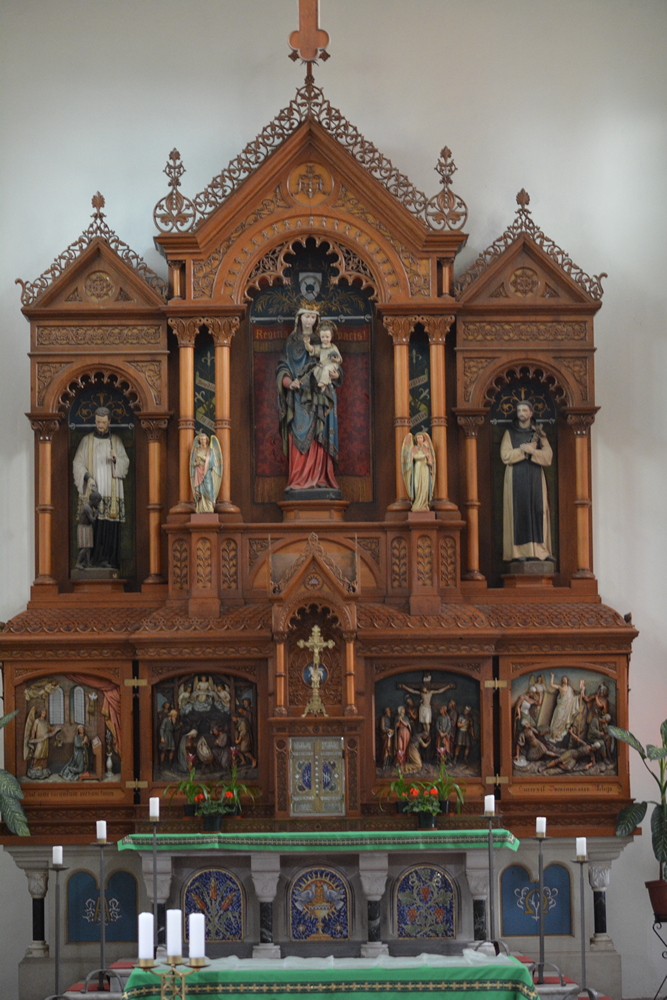
Main Altar at Mariannhill
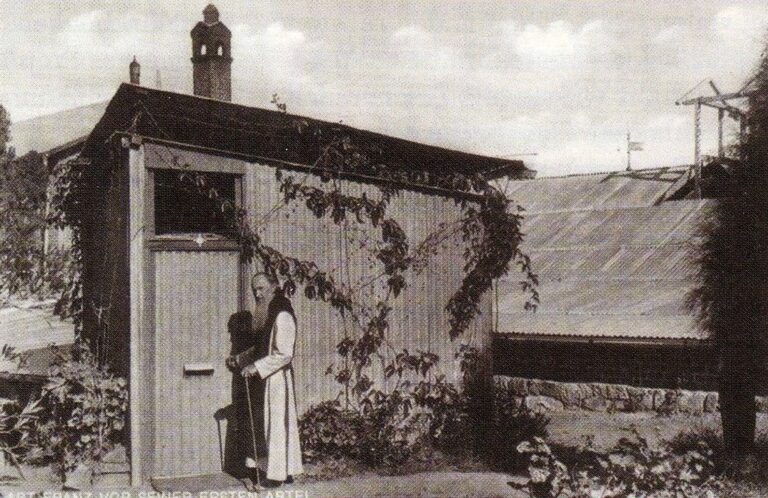
Abbot Franz Pfanner
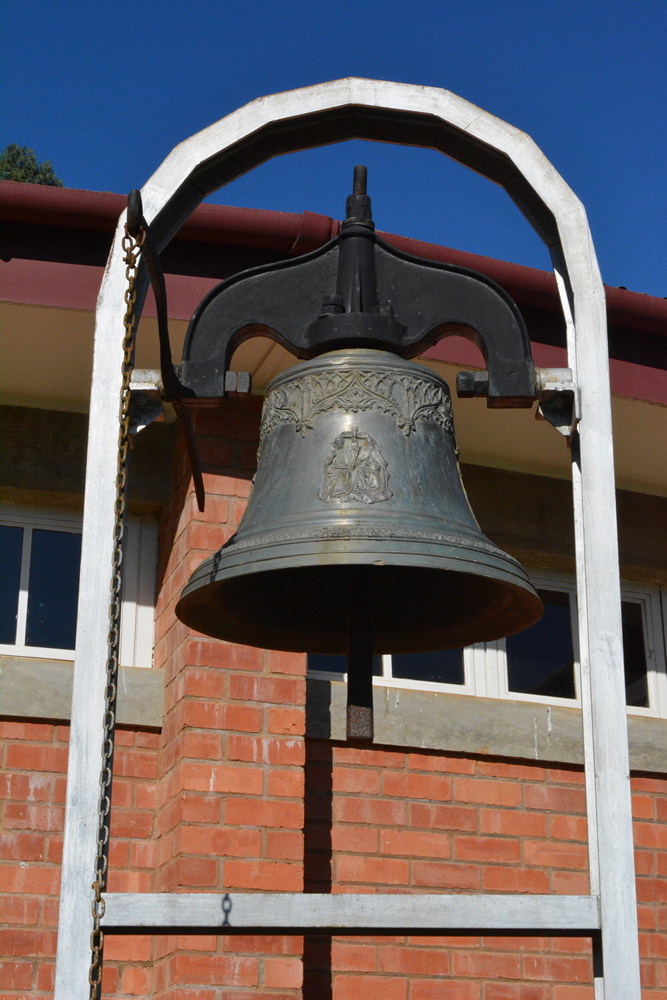
Bell at Emaus Mission