Winning the heart and soul of South Africa for Mary by spreading the Fatima Message

Winning the heart and soul of South Africa for Mary by spreading the Fatima Message

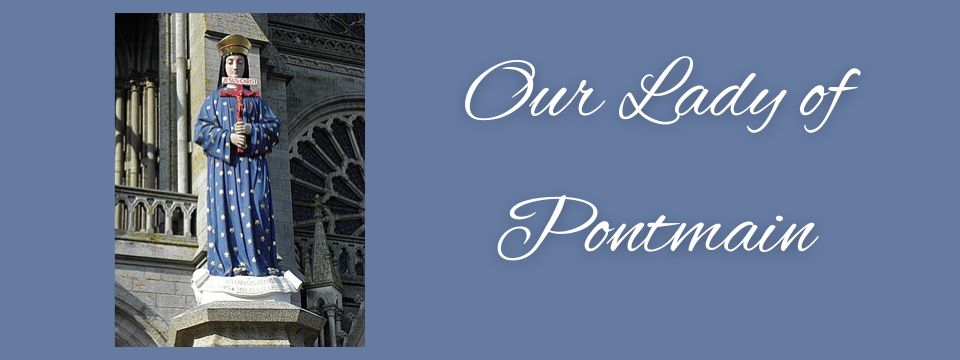
Our Lady of Hope of Pontmain

Feast Day January 17


It was in the winter of 1871 in the village of Pontmain, France, Eugene Barbedette was busy in his father’s barn helping prepare the animal feed. He stood briefly in the open doorway, admiring the beautiful evening. Suddenly the gaze of the 12-year-old was held there, for opposite the barn and in a framework of stars, stood a beautiful lady – motionless – smiling at him.

“Do you see anything?” he shouted to the others, “Look, over there!”

“Yes,” cried his brother Joseph, “a beautiful lady dressed in a blue robe with golden stars, yes, and blue shoes with golden buckles…and, she has a golden crown which is getting bigger, and a black veil.”

Since the father did not see her, he told the boys to get on with their work; then curiously, he asked, “Eugene, do you still see anything?”

“Yes, she’s still there,” the boy answered and ran to fetch his mother; she saw nothing, but with a woman’s intuition, she thought it might be the Blessed Virgin and assembling the family gently, all prayed five Paters and Aves in honour of the Mother of God. She called for a nun at the convent next door, who brought her two little charges with her, the later, Francoise and Jean Marie, reaching the door of the barn, called out, “Oh, look at that lovely lady with the golden stars!” and clapped their hands with delight.

The news spread quickly, people gathered, with them the cure, M. Guerin. The Magnificat was intoned, and Eugene shouted, “Look what she is doing!”

Slowly a great white streamer unfolded and in large letters they read: “Pray, my children, God will answer your prayers very soon. He will not allow you to be touched.”

The cure then intoned the hymn: “My Sweet Jesus…” At that a red cross with the wounded body of Christ appeared before the Virgin, who held it. At the top in large red letters was written, “Jesus Christ.”

The crowd burst into tears, while the cure ordered night prayers to be said; a white veil hid the vision, while our Lady smiled at the children, a smile which haunted them all through life with its beauty. Something of the sorrow of farewell was depicted on the faces of Eugene and Joseph, for the cure said quickly, “Can you still see anything?”

“No, it is quite finished,” they answered.

At the moment the message was being written in the sky, a messenger passing in front of the crowd had shouted, “You may well pray, the Russians are at Laval.” But they never entered it.

On the 17th of January, at six o’clock at night, the very hour the Virgin appeared to the children of Pontmain, the division of soldiers, without apparent reason, received the order to retire.

On the 28th of January, the armistice was signed at Versailles. After long and searching inquiry, Mgr. Wicart, the Bishop of Laval, proclaimed the authenticity of the vision, and at the very spot where Our Lady had appeared, a basilica was erected in honour of Our Lady of Hope of Pontmain. There the Queen of Heaven receives her countless children and gives them fresh hope in their trials, as she gave France peace in her hour of need.

The basilica is a magnificent structure in the 13th century style, and one may still see the barn where Eugene and Joseph worked when Mary appeared.

*From The Woman in Orbit

As seen on www.roman-catholic-saints.com

Our Lady of the Star

Feast Day 7 March


In the year 1050 there were two Benedictine monks who lived in the convent of Monte Cassino. They decided to go on pilgrimage, teaching and catechizing all those they met along the way. 

One night they found themselves wandering on the coast of Normandy, France, near a place called Grand Champ. Tired and sleepy, they decided to spend the night on the beach under the stars. Father Rogerio slept on the cool sand and the other monk found himself a place to rest in a small boat nearby. 

As the night went on the tide came up and the little boat was gently drawn out onto the sea. Without realizing it, the monk was going on an adventure in which he would not awaken until he was just off the coast of England. 

In Salisbury, England, everyone was amazed to see the monk in the little boat, convinced that it was a miracle that he had crossed the French Sea in a small boast and lived to see the shores of England. Soon, the monk was made Bishop and his period in office was marvellous to the people because he was a humble man of prayer who sacrificed everything in the name of God. 

The monk who had stayed on the beach, Father Rogerio, knew nothing of what had happened to his friend. All he knew was that he and the boat had disappeared, and giving his concerns into the hands of God, he determined to continue on his journey alone. 

One night not long afterward, Father Rogerio went to sleep and had a dream that would change his life forever. In his dream he saw a great star fall from the sky, burning all the bushes and trees, and heard a voice that said: “Our Lady wants a church built in this place.” 

When he awoke, Father Rogerio looked about himself. He was not injured, but this indeed was the place he had seen in his dream, for everything around him was burned. Father understood that Our Lady really did desire that he should build a church there in her honour. He also felt in his heart the desire to give Mary the title of “Our Lady of the Star,” because of the star he had seen in his dream. 

Due to the poverty of those who inhabited that region, Father Rogerio was only able to build a small altar and a tiny chapel which would be the seed of the great Abbey of Our Lady of the Star of Monteburgo. One day an immense chapel would be built, sheltering not only the Church but a very large convent as well. 

King William, who was the Duke of Normandy and he who had conquered England, learning of the shrine of Our Lady of the Star, sent his private doctor to visit the little chapel to find out for himself how it had all come about. Upon arriving there, the doctor discovered that he was the brother of the monk Rogerio! He listened to his brother’s account of how he had been separated from his friend, and then told about his dream. The doctor believed everything at once, and to Father Rogerio’s surprise, the doctor knew the monk who had crossed the channel in a small boat and informed his brother that his lost friend had become the Bishop of Salisbury! The two brothers excitedly thanked Our Lady for providing this reunion. 

The Bishop of Salisbury, our former friend of the monk Rogerio, asked King William to help his brother in the faith, for they were both blessed by Our Lady on their pilgrimage. 

William the Conqueror, with a glad heart, donated to Father Rogerio the entire region of Monteburg, along with the resources to build a great church and an Abbey there that became a great seminary. The work was finished by the son of King William, King Henry. He, taking the throne, continued the work until its completion. The Abbey of Our Lady of the Star was, for many centuries, a centre of reference of the Church for the whole region. 

Dark centuries ensued, and the church and abbey suffered a decline until in 1842, the Vicar General of Coutances took possession of what was by that time little more than an enclosure of ruins. He turned it over to the Brothers of Mercy, a new order meant to promote Catholic education. The abbey church was rebuilt, but as time went on the Brothers of Mercy also left, and all is now used as part of an agricultural school. As for Our Lady of the Star, it is a story almost completely forgotten, even to Catholics. 

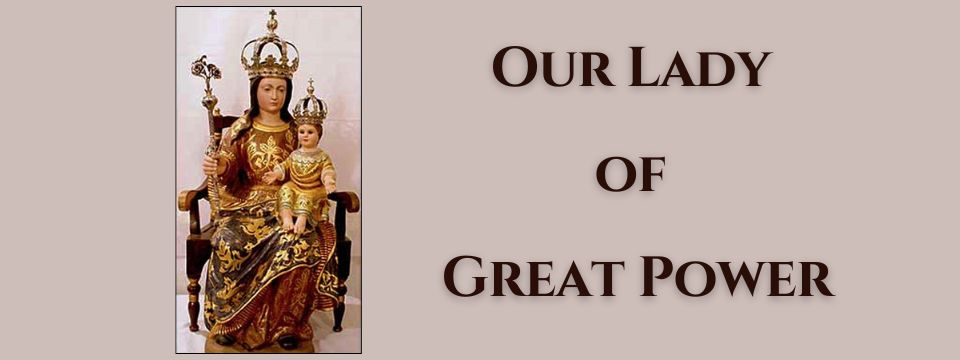
Our Lady of Great Power

Feast day 25 February


Our Lady of Great Power is little known in America, unless among the pupils of the Ursulines in Quebec. Generations of these, however, have dwelt within the walls of the Old Monastery for two centuries and more, since the arrival of the statue in the last years of the 17th century. 

In the annals of the Ursulines of the Sacred Heart at Perigueux, France, where the statue was solemnly crowned, we find the origin of the devotion. The devotion to Our Lady of Great Power began in the monastery of Issoudun. There a holy Ursuline nun, Mother Saint Peter, was inspired during her prayer to invoke Our Lady under this title. She spoke of her inspiration to her sisters and her Superiors. The devotion was adopted with enthusiasm, and very soon it was decided that a statue be sculptured and a chapel built, dedicated to Our Lady of Great Power; she would henceforth be chosen as first and principal Superior of the Monastery. 

The feast of the dedication took place 25 February 1673, and was celebrated with great pomp, as the chronicle testifies: 

“After High Mass two ecclesiastics carried the statue to the entry of the monastery where the nuns, in solemn procession, received it. It was placed on a richly decorated litter, and to the chanting of hymns, psalms and canticles, it was brought to the prepared chapel.” 

“When the same statue was raised on its pedestal, the superior laid the keys of the monastery, the seals and constitutions at Our Lady’s feet, begging her, in the name of the community, to accept the gift of all hearts, and of the entire monastery and to allow them to look on her as their Superior forever. Each rendered homage while hymns and canticles of thanksgiving were sung in Mary’s honour.” 

Ever after, when a superior was elected, the ceremony was renewed and is still renewed in each Ursuline community every year on a principal feast of the Blessed Virgin; though homage is rendered only every three years, after the election or nomination of superiors. 

The statue of Our Lady of Great Power was carried off and profaned during the dark days of the French Revolution. It was found and returned to the monastery at Perigueux; and the devotion continued fervently until 1892, when the bishop of Perigueux, in the name of the Sovereign Pontiff, placed a richly jewelled crown on the head of the Mother and the Child, and ratified the numberless and signal favours obtained through Our Lady of Great Power. 

Through the Ursulines in Quebec, the devotion soon spread through the New World. Before the altar in Quebec hangs the famous votive light promised to be kept burning as a token of thanks for favours granted to Mother Saint Agatha (Madeleine de Repentigny). Relatives and descendants of this holy nun have kept the lamp burning. One relative, Miss Anthon, had a new lamp made, an artistic gem, the work of the celebrated ecclesiastical goldsmith Calliat of Lyon, France. 

*from The Woman in Orbit 


As seen on https://www.roman-catholic-saints.com/our-lady-of-great-power.html


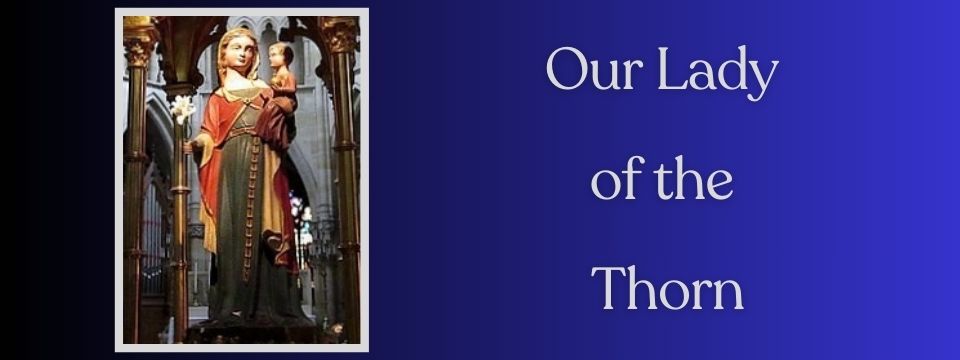
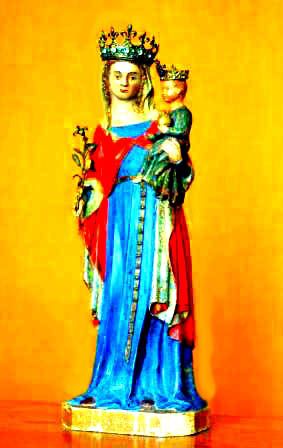
Our Lady of the Thorn

Feast Day 16 February

On the night of the Feast of the Annunciation, March 24 in the year 1400, some shepherds tending their flocks were attracted by a bright light coming from the Chapel of Saint John the Baptist near Chalons, France. As they approached the light they saw that it was actually a thorn bush fully engulfed in flames, and they discovered a statue of the Blessed Virgin standing unharmed in the midst of the flames. In fact, though the fire burned brightly, the branches and leaves of the thorn bush were unaffected by the flames.

The miracle continued all that night and into the next day, and news of the miracle spread quickly. Mobs of people crowded around the burning bush that was so reminiscent of the one witnessed by Moses on Mount Horeb. The Bishop of Chalons, Charles of Poiters, also witnessed the burning bush and the miraculous statue – both still unaffected by the fire.

When the flames finally did die down, the bishop reverently took the statue and carried it in his own hands to the nearby Chapel of Saint John. On the very site of the miracle, construction of a church was begun for the enshrinement of the miraculous statue. Since the church was built so rapidly – in a little over 24 years – a charming local legend claims that angels continued the work at night after the labourers had left for home.

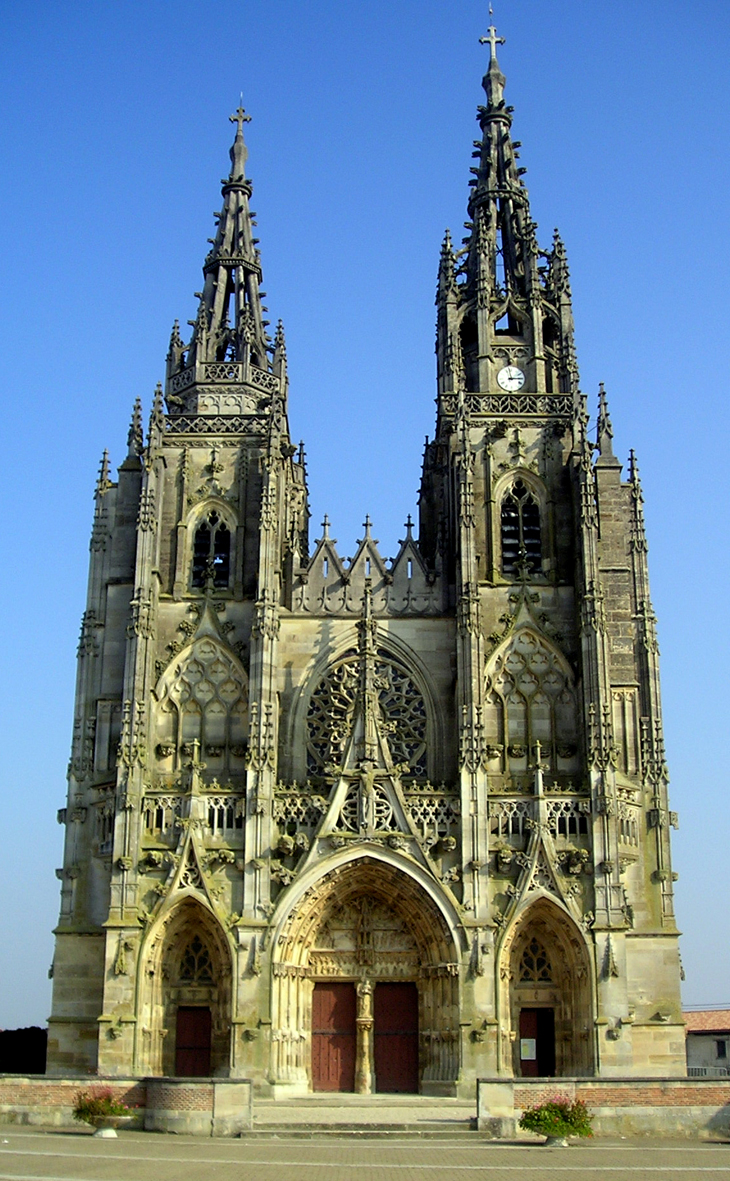
Our Lady of the Thorn (Notre Dame de l’ Epine) became a place of pilgrimage very rapidly. Today, a minor basilica, the shrine proved to be so beautiful that the people considered it a worthy place to venerate the Blessed Virgin. The flamboyant Gothic church boasts majestic great doors, a splendid rosette decorating the principle entrance and two chiselled stone spires, rises high and imposing on the plain in Champagne.

During the terrible French Revolution, the statue of Our Lady of Thorns was removed from the main altar and hidden for safekeeping. After it had ended, the statue was brought back out for veneration.

Many healings have also been reported at the shrine, many verified by physicians. The beautiful church of Our Lady of the Thorn has been recognized by several popes, including Pope Calixtis III, Pius II, and Gregory XV. Pope Leo XIII ordered the solemn coronation of the miraculous statue, saying, “Yes, Our Lady of the Thorn will be crowned in my name. Prepare for her a diadem worthy of the Mother of God and the people whom she protects…”

It is a place of grandeur where Christian souls can expand in adoration of the Son of God, and many are the pilgrims of all descriptions who have visited the shrine over the years, including Saint Joan of Arc in 1429.


As seen on https://www.roman-catholic-saints.com/our-lady-of-the-thorn.html

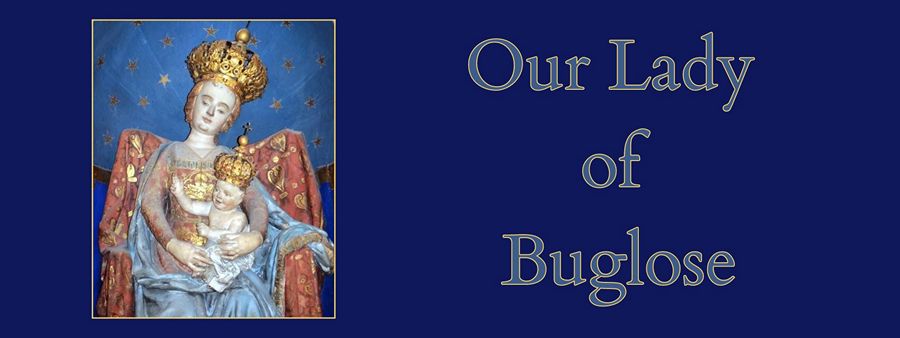
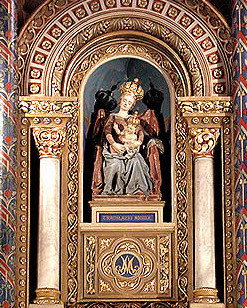
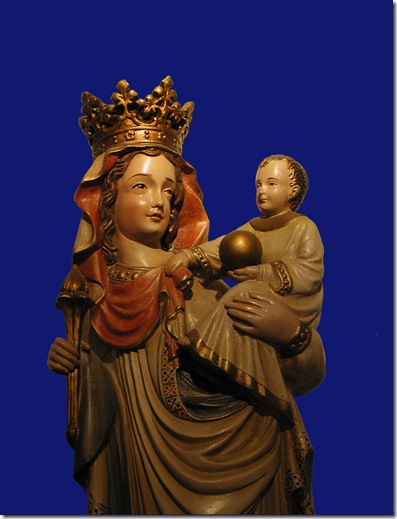
Our Lady of Buglose

Feast Day June 29

Located about two leagues from Acqe in Glascony is the shrine containing a miraculous image of Our Lady of Buglose. The original shrine of Notre Dame de Buglose was burned and completely destroyed by the Huguenots, and the statue of Our Lady was hidden in a marsh. The exact location of the statue was eventually forgotten, as was the memory even that the place had once been the location of a shrine in honour of the Blessed Virgin.

Years later, a shepherd led his herd into the marshes and observed that one of his oxen did not go with the others, but went into an area of the marsh alone and began to bellow in a strange manner. The shepherd climbed a tree to see what was happening, and saw the ox licking an unknown object that was half buried in the mud. Not understanding the mystery, he ran into town to bring others back with him to see what had happened.

When the shepherd returned, the statue of the Blessed Virgin holding the baby Jesus in her arms had been revealed. It was respectfully removed from the water, and the bishop of Dax desired to take the image to his church in Pouy. He placed the statue in a cart that was pulled by oxen to transport it back to Pouy. The procession began with hymns and prayers, but had only gone a short distance when the oxen stopped and would not move any further. It was understood that the Blessed Virgin desired that her image should stay near the fountain.

The bishop accepted the revelation as a divine order, and thanks to the zeal and enthusiastic support of the people living in the region, a new church was built with prodigious speed. The shrine was for a long time popular as a place of pilgrimage in France; now it is further renowned as the birthplace of Saint Vincent de Paul. The house where he was born and where he spent his boyhood is still shown.

There have been many miracles at the shrine, as indeed Buglose had become known as a land of miracles. There were 19 miracles recorded in the year 1622 alone.

There is a fountain near the chapel marking the place where the statue of Our Lady of Buglose was found buried. In 1623, a man named Bernard Ducassou came to the shrine seeking a cure for the seven boils that covered his left leg. He spent the entire night in prayer, and the next day bathed at the fountain. The ulcers that would not heal were suddenly closed.

The above pilgrimage is merely a side issue for pilgrims on their way to the famous shrine of Our Lady where miracles are still granted to pious devotees.

*from The Woman in Orbit and other sources

James Fitzhenry, roman-catholic-saints.com, Marian Calendar

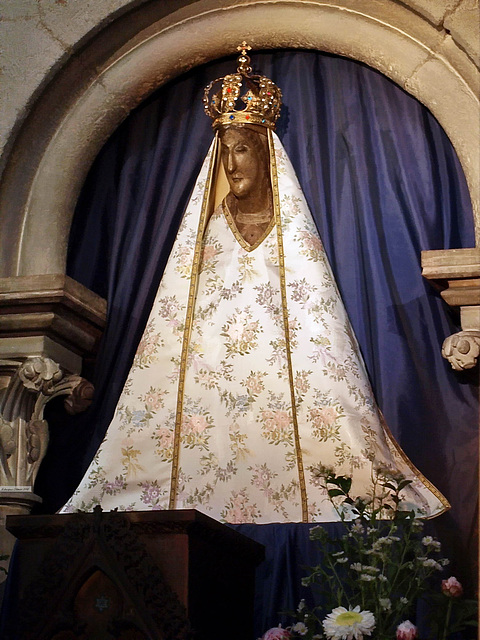
Our Lady of Paris

Our Lady of Paris

Feast Day: 15 February

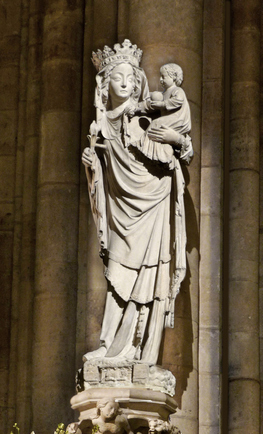
There does not seem to be a great deal of information about Our Lady of Paris; it is an ancient title, and can be traced well back before the 12th Century, when the Cathedral of Notre Dame de Paris (Our Lady of Paris) was begun. Some authorities say that veneration of the Blessed Virgin in Paris can be traced to the first apostles of the city. Since Saint Paul was in Gaul (France) during his travels, it may be assumed that this veneration dates to the first century of the Christian era. And if Mary was venerated in Paris at that early date, it is possible that she was, even then, known as Our Lady of Paris. Briefly, as long as Christian minds can remember, Paris was consecrated to the Virgin Mary, whom the inhabitants always venerated.  

It is known that Our Lady of Paris was a church first built by King Childebert in the year 522. About the year 1257, King Saint Louis IX assisted in the construction of a larger church carried on in the same place, built on the foundations which King Philip Augustus had laid in the year 1191. The older church built by King Childebert, which had been dedicated to the Blessed Virgin, was too ruined to be repaired, so Maurice, Bishop of Paris, decided to rebuild it — and at the same time adorn Paris with a Cathedral that would outshine all those which had hitherto been built anywhere. 


 Plans were drawn up during the reign of King Louis VII, and work began on Notre Dame Cathedral in 1162. The cornerstone was laid in the presence of Pope Alexander III. Notre Dame is a huge Gothic cathedral on the Ile de la Cite, with beautiful flying buttresses to support the tremendous height of the walls, which are adorned with stylish gargoyles. It is home to a reliquary which contains Christ’s Crown of Thorns. By the beginning of the fourteenth century, perhaps 1345, the cathedral was finished, virtually as it stands today. Sometime during the building of the Cathedral, a statue of Our Lady was fashioned and installed in a place of honour. 

As is typical during times of upheaval, the cathedral along with the statue of Our Lady were desecrated during the French Revolution, and many of the religious artefacts were lost to future generations, although the incredible stain glass windows were not destroyed, including the spectacular “rose window” that can still be seen today. 

*from The Woman in Orbit and other sources 

Our Lady of Good Hope

Our Lady of Dijon

FEAST DAY: 18 JANUARY

In the fifth century the Abbey of St Etienne of Dijon had a regular chapter which observed the Rule of St Augustine; it was given over to the secular Canons, and later Clement XI made the church the Cathedral of Dijon.

The image of Our Lady of Dijon in Burgundy was formerly named the “Black Virgin,” and “Our Lady of Good Hope.” In the year 1513, Mary miraculously delivered the city of Dijon, the ancient city of the Dukes of Burgundy, from the hands of the Swiss. The German and Swiss forces coming against them totalled 45 000 men, and although Dijon was well stocked for a siege, they only had perhaps 6 000 defenders. There were plenty of arrows, but little gunpowder, and most of the French cannon needed repairs.

The invading force was so sure of success that they there were columns of empty wagons pulled behind the army to bring back the loot they expected to take from the French towns and monasteries. The Monastery at Beze was not spared, as even dead monks were dug up in search of treasure.

The army arrived on 8 September, the solemnity of Our Lady’s Nativity. There were so many men that the defenders saw nothing but a vast sea of shining armour wherever they gazed. The Swiss opened up with heavy cannon fire the next day, yet there were surprisingly few fatalities. When breaches were made in the walls and the enemy attacked, they were repulsed with heavy loss of life.

On Sunday, 11 September, a procession was organized after Mass. The “Black Virgin” was carried through the streets as the French prayed to the Mother of God to spare them from their deadly enemies. The following day a treaty was signed, and the conflict ended unexpectedly. In thanksgiving for this favour, she was titled Our Lady of Dijon, and general procession to her shrine is made every year.

During the French Revolution the church suffered the outrage of being transformed into a forage storage house. Afterward, in atonement to Our Lady for this insult, the faithful of France rebuilt the shrine, and pleaded that the Holy See grant numerous relics and valuable keepsakes to be placed there. Our Blessed Mother responded to the generosity and love of the people by granting favours and cures and extending her God-given miraculous power over the people.

In 1944 the German army occupied the city of Dijon. The people turned to Mary, praying: “Holy Virgin, Compassionate Mother, you who protected our knights of old and who delivered our city from enemy attack, you maintained our ancestors in their times of trouble…Our Lady of Good Hope, pray for us.” On 11 September the Nazi army unexpectedly left Dijon.


*from The Woman in Orbit

Consecrations in History

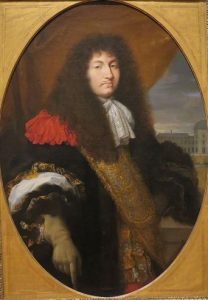
Louis XIV of France

An interesting historical anecdote comes to mind on the question of consecrations and the consequences of failing to act. On 17 June 1689, the Sacred Heart of Jesus manifested to Saint Margaret Mary Alacoque, the great apostle of the Sacred Heart, His command to the King of France (Louis XIV) that the King consecrate France to the Sacred Heart. For 100 years to the day, this seemingly “unimportant” command was ignored. Thus in 1789 did France erupt in a frenzy of bloodshed, a diabolical assault on the Altar and Throne and the ensuing complete disruption of life in France and Europe.

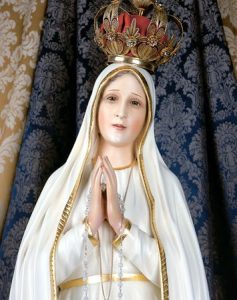
In 1917, Our Lady at Fatima delivered to the world a peace plan. This plan has however in large part been ignored, or shunted sideways. This, despite dire warnings about the threats hanging over humanity for non-compliance, including the prophesied eruption of World War II and the prospect of “annihilation of many nations.” No amount of petitions, reason, appeals or prayers has motivated the last seven popes to honour this request, at least in its fullness.


One is reminded of Our Lord’s words when He appeared to Sister Lucy, one of the Fatima seers, regarding the preceding: “Make it known to My ministers given that they follow the example of the King of France in delaying the execution of my command, like him they will follow him into misfortune.” 

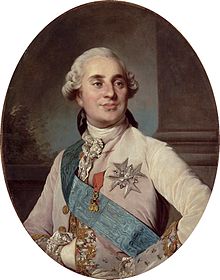
Successive French Kings failed to obey Our Lord and the reader will recall that during the Terror of the French Revolution, Louis XVI was guillotined on 21 January 1793. In prison, and finally realising the enormity of his predicament and that of his glorious country, he promised to formally consecrate France in a promissory note he wrote in prison, if Our Lord should restore his freedom. It was however too late…

King Louis XVI