Winning the heart and soul of South Africa for Mary by spreading the Fatima Message

Winning the heart and soul of South Africa for Mary by spreading the Fatima Message

The Amazing Hiroshima Eight Survivors

Early on 6 August 1945, a lone American B-29 Superfortress bomber circled in a vividly blue sky over the Japanese city of Hiroshima. The unsuspecting inhabitants on the ground barely glanced at the plane. They were unaware of the deadly payload it was about to unleash on them, ushering in the atomic age with unimaginable death and destruction.

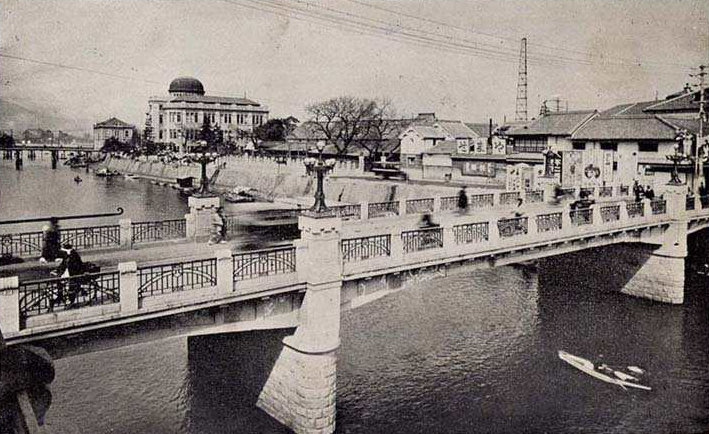
Hiroshima before the bombing.

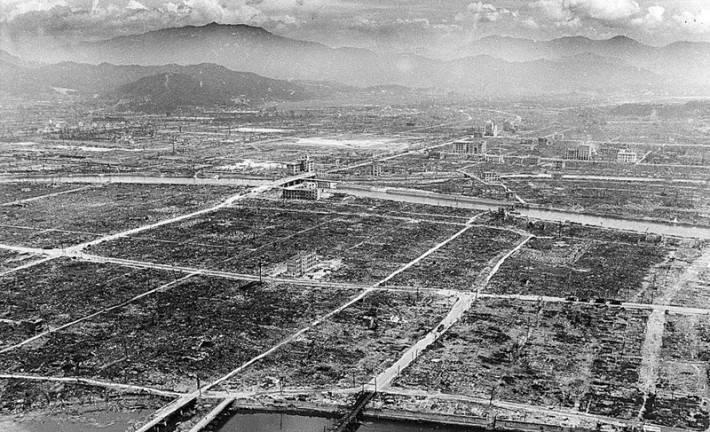
As one single bomb neared the ground, a city died in an instant. Houses crumbled, people evaporated, an immense ball of fire shot skywards, and a terrible wave of super-heated gas bulged out from ground zero, flattening buildings for miles.

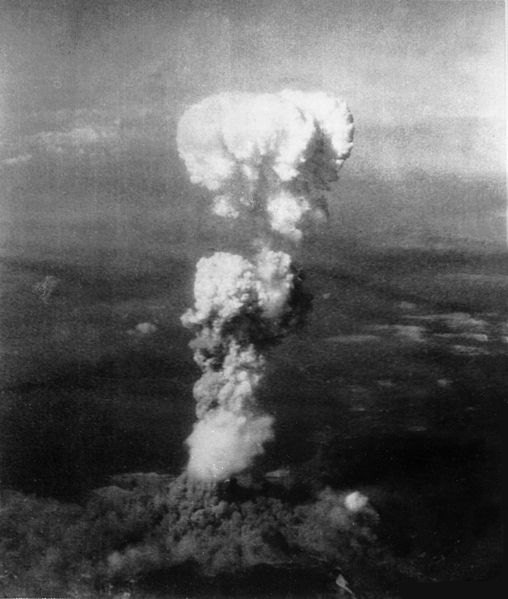
Atomic cloud over Hiroshima. The cloud rose to over 18 300 metres in about ten minutes, while smoke from the burst of the first atomic bomb had spread over 3000 metres at the base of the rising column.

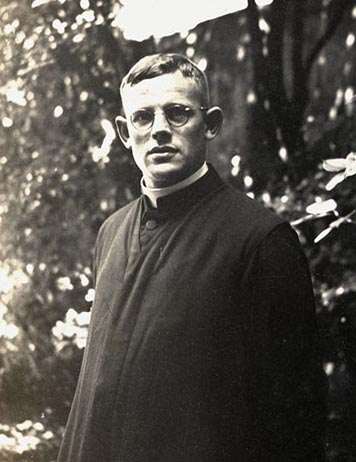
Amongst the unsuspecting inhabitants of Hiroshima was Fr. Schiffer, a Jesuit missionary assisting the many Catholics of that city. On the morning of 6 August 1945, he had just finished Mass and sat down at the breakfast table. As he plunged his spoon into a freshly sliced grapefruit, there was a bright flash of light. His first thought was that a fuel tanker had exploded in the harbour, as Hiroshima was a major port where the Japanese refuelled their submarines. Then, in the words of Fr. Schiffer: “Suddenly, a terrible explosion filled the air with one bursting thunder stroke. An invisible force lifted me from the chair, hurled me through the air, shook me, battered me, whirled me round and round like a leaf in a gust of autumn wind.” Next thing he remembered was that he opened his eyes and found himself on the ground. He looked around, and saw there was nothing left in any direction: the railroad station and buildings in all directions were gone. Yet, the only harm to him was a few slight cuts in the back of his neck from shards of grass. As far as he could tell, there was nothing else physically wrong with him.

Father John Seimes, S.J., one of the eight Jesuit Fathers that miraculously survived the atomic bombing.

The small community of Jesuits to which Fr. Schiffer belonged lived in a house near the parish church, situated only eight blocks from the centre of the blast. When Hiroshima was destroyed by the atomic bomb, all eight members of the small Jesuit community escaped unscathed, while every other person within a radius of one-and-a-half kilometres from ground zero died immediately. The house where the Jesuits lived was still standing, while buildings in every direction from it were levelled. Father Hubert Schiffer was 30 years old when the atomic bomb exploded right over his head at Hiroshima. He not only survived, but also lived a healthy life for another 33 years!

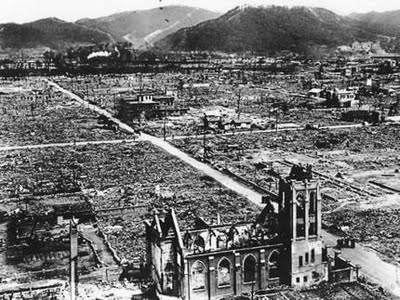
Our Lady of the Assumption Church and the Jesuit Rectory.

How did this group of men survive a nuclear blast that killed everyone else, even people over ten times further away from the blast? It is absolutely unexplainable by scientific means. An interesting detail is that this group of Catholic clergy was made up of ardent enthusiasts of the Message of Fatima. They lived the Message. Was their fidelity to Our Lady rewarded by this stupendous miracle of their survival?

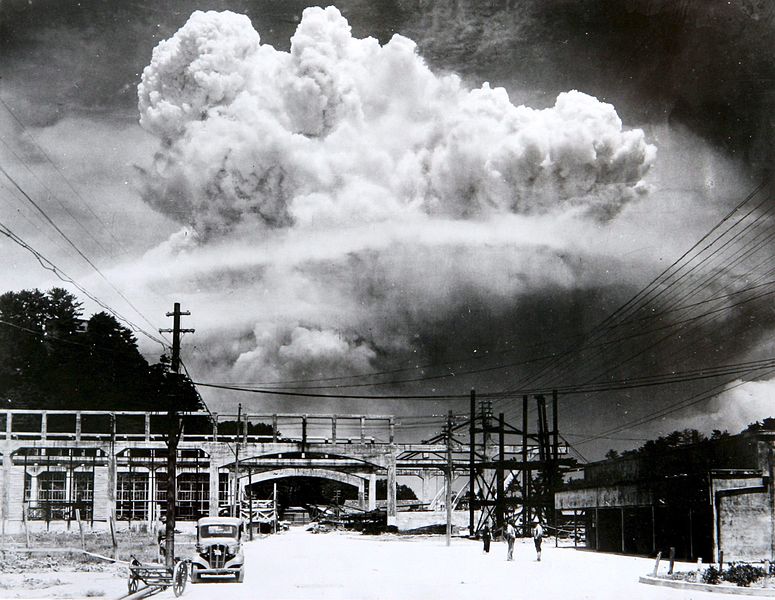
Atomic cloud over Nagasaki from Koyagi-jima on 9 August 1945.

Even more astonishing is that the story was to be repeated a few days later at Nagasaki, the second Japanese city to be hit by an atomic bomb. In both Hiroshima and Nagasaki, the survivors were Catholic religious. Most other buildings were levelled to the ground, even at 3 times the distance, but in both cases their houses stood – even with some windows intact! All other people, bar a handful of scattered mutilated survivors, even at thrice the distance from the explosion, died instantly. Those within a radius ten times the distance of the Jesuits from the explosion were exposed to fierce radiation and died within days.

After the American conquest of Japan, U.S. army doctors explained to Fr. Schiffer that his body would soon begin to deteriorate because of the radiation. To the doctors’ amazement, Fr. Schiffer’s body showed no radiation or ill effects from the bomb. All who were at this range from the epicentre should have received enough radiation to be dead within a matter of minutes. Scientists examined the group of Hiroshima Jesuits over 200 times during the next 30 years and no ill effects were ever found.

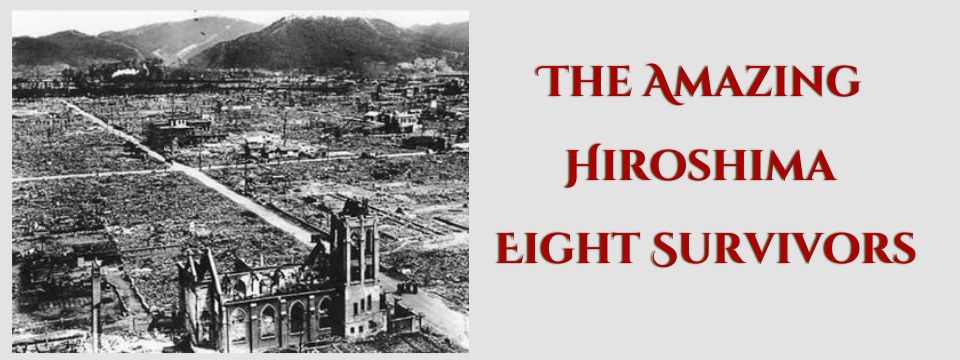
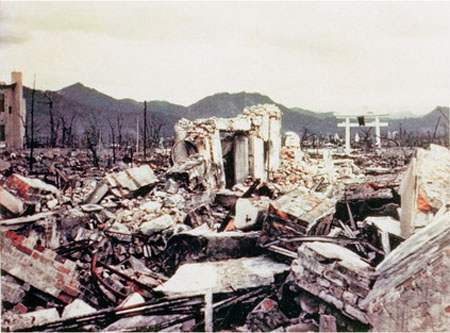
Hiroshima after the bombing.

Could it have been a fluke? Could the bomb’s makers have designed it to avoid killing U.S. citizens? There is no known way to design a uranium-235 atomic bomb so it could leave such a large discrete area intact while destroying everything around it. The Jesuits say: “We believe that we survived because we were living the message of Fatima. We lived and prayed the Rosary daily in that house.” Fr. Schiffer feels that he received a protective shield from the Blessed Virgin, which protected him from all radiation and ill effects. Fr. Schiffer attributes this to his devotion to Our Lady, and his daily Fatima Rosary: “In that house the Holy Rosary was recited together every day.” Secular scientists are dumbfounded and incredulous at his explanation. They are sure there is some ‘real’ explanation. However, over 60 years later the scientists still have not been able to explain it.

From a scientific standpoint, what happened to those Jesuits at Hiroshima still defies all the laws of physics. It must be concluded that some other force was present, whose power to transform energy and matter as it relates to humans is beyond our comprehension.

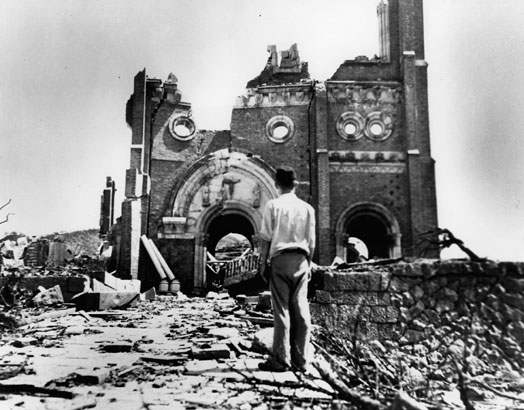
Urakami Cathedral after the bomb. Only 150 metres from the hypocentre of the blast stood the original Urakami Cathedral, a centre for Nagasaki’s Catholic community. Catholic missionaries first came to Nagasaki in the 16th century, and within several decades hundreds of thousands of people in South-western Japan were practicing Catholics.

Dr. Stephen Rinehart of the U.S. Department of Defence is widely recognized as an international expert in the field of atomic blasts. Says Rinehart: “A quick calculation says that at one kilometre the bulk temperature was in excess of 11 000 to 16 000 degrees C, and the blast wave would have hit at sonic velocity with pressures on buildings greater than 600 PSI. If the Jesuits, at one kilometre from the geometric epicentre, were outside the atomic bomb’s “plasma” their residence should still have been utterly destroyed. Un-reinforced masonry or brick walls, representative of commercial construction, are destroyed at 3 PSI, which will also cause ear damage and burst windows. At 10 PSI, a human being will experience severe lung and heart damage, burst eardrums and at 20 PSI limbs can be blown off. All the cotton clothing would be on fire at 176 degrees Celsius, and your lungs would be inoperative within a minute of breathing even one lungful of air at these temperatures.

Hypocentre of the blast in Hiroshima was Shima Hospital.

“No way could any human have survived nor should anything have been left standing at one kilometre. At ten times the distance, about ten to fifteen kilometres, I saw the brick walls standing from an elementary school and there were a few badly burned survivors; all died within fifteen years of some form of cancer. Reconnaissance pictures taken of a panoramic view from epicentre of the blast, at Shima Hospital looking towards the Jesuits’ house, did show some kind of two-story building totally intact, at least from what I could make out, and it looked to me the windows were in place. Also there was a church with walls still standing a few hundred yards away, but the roof was gone.

“The Department of Defence never commented officially on this and I suspect it was classified and never discussed in open literature. I think it is possible the Jesuits were asked not to say anything either at the time.”

For God, who made all matter and energy, it is simply a matter of willing it and the laws that govern them are suspended. This is what happened at Hiroshima and Nagasaki. It also happened in ancient times, to the loyal servants of God Sidrach, Misach, and Abdenago, as is related in the Book of Daniel (3:19-24):

    “Then was Nebuchodonosor filled with fury: and the countenance of his face was changed against Sidrach, Misach, and Abdenago, and he commanded that the furnace should be heated seven times more than it had been accustomed to be heated. And he commanded the strongest men that were in his army, to bind the feet of Sidrach, Misach, and Abdenago, and to cast them into the furnace of burning fire. And immediately these men were bound and were cast into the furnace of burning fire, with their coasts, and their caps, and their shoes, and their garments. For the king’s commandment was urgent, and the furnace was heated exceedingly. And the flame of the fire slew those men that had cast Sidrach, Misach, and Abdenago. But these three men, that is, Sidrach, Misach, and Abdenago, fell down bound in the midst of the furnace of burning fire. And they walked in the midst of the flame, praising God and blessing the Lord.”

As seen on: https://nobility.org/2015/08/hiroshima-70-years/

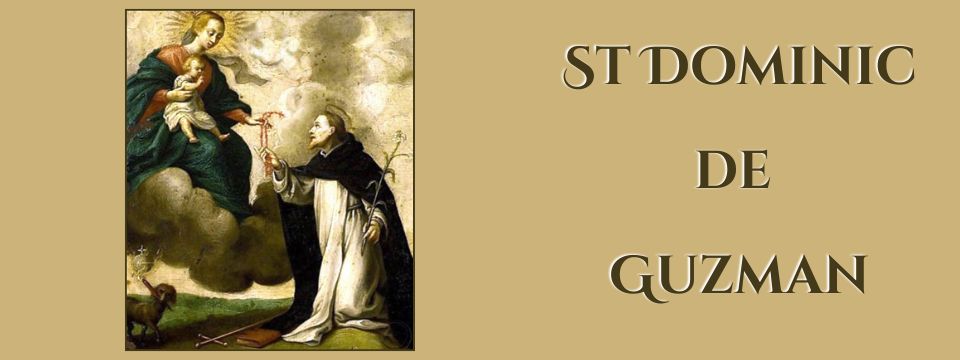
St Dominic de Guzman

Feast Day: 8 August


Dominic was born in 1170 in Castile, Spain to Felix Guzman and Joan of Aza (who later became a blessed).

He was sent to school in Palencia when he was fourteen, and while he was still a student, was made Canon of the Cathedral of Osma.

He went on to complete his studies and was ordained a priest, taking up his role at Osma.

Around the year 1204, Dominic accompanied the bishop of Osma to Denmark. Their travels took them through Languedoc, in southern France, where the Albigensian heresy, the belief that the body is evil, was rampant.

The host at an inn where they stopped was an Albigensian. Dominic spent a whole night in discussion with him and by morning he had converted the innkeeper. That is when Dominic saw his true vocation in spreading and defending the Catholic Faith.

With papal permission, Dominic spent nearly ten years preaching in France with a small group of men living under the rule of St. Augustine.

Then, in the year 1216, his small group became a community: the Order of Preachers. Dominic sent his followers far and wide, establishing friaries in Spain, France and Italy.

Dominic became ill and died in 1221 at the age of fifty-two.

St Dominic and The Rosary

Taken from: Second Rose, from the Secret of the Rosary, by Saint Louis de Montfort


Since the Holy Rosary is composed, principally and in substance, of the Prayer of Christ and the Angelic Salutation, that is, the Our Father and the Hail Mary, it was without doubt the first prayer and the first devotion of the faithful and has been in use all through the centuries from the time of the Apostles and disciples down to the present.

But it was only in the year 1214, however, that Holy Mother Church received the Rosary in its present form and according to the method we use today. It was given to the Church by Saint Dominic who had received it from the Blessed Virgin as a powerful means of converting the Albigensians and other sinners.

I will tell you the story of how he received it, which is found in the very well-known book “De Dignitate Psalterii” by Blessed Alan de la Roche.

Saint Dominic, seeing that the gravity of people’s sins was hindering the conversion of the Albigensians, withdrew into a forest near Toulouse where he prayed unceasingly for three days and three nights. During this time he did nothing but weep and do harsh penances in order to appease the anger of Almighty God. He used his discipline so much that his body was lacerated, and finally he fell into a coma.

At this point Our Lady appeared to him, accompanied by three angels, and she said:

“Dear Dominic, do you know which weapon the Blessed Trinity wants to use to reform the world?”

“Oh, my Lady,” answered Saint Dominic, “you know far better than I do because next to your Son Jesus Christ you have always been the chief instrument of our salvation.”

Then Our Lady replied:

“I want you to know that, in this kind of warfare, the battering ram has always been the Angelic Psalter which is the foundation stone of the New Testament. Therefore if you want to reach these hardened souls and win them over to God, preach my Psalter.”

So he arose, comforted, and burning with zeal, for the conversion of the people in that district he made straight for the Cathedral. At once unseen angels rang the bells to gather the people together and Saint Dominic began to preach.

At the very beginning of his sermon an appalling storm broke, out, the earth shook, the sun was darkened, and there was so much thunder and lightning that all were very much afraid. Even greater was their fear when looking at a picture of Our Lady exposed in a prominent place they saw her raise her arms to heaven three times to call down God’s vengeance upon them if they failed to be converted, to amend their lives, and seek the protection of the Holy Mother of God.

God wished, by means of these supernatural phenomena, to spread the new devotion of the Holy Rosary and to make it more widely known.

At last, at the prayer of Saint Dominic, the storm came to an end, and he went on preaching. So fervently and compellingly did he explain the importance and value of the Holy Rosary that almost all the people of Toulouse embraced it and renounced their false beliefs. In a very short time a great improvement was seen in the town; people began leading Christian lives and gave up their former bad habits.

Rosare e Halalelang The Holy Rosary (Sesotho)

TSELA YA HO ETSA ROSARE

  • Pontso ya Sefapano
  • Kea dumela
  • Ntata rona ea Maholimong
  • Ahe Maria… x3
  • Oho Jesu oa ka…

Ntata rona ea Maholimong

Ahe Maria… x10               

Letlotlo le be ho Ntate                     This set of prayers are repeated 5 times respectively  

Oho Jesu oa ka…                       


  • Ahe Mofumahali…

Tomorrow is First Saturday

The Five First Saturdays devotion is one of the principal points of the Fatima message. It centres on the urgent need for mankind to offer reparation and expiate for the many injuries that the Immaculate Heart of Mary suffers from the hands of both impious and indifferent men.


On the First Saturday during 5 Consecutive Months, the Devotion consists of:

  1. Going to Confession,
  2. Receiving the Sacrament of Holy Communion,
  3. Saying five decades of the Rosary,
  4. Meditating for 15 minutes on the mysteries of the Rosary.

All this offered in REPARATION for the sins of blasphemy and ingratitude committed against the Immaculate Heart of Mary.


History

During the third apparition on 13 July 1917, Our Lady revealed that she would come to ask for the consecration of Russia to her Immaculate Heart and for the Communion of Reparation of the Five First Saturdays. Consequently, she asked for the devotion in 1925 and the consecration in 1929.

While staying at the House of the Dorothean Sister in Pontevedra, Portugal, Sister Lucia received a vision on December 10, 1925 where the Blessed Mother appeared alongside a Boy who stood over a luminous cloud. Our Lady rested one hand on the Boy’s shoulder while she held on the other hand a heart pierced with thorns around it.

Sister Lucia heard the Boy say, “Have pity on the Heart of your Most Holy Mother which is covered with thorns with which ingrate men pierce it at every moment with no one to make an act of reparation to pull them out.”

Our Lady expressed her request in the following words,

“See, my daughter, My Heart surrounded with thorns with which ingrates pierce me at every moment with blasphemies and ingratitude. You, at least, make sure to console me and announce that all those who for five months, on the first Saturdays, go to confession, receive Communion, say five decades of the Rosary and keep me company for 15 minutes meditating on the mysteries of the Rosary, with the purpose of making reparation to Me, I promise to assist them at the hour of death with all the graces necessary for the salvation of their souls.”

A few days afterward, Sister Lucia detailed this vision in a letter addressed to Monsignor Manuel Pereira Lopes, her confessor when she resided in the Asylum of Vilar in the city of Oporto, Portugal.


Why Five Saturdays?    

Sister Lucia’s confessor questioned her about the reason for the five Saturdays asking why not seven or nine. She answered him in a letter dated June 12, 1930. In it she related about a vision she had of Our Lord while staying in the convent chapel part of the night of the twenty-ninth to the thirtieth of the month of May, 1930. The reasons Our Lord gave were as follows:

The five first Saturdays correspond to the five kinds of offenses and blasphemies committed against the Immaculate Heart of Mary. They are:

  1. Blasphemies against the Immaculate Conception
  2. Blasphemies against her virginity
  3. Blasphemies against her divine maternity, at the same time the refusal to accept her as the Mother of all men
  4. Instilling, indifference, scorn and even hatred towards this Immaculate Mother in the hearts of children
  5. Direct insults against Her sacred images

Let us keep the above reasons firmly in our minds. Devotions have intentions attached to them and knowing them adds merit and weight to the practice.


Modifications to the Five First Saturdays Devotion to facilitate its observation

The original request of Our Lady asks one to confess and receive Communion on five consecutive first Saturdays; to say five decades of the Rosary; to meditate during 15 minutes on the mysteries of the Rosary for the purpose of making reparation to the Immaculate Heart of Mary in reparation for the sins of men.

In subsequent private visions and apparitions however, Sister Lucia presented to Our Lord the difficulties that devotees encountered in fulfilling some conditions. With loving condescension and solicitude, Our Lord deigned to relax the rules to make this devotion easy to observe:


  1.     Confession may be done on other days other than the First Saturdays so long as one receives Our Lord worthily and has the intention of making reparation to the Immaculate Heart of Mary.
  2.     Even if one forgets to make the intention, it may be done on the next confession, taking advantage of the first occasion to go to confession.
  3.     Sister Lucia also clarified that it is not necessary to meditate on ALL mysteries of the Rosary on each First Saturdays. One or several suffice.


With much latitude granted by Our Lord Himself, there is no reason for the faithful to hesitate or delay this pious practice in the spirit of reparation which the Immaculate Heart of Mary urgently asks.


This devotion is so necessary in our days

The culture of vice and sin remains unabated even as one reads this. Abortion, blasphemy, drug abuse, pornography, divorce and bad marriages, religious indifference, the advances of the homosexual agenda and others are just some of society’s many plagues that cut deeply into the Immaculate Heart of Mary.

We must console Our Lady amidst all these insults and injuries to her and her Divine Son. She asks for reparation, she pleads for our prayers, she hopes for our amendment of life. Let us listen to her maternal pleas and atone for the ingratitude of men.

The First Five Saturdays devotion stimulates the spirit of reparation; it instils a tender love for the Holy Sacraments of Confession and the Blessed Eucharist. It nurtures a holy affection for the Immaculate Heart of Mary and the Rosary. Above all, it is an excellent means to maintain one in the state of grace while immersed in the daily spiritual battles and prosaic existence in the neo-pagan world that we live in.

Let us not delay in observing this devotion for it too gives us hope for eternal salvation.


REFERENCE:

Solimeo, Luiz Sergio, Fatima, A Message More Urgent than Ever