Patron Saint of Catholic Schools, Scholars, Theologians & Booksellers
Feast January 28
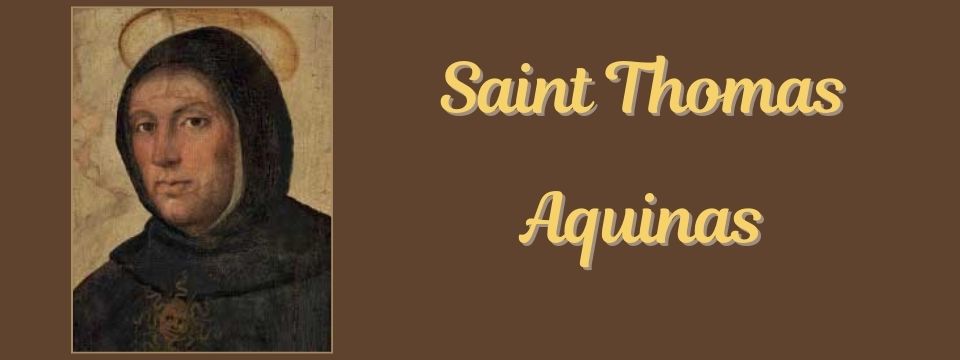
Thomas Aquinas was born about 1225 in the castle of Rocca Secca, into the noble lineage of the family of Aquino. His father, Landulf, was a knight and his mother, Theodora, a countess.
At age five Thomas was sent to the Benedictines of Monte Cassino as an oblate and remained until thirteen. He was studious, meditative and devoted to prayer, and frequently asked the question, “What is God?”
Around 1236, the Abbot convinced Thomas’ father that such a talented lad should go to Naples to study, and there he shone academically. In Naples Thomas came under the influence of the Dominican Order of Preachers, and at nineteen was received into the Order.
His family was indignant because he had chosen a mendicant order. At Theodora’s orders two of his soldier-brothers imprisoned him in a castle. They even introduced a temptress into Thomas’ chamber whom he drove away with a brand snatched from the fire. Falling to his knees he begged God for the virtue of integrity of mind and body. Falling asleep, he dreamt of two angels who girded him with a white girdle saying, “receive the girdle of perpetual virginity,” and he was never tempted by the flesh again – for which he is called “The Angelic Doctor.” He spent the two years of his captivity praying, studying and writing.
Finally, his mother relented. Returning to the Dominicans they found that he had made so much progress on his own, that he was soon ordained. Sent to study in Cologne under St. Albert the Great, his great size and silence earned him the tag “the Dumb Ox” but hearing his brilliant defence of a difficult thesis, St. Albert responded, “We call this young man a dumb ox, but his bellowing in doctrine will one day resound throughout the world.”
Thomas received his doctorate in Theology in Paris, and went on to teach, preach, and write extensively. Between 1259 and 1268 he was in Italy as Preacher General teaching in the school of selected scholars attached to the Papal court. About 1266 he began writing the most famous of all his works, The Summa Theologica.
In 1269 he was back in Paris, where he was a friend and counsellor of King St. Louis IX. In 1272 he was recalled to Italy. In the following year, on the Feast of St. Nicholas, he received a revelation that caused him to leave his great Summa unfinished saying, “…all that I have written seems like so much straw after the things that have been revealed to me.”
Becoming ill, Thomas died on 7 March 1274 at fifty years of age. He was canonized in 1323 and declared a Doctor of the Church by Pope St. Pius V in 1567. His feast is celebrated on January 28.
Patron Saint of the Sick, Disabled and Physically Challenged People and those Grieving the Loss of Parents
Feast January 27
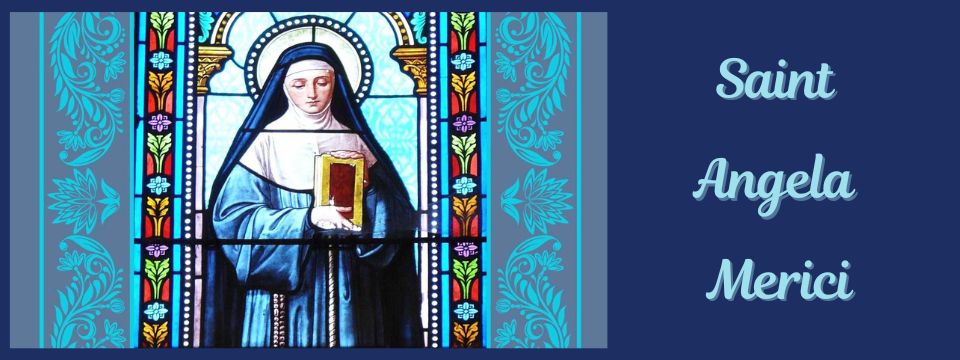
Angela de Merici was born in Desenzano, on the south-western shore of beautiful Lake Garda, in northern Italy.
Left an orphan at the age of ten with an older sister and a brother, they were taken in by an uncle living in the neighbouring town of Salò.
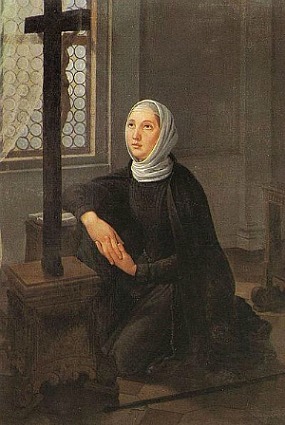
Angela was much distressed when her sister suddenly died without the assistance of the last sacraments. At this time, she had a vision, the first of many in her life, which set her mind at rest as to her sister’s salvation. In gratitude, she made a special consecration of herself to God, joined the Third Order of St. Francis and began to lead a life of great austerity.
After her uncle died when she was twenty, Angela moved back to Desenzano. Convinced of the need to instruct young girls in the Faith, she converted her home into a school.
In a vision, she was shown that she would found a congregation for the instruction of young girls. Angela talked with fellow Franciscan tertiaries and friends who began to help her.
Though petite in stature, Angela had looks, charm and leadership. Her school thrived and she was approached about starting a similar school in the larger city of Brescia where she came in contact with leading families whom she influenced with her great ideals.
In 1525 on a pilgrimage to Rome, Pope Clement VII, who had heard of her holiness, suggested she found a congregation of nursing sisters in Rome. But Angela who felt called elsewhere and shunned publicity, declined and returned to Brescia.
On 25 November 1535, with twelve other virgins, Angela Merici laid the foundations for her order for the teaching of young women, the first congregation of its kind in the Church. She placed her order under the protection of St. Ursula the patroness of medieval universities and popularly venerated as a leader of women.
To this day her followers are known as the Ursulines.
Angela died only five years after establishing the Ursulines, and was canonized in 1807 by Pope Pius VII.
Patron Saint of Gravediggers, Butchers, and Skin Diseases
Feast 17 January
Anthony was born in 251 in the village of Koman, south of Memphis in Egypt. Anthony’s well-to-do parents died before he was twenty leaving him in charge of a younger sister, and the owner of a considerable estate.
In 272, wishing to leave all to follow Christ, after securing his sister’s support and upbringing, he distributed his holdings among the poor, and retired to a life of solitude. He lived a life of penance, sleeping on a rush mat on the bare floor, eating and drinking bread and water. The devil was allowed to attack him grievously, on one occasion subjecting him to a beating that left him for dead, only to be saved by friends. Anthony emerged victorious from all these trials.
At the age of thirty-five, the holy hermit moved from his solitude in the vicinity of his native village, to a location across the eastern branch of the river Nile where he made his abode in some ruins on the summit of a mountain. There he lived for twenty years, rarely seeing any man except one who brought him bread every so often.
St. Athanasius, his friend and first biographer, speaks of Anthony as not only spending his time in prayer and meditation but also in making mats. He also gardened.
At fifty-four, being sought out by men who wanted to follow his way of life, Anthony founded his first monastery in Fayum in a series of scattered caves, which he visited occasionally.
In 311 as religious persecutions again broke out under Emperor Maximinus, Anthony left his solitude to give courage to the martyrs in Alexandria. When the persecution abated, he returned to his previous solitude. He later founded another community of monks near the Nile called Pispir, though he continued to live on his mountain.
Years later, at the request of the bishops, Anthony again journeyed to Alexandria to confute the Arians, who denied the divinity of Christ. All ran to hear the holy hermit, and even pagans, struck by the dignity of his character, flocked around him. Heathen teachers and philosophers often sought him out, and were astounded at his meekness and wisdom.
Anthony died at age 101 surrounded by his spiritual sons in his hermitage on Mount Kolsim.
His last words were, “Farewell, my children, Anthony is departing and will no longer be with you.” Thus saying, he stretched out his feet and calmly ceased to breathe.
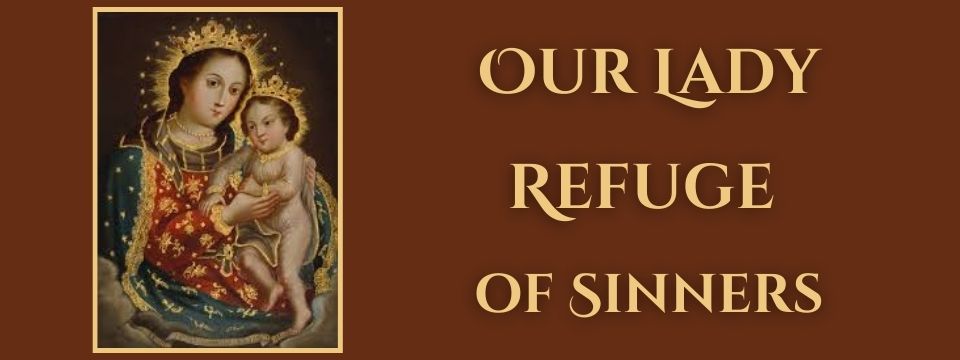
The worst evil that can befall us is unquestionably SIN, which makes us an object of abhorrence in the sight of God.
God’s infinite mercy has not only prepared for us a potent remedy against sin in the merits of Jesus Christ, our Saviour, but it has also given us poor sinners a secure refuge in the assistance of Mary, Our Lady refuge of sinners. In the Old Law there were cities of refuge to which the guilty could flee for safety; in the New Law, Mary’s mantle is for us that citadel of refuge for sinful souls. How can the Divine Wrath strike us, if we are covered by the mantle of Mary, the chosen daughter and the honoured Mother of God?
Our Lady refuge of sinners is thus not merely a pledge of our safety, but by her unrivalled sanctity, she is as earnest of pardon for all sinners who have recourse to her intercession. She not only disarms the just anger of God roused by our sins, but also obtains for her true clients sincere and heartfelt conversion. All we need do is turn toward her with Faith, to obtain Divine Clemency and the means to rise from the mire of sin.
To be cleansed from sin and to be admitted again into the friendship of God is a grace beyond compare; but to be kept free from fresh falls is even more important, as our salvation depends entirely upon final perseverance. Mary, by her intercession, helps us detest past sins and faults; and keeps us from renewed relapses.
Through God’s permission we are tempted in all sorts of ways; but Mary’s watchful assistance helps us put Satan to flight while she suggests to us, through our Angel Guardian, all manner of good thoughts and holy aspirations.
More than ever at the hour of death, Mary shelters her devoted children, driving the Tempter far from us, and encouraging us to fight valiantly to the last gasp.
“Holy Mary, Mother of God, pray for us SINNERS, now and at the hour of our death. Amen.”
St. Bonaventure has aptly said: “You embrace with maternal affection a sinner who is even despised by the whole world, nor do you cease your embrace until you have reconciled him with his judge.”
In the Old Testament we find many figures of Mary as the refuge of sinners, like Ruth who “gleaned the ears of corn after the reapers.” St. Bonaventure draws this comparison:
“As Ruth found grace in the eyes of Booz, so Mary found Grace before God. The reapers are the gleaners in the vineyard of the Lord, the missionaries, preachers and confessors who endeavour to gain souls to God. But there are obstinate and hardened souls who do not allow themselves to be gained; these can be saved only through the powerful intercession of Mary. There is no sinner so corrupt and sunk in vice that Mary will despise and reject him. If such a one seeks help with her, she will most certainly reconcile him with Jesus and obtain pardon for him.”
*from The Woman in Orbit and other sources as seen on https://www.roman-catholic-saints.com/our-lady-refuge-of-sinners.html
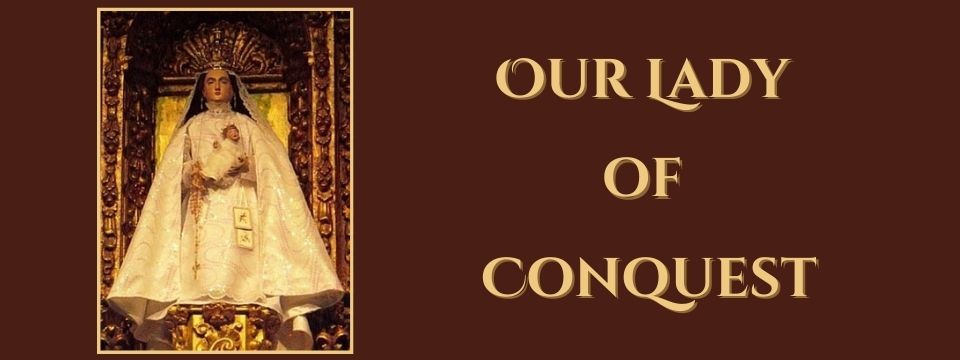
In the North Chapel of the beautiful cathedral of Santa Fe stands a little statue (scarcely one metre tall) of Our Lady holding the Child Jesus. It was skilfully carved by loving hands in Spain. Mary is clad in a richly embroidered dress, topped by a jewelled crown. Her regal countenance wears a serene, detached expression that is strangely impressive. This is Our Lady of Conquest, or La Conquistadora.
The statue of Our Lady of Conquest came to the new world in the care of the Franciscan missionary Fray Alonso da Venevides. She was installed with great ceremony in a church in Santa Fe. Over the ensuing decades, as often happens, the men living in the region did not practice their religion as they should. Mary appeared in a vision to a young girl, warning her that the colony would be overrun due to the loss of reverence for priests and the Faith.
In the year 1680 the local Indians rose up and attacked the Spanish. Twenty-one priests were killed, and the colonists completely driven out of the region. The statue was rescued from the burning church and taken back to Mexico with the colonists who escaped the wrath of the Indians.
It was not until the year 1691 that Don Diego de Vargas was sent by the King of Spain to attempt the resettlement of the city of Santa Fe. Like so many Spanish heroes who had accomplished seemingly impossible deeds during their lifetimes, he was as fervent a Catholic as he was a capable knight. Don Diego de Vargas carried with him the statue of Our Lady as he re-entered New Mexico. Although he had only a small force, he was able to peacefully negotiate a peace with the various Indian nations. He attributed his success to “the Sovereign Queen, Most Blessed Mary.” He is said to have vowed to build a chapel for her and hold a yearly procession if she would grant him a speedy and blood-less victory over the Indian, which she did.
Upon reaching his goal, however, the Indians refused to allow the Spanish colonists to return to Santa Fe. The Spanish under Don Diego were few in number, and they were forced to fight a numerically superior force.
The colonists prayed the rosary before the statue of the Blessed Virgin as the men engaged the Indians in battle. The fighting lasted all day, and it was not until evening when they reclaimed the city. Once again, Mary was credited for the victory, and to show her sovereignty, Don Diego placed an officer’s baton in her hand.
The shrine symbolizes a spirit of deep-rooted Faith and devotion which characterized the “Conquistadores” of this land. There is still a great deal of devotion shown to Mary at the Cathedral of St. Francis that includes processions, fiestas and other celebrations.
The statue was formally crowned by Cardinal Francis Spellman and in 1960 received a Papal Coronation.
As seen on https://www.roman-catholic-saints.com/our-lady-of-conquest.html
To better understand the great spiritual treasure contained in the Sacrament of Penance or Confession, let us turn the clock back two thousand years to Palestine, to a scene in the public life of Our Lord Jesus Christ.
The majesty of His Person, the wisdom pouring forth from His mouth and the power manifested by His miracles attracted a multitude that followed Him everywhere.
Only God Can Forgive Sins
One day, after curing the centurion’s daughter as a reward for his faith, silencing the storm before the fearful apostles, and expelling the demons in Gerasa, he boarded Peter’s boat for Capharnaum.
Hearing that He was in a house in their city, the people gathered in such numbers that the door of the house was obstructed. But for faith there are no obstacles, so some charitable persons carrying a paralytic, unable to enter by the door, climbed to the roof and lowered the suffering man into the room, setting him at Our Lord’s feet to be cured.
To everyone’s surprise, instead of simply performing the expected miracle, Jesus said:
“Courage, son, thy sins are forgiven.”
This was something new. No prophet had dared pardon sins. Not even John the Baptist, the greatest of all, had dared so much, preaching only the baptism of penance for the forgiveness of sins. 1 Nevertheless, this new Prophet declared, “thy sins are forgiven.”
The Pharisees, always looking for something with which to be scandalized, despite the Master’s astounding miracles, thought to themselves: “How does this man speak this way? He is blaspheming. Who but God alone can forgive sins?”
Truly, only God can forgive sins. That is because sin is an offense against the divine Majesty and only the object of the offense can forgive the offender. No one can forgive an offense done to another, above all when this Other is of a superior nature, God Himself.
Still, the wisdom and the miracles showed that this Prophet possessed powers that no other prophet before Him had possessed. His was an unfathomable perfection. But the Pharisees had hardened their hearts, and their understanding was clouded by passion. Within themselves, they uttered the same accusation that they were to renew at His passion: “He has blasphemed.”2
There was drama in the air. Everyone felt it. How would Jesus react before that mute accusation and ill-disguised surprise?
The answer came as a challenge. “Why are you thinking such things in your hearts? Which is easier, to say to the paralytic, ‘Your sins are forgiven,’ or to say, ‘Rise, pick up your mat, and walk’?”
As always, the Pharisees were speechless before the dilemma offered them by the Rabbi.
In answer to their silence, Jesus said:
“But that you may know that the Son of Man has power on earth to forgive sins,” He said to the paralytic, “I say to you, arise, pick up your mat, and go home.”
“And immediately,” writes Saint Mark, the paralytic “rose, picked up his mat, and went away in the sight of everyone. They were all astounded and glorified God, saying: ‘We have never seen anything like this.’”3
The miracle performed by Our Lord on this occasion had an apologetic value. As Saint John Chrysostom explains, Jesus proved His divinity by a triple miracle:
“First, declaring openly their secret thoughts and murmurs against Him; second, healing the paralytic, third, performing the miracle with this end in view, that, by it, He might show that He had the power to forgive sins.”4
Our Lord Gave the Apostles the Power to Forgive Sins
Here we have the explanation for Confession. As Jesus proved that He was God by means of an astounding miracle, He also proved that He could forgive sins. And, as God, He has not only the power to forgive sins but has also the power to confer this faculty on others.
Furthermore, as Jesus is the only priest of the new Law, the mediator between God and men, a simple “delegation” of the power to forgive sins would still not be enough. It was necessary that Christ unite His Eternal Priesthood to that of those that would continue His work on earth after His ascension into Heaven.5 For this reason, He instituted the ministerial priest as the visible instrument of His action.6
The power to forgive sins was bestowed on the Apostles on the evening of the day Our Lord resurrected from the dead and mysteriously appeared amidst the Apostles gathered in the cenacle behind locked doors.
Saint John narrates:
Now when it was late that same day, the first of the week, and the doors were shut, where the disciples were gathered together, for fear of the Jews, Jesus came and stood in the midst and said to them, “Peace be to you.”
When He had said this, He showed them His hands and His side.
The disciples therefore were glad, when they saw the Lord. He said therefore to them again, “Peace be to you. As the Father hath sent me, I also send you.”
When He had said this, He breathed on them and He said to them:
“Receive ye the Holy Ghost. Whose sins you shall forgive they are forgiven them, and whose sins you shall retain they are retained.”7
The Power to Judge and to Forgive
It is clear in the narrative above that Our Lord instituted not only the Sacrament of Penance, but also the mode in which it must be practiced.
On declaring that the sins that a priest forgives are forgiven and those that he retains are retained, He is signifying that, before forgiving, the priest must become acquainted with the sins as well as with the dispositions of the sinner. Only then will he be in a position to judge if there are conditions for forgiveness or not.
The seal of confession is an essential aspect of the sacrament of Penance. This sacred trust between penitent and confessor cannot be broken.
Thus, in the tribunal of Confession, as in any other tribunal, it is necessary that there be an accused, an accuser, and a judge. In Confession, the role of accuser is exercised by the penitent who accuses himself to the priest of the sins he has committed; hence the necessity of oral confession.8 The judge is the priest.
The Absolute Necessity for Secrecy in Confession
Our Lord, having established the Sacrament of Penance and the need for the penitent to declare his sins to the priest, also established the secrecy of Confession as a necessary consequence. For if secrecy were not obligatory, Confession would be odious if not impossible. This would render the sacrament ineffective, which is absurd.
Therefore, the secrecy of Confession is a divinely instituted right and cannot be abolished by any earthly authority. Any attempt in this respect is in direct opposition to God’s will.
Besides being a divine right, this obligation of secrecy was also established by ecclesiastical law, which always imposed the severest penalty for its infraction.9 Current legislation continues to maintain the same, declaring that any confessor who violates the secrecy of Confession is automatically excommunicated and can only be absolved by the Holy See.10
Is It Not Too Humiliating to Confess to Another Man?
Is it not too humiliating to have to submit to another man, himself a sinner, at times possibly even a greater sinner than the one confessing his sins?
If we truly realized the scope of God’s infinite grandeur and majesty and His immense perfection, we would be much more ashamed of telling our sins to Him (as if He did not already know them,) than to a man. The more perfect is the creature we address, the more miserable we appear and the more evident is the contrast between perfection and sin.
That is why theologians say that when a person dies in the terrible state of mortal sin and appears at his private judgment before the unspeakable perfection of God, he flees from God and hurls himself in Hell to hide his shame.
Thus if we analyse this well, this very humiliation of having to confess our sins to another man is a mercy of God. How much more humiliating it would be to kneel before the Divine Master Himself and tell Him all our sins! What is the humiliation before a man compared to the humiliation of recounting our sins before the infinite perfection of God?
In any case, this is the form in which Our Lord instituted the Sacrament of Confession, so we should submit in a spirit of obedience and love. In His infinite wisdom, He does everything to perfection. When men try to modify what He instituted, the result can only be deplorable.
The prideful attitude of saying, “I confess directly to God,” is almost the same as saying: “I am so perfect that I go directly to God Himself. I have no need of those crutches that are the Sacraments, the advice or the help of other men.”
The priest is “taken from among men and made their representative before God to offer gifts and sacrifices for sins.”11
An angel cannot be a mediator. To refuse thus the mediation of another man is to refuse the priesthood, because the priest, while a mediator, has to be of the same nature as those for whom he mediates. That is why Our Lord, the Supreme Priest, became flesh and took our nature onto Himself, as Saint Paul says:
“For we do not have a high priest who is unable to sympathize with our weaknesses, but one who has similarly been tested in every way, yet without sin.”12
But Can a Sinner Forgive Sins?
To a priest applies, even more than to the common faithful, the general convocation to sanctity of Our Lord when he said:
“So be perfect as your heavenly Father is perfect.”13
But a priest is also subject to temptation and can not only sin but be, in certain cases, a sinner. Nevertheless, even when he sins, he does not forfeit the power that comes to him from the Sacrament of Holy Orders.
This was the objection raised at the beginning of the Church by the Donatist heretics as a result of a misunderstanding of the doctrine on the sacraments.
But Saint Augustine made it very clear to these same heretics that:
“…the power of the sacraments does not come from the sanctity of its ministers but from the infinite sanctity and perfection of Our Lord Jesus Christ.”
I Have No Sins to Confess…
Many people feel no need to go to Confession, thinking that they have no sins. They should consider what Scriptures says:
“Yet there is no man on earth so just as to do good and never sin.”15
“If we say, ‘we have not sinned,’ we make Him [God] a liar, and His word is not in us.”16
In these times of extreme corruption, let us avail ourselves of this instrument of divine mercy that is Confession. Let us carefully examine our consciences and with the firm resolution of turning away from sin, confess our failings to the priest.
For this small effort, this small humiliation, the reward is immense. Our soul is washed clean, our sins are forgiven, and we return to God’s friendship. As the Psalmist says: “cleanse me with hyssop, that I may be pure; wash me, make me whiter than snow.”17
References:
Cf. Luke 3:3.
Matt. 26:65.
Mark 2:5-11; cf. Matt. 8:1-34; 9:1-8.
Cornelius a Lapide, St. Matthew’s Gospel, Chaps. I to IX, in The Great Commentary of Cornelius a Lapide (London: John Hodges, 1893), p. 353.
See 1 Tim. 2:5; Heb. 5:6; 7:24; Ps. 110:5.
Our Lord instituted the Sacrament of Holy Orders on Holy Thursday. After anticipating the sacrifice of the Cross in a sacramental form by the transformation of the bread and wine into His body and blood, He commanded the disciples: “Do this in remembrance of Me.” On giving this command, He also granted the necessary power to execute it, that is, the power to consecrate. (Luke, 22:19; 1Cor.11:24.)
John 20:19-23. Saint Cyril explains that Saint Thomas, despite being absent, also received the Holy Ghost and then the power to pardon sins eight days later when Our Lord appeared to him and converted him from his incredulity. (cf. Cornelius a Lapide, The Great Commentary–St. John’s Gospel [Edinburgh: John Grant, 1908], p. 273).
Under special circumstances, the Church allows general absolution without oral confession, but oral confession must be made at the first opportunity. (See Canon 963.)
Cf. “Seal of Confession. … Imposed by Christ in instituting the sacrament, this obligation has repeatedly been inculcated by ecclesiastical authority.” Fr. Gregory Manise, O.S.B., s.v. “Seal of Confession,” in Dictionary of Moral Theology (Westminster, Md.: Newman Press, 1962), p.1105.
The region of Limousin is nestled near the heart of France, and the essentially rural area has suffered much from heresies such as that of the French Huguenots over the centuries. Devotion to Our Lady is always a sure remedy, so much so that one of her titles is Destroyer of Heresies.
Among the many miracles said to have taken place at the shrine of Our Lady of Bessiere, in Limousin, France, is one told of a certain heretic who had derided the devotion paid to Our Lady. He would hide in the woods and waylay pilgrims on their way to the shrine.
Fearing neither God nor his Holy Mother, he would block their way, mock them for undertaking such a journey, sneer at their Christian beliefs, and taunt them with sarcastic reproaches and foul ridicule.
The unhappy man was soon to regret his folly. He was severely punished one day, as upon returning home, he saw his house go up in flames before his very eyes. Even with the assistance of his neighbours, all attempts to put out the flames were fruitless. In a matter of minutes his house was fully engulfed in flames.
As the fire was at its height, Our Lady appeared in the flames in all her majesty and was seen to frown upon the heretic. This vision was witnessed by all present, who immediately fell upon their knees, urging the heretic to do the same.
A broken man, frightened and frustrated, he prostrated himself, calling upon the Mother of God to be merciful to him.
His pleas were not in vain, but it was not his house that she saved, but his soul. In that moment he experienced a true and lasting conversion. He went on to live a very penitential life, and died true believer.
As seen on https://www.roman-catholic-saints.com/our-lady-of-bessiere.html
Our Lady of Guides is also known as Our Lady of Guidance, or in Spanish, Nuestra Senora De Guia. She is currently displayed in the Ermita Church, and is the patroness of Manila.
One of the sailors to land on the island of Luzon in 1570, while walking in the woods near the native settlement of Manila, came upon a religious ceremony held by the Natives. They were honouring an image of the Mother of God, a statue on a rough pedestal. The natives told the Spanish that the statue had the power to make their petitions come true, and indeed, miracles were performed.
Since nothing of the origin could be learned, the sailors determined to name the statue by some “Lady Title”; the lot fell upon “Our Lady of Guidance”; everyone agreed she had guided them on their dangerous journey.
When the cathedral at Manila was built the statue was enshrined there. A hundred years later, this cathedral having been destroyed, a new church was built, and it is visible from the sea. In its high tower a light was set as a beacon to incoming ships, a fit place for Our Lady of Guides. Later the statue was placed within the walls of the restored cathedral.
As to the mysterious nature of the statue’s unknown origin, some think the statue floated in from a wrecked ship, and was so seized by the natives.
The statue of Our Lady of Guidance was canonically crowned in the year 1955 by the Papal Nuncio to the Philippine Islands. The shrine is visited by labourers seeking employment in many countries, and when they return they leave gifts of thanks for the Queen of Heaven before her statue.
Today the devotion to Our Lady of Guides still flourishes. For all of us who travel this wide lonely world, she is the patroness, the Queenly Lighthouse, the Star of the Sea.
As seen on https://www.roman-catholic-saints.com/our-lady-of-guidance.html
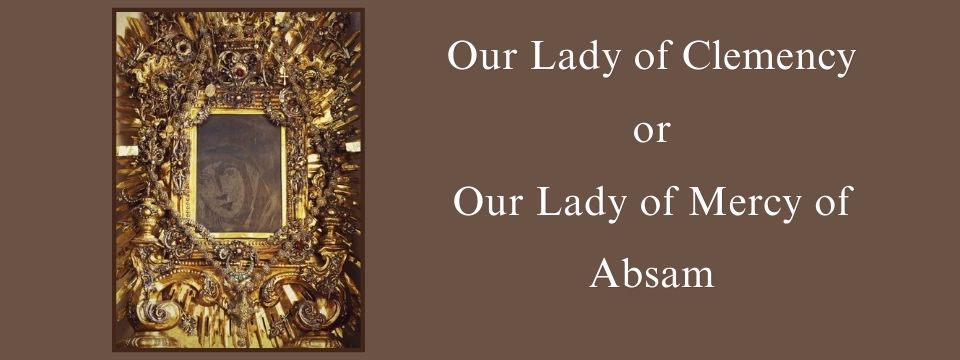
The shrine is probably the only one in the world where Our Lady’s shrine is enclosed in glass. It dates from the late 18th century.
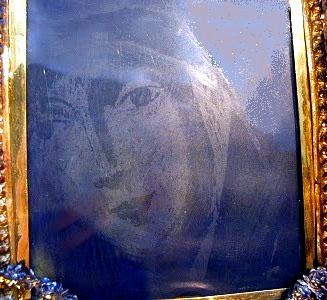
On a dark snowy day in 1797, Rosina Bucher, a young girl of the village of Absam near Innsbruck, was sitting by the window sewing in her farmhouse. It was between three and four in the afternoon and the light was just beginning to fade. Rosina looked up and saw a face in the window pane. She looked closely, not sure that she saw right, and finally called her mother.
Others, including the parish priest, were called in to observe the strange happening. All agreed that it was a face, the face of the Mother of Sorrows. It was turned slightly and there was a strange expression on it.
The window was made up of several small panes of glass quite dark in colour. They removed the pane of glass with the picture on it, which was on the inside of the double window. After they had examined the glass, it was sent to experts in painting and glasswork. Here it was discovered that the face disappeared when water was put on the glass, but came back as soon as the glass was dry. They analysed it chemically, and could not discover by what process the picture had been placed there.
Rosina’s mother thought it was an omen of trouble. The parish priest, on the contrary, felt that Our Lady’s blessing must rest on the house. He asked her to let him have the picture for the Church. It can now be seen at St. Mary’s Basilica Absam, which quickly became a popular shrine and the most important site of Marian pilgrimage in the Austrian federal state of Tyrol.
Many miracles have been recorded from the pilgrims who prayed there. The church was raised to the status of a Minor Basilica in June of 2000 by Pope John Paul II due to its popularity as a site of pilgrimage.
Our Lady of Clemency of Absam is still a popular place of pilgrimage, but the most popular date is the anniversary of the discovery of the picture, January 17th. On the 17th of each month there is a celebration of the discovery of the image. The picture is quite small, the size of a small pane of glass. It is not at all pretty, and popularly known as Our Lady of Mercy and Clemency of Absam – clemency, because Mary’s heart is filled with love and kindness to those who pray at this shrine and implore her help.
As seen on https://www.roman-catholic-saints.com/our-lady-of-clemency.html
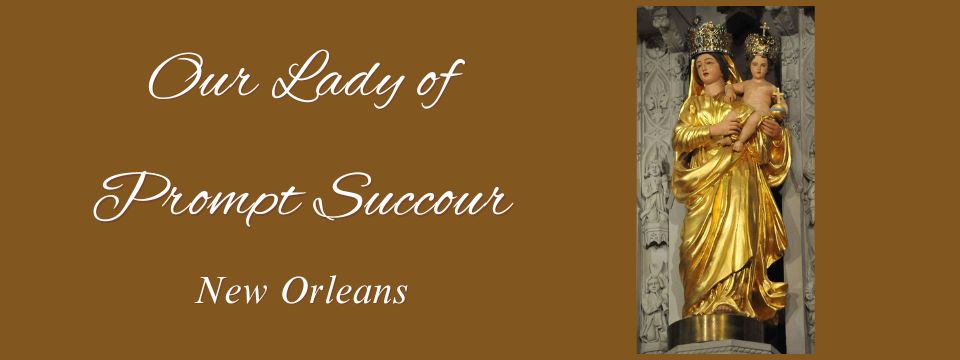
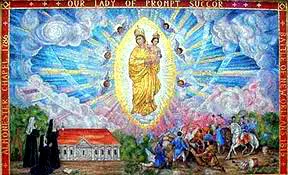
For almost two hundred years the Ursuline nuns of New Orleans, Louisiana, have owned and venerated a golden, miraculous statue of Our Lady under the title, Our Lady of Prompt Succour. This lovely statue, which today stands above the high altar of the Votive Shrine or chapel, was brought from France by a humble and holy Ursuline Sister in fulfilment of a vow.
Today, Our Lady of Prompt Succour is the only statue in the United States that has been crowned by a Pope’s delegate, and it is one of the few miraculous statues in North America. The favours granted by Our Lady of Prompt Succour are so numerous and wonderful, that whole books could be written about them.
At the outbreak of the French Revolution, and Ursuline nun, Madame St. Michel Gensoul (Frances Agatha Gensoul), was obliged to leave her convent in France, return to the world and wait the time when convents would be reopened. Meanwhile she received a letter from a relative in the Ursuline Convent in New Orleans (Mother St. Andre Madier), saying that sixteen other Ursulines, to escape the government of France, had come to Havana, Cuba, to open a community there. Mother St Michel decided to devote herself to spiritual labours in Louisiana, but her Bishop refused consent, since he hoped the convents of France would soon resume activity, and he told the religious that only the Pope could give her permission, and since he, the Pope was a prisoner of Napoleon, the entire project was out of the question.
Following an impulse, Mother St. Michel wrote to the Pope and then turning for aid to Our Blessed Mother, she prayed: “O most Holy Virgin Mary, if you obtain for me a prompt and favourable answer to this letter, I promise to have you honoured at New Orleans under the title of Our Lady of Prompt Succour.”
The letter was sent from Montpellier to Rome on 19 March 1809, and despite all things to the contrary, Pope Pius replied on 29 April 1809. The request had been obtained thru the prompt aid of Our Lady. In thanksgiving, Mother St. Michel ordered sculptured a beautiful statue of Our Lady holding the Infant Jesus in her arms, Our Lady of Prompt Succour. In this statue, Jesus holds in His Hands a globe, representing the world. Bishop Fournier, recognizing in all this the acts of Divine Providence, asked permission to bless the statue.
Mother St. Michel and several postulants with the precious statue of Our Lady of Prompt Succour, arrived in New Orleans December 31, 1810. The statue was set up in the chapel of the Sisters on Ursuline St. and Mother St. Michel who taught there, lost no time in spreading devotion to Our Lady, which soon became popular.
Two signal favours showed Our Lady’s pleasure at the devotion: in 1812 a great fire broke out near the convent, which was doomed for destruction. An old lay sister placed a small statue of Our Lady of Prompt Succour on a window ledge facing the approaching flames; at the same time Mother St. Michel fell on her knees and prayed: “Our Lady of Prompt Succour, we are lost if you do not come to our aid.” The wind veered, the fire died down and the convent was saved.
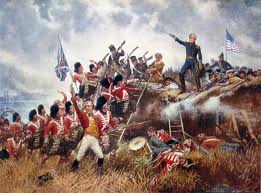
Another great favour was bestowed during the Battle of New Orleans, 8 January 1814. Never before was the city in hopelessly greater danger as the British fleet arrived at the mouth of the Mississippi River. A small American fleet had been left to defend the river, but upon encountering the British Fleet they were quickly “blown to pieces.”
Very Rev. Wm. Doubourg, urged the people to pray to Our Lady. He was not alone. The leader of the meagre American forces, General Andrew Jackson, had himself warned the Ursulines and all the citizens of the approaching battle and begged their prayers for victory for his out-numbered army.
Early Sunday morning while the raging battle could be heard in the city, the convent chapel of Our Lady of Prompt Succour was crowded with petitioners, begging Mary for prompt aid. The statue was placed upon the altar and Mother Superior in the name of the community vowed if the American forces were victorious and God spared the city, the Ursulines would see that each year a Mass of Thanksgiving would be offered in honour of Our Lady of Prompt Succour.
The British had planned to attack the American defences, which amounted to nothing more than a barricade of boards set behind a shallow moat, in the darkness just before dawn. They feared the deadly marksmanship of the American riflemen, and did not want to approach them across the field after dawn.
The British plans were unexpectedly upset, however, and they were unable to get their 20,000 men into position until after sunrise. Even so, it seemed fortune was with them, as a heavy fog worked to conceal their advance over the cane stubble of the field.
But then something strange and wonderful happened. A wind dispersed the fog just long enough for General Jackson to see the British Redcoats advancing in a straight line, should to shoulder with bayonets drawn. On their chest were white military crossbelts. Jackson gave the command to aim at the crossbelts and his men carried out his order when the enemy had marched within range of their guns.
General Jackson
There was a deafening explosion from the American guns and at once the front rank of the British column fell and died. The big guns of the British now went into action filling the air with smoke and noise and destruction. Jackson had lined up his men in files. When the first file had fired its guns, it withdrew to the rear to reload while the second file came forward to the wall, took aim and fired. When it had finished its deadly work, the third file advanced. Thus it went in orderly fashion with each of the volleys from the guns taking a terrible toll of the British soldiers.
The British kept advancing after each deadly volley of gunshots in a straight unbroken line. Instead of breaking ranks, crouching to the ground and firing, they continued marching forward in plain sight of the American militia who were well-protected behind the mud wall and the high boards. The white crossbelts over the scarlet coats made perfect targets for the backwoodsmen from Tennessee and Kentucky, and the British fell lifeless on top of one another under such deadly fire.
To add to their confusion and rout, those British who had been assigned to bring the scaling ladders to be used in crossing the moat and climbing the walls to the American lines forgot to bring the ladders, and while they rushed to the rear to fetch them, their men were taking a merciless pounding from American guns. British General Gibbs rushed into the lines of his men on horseback encouraging them to attack with bayonets, but the front rank of his soldiers was in retreat and there was so much confusion that he accomplished nothing.
The battle lasted 25 minutes; the routed British lost 800 dead or missing from action, while Jackson lost only 7 men with an additional 6 wounded. Jackson declared only the aid of the Almighty could have brought about such results. He went himself to the convent afterwards to thank the Ursulines for their prayers and for their nursing of the American wounded.
Many favours continue to be obtained through Mary’s intercession, as records testify.
Pope Leo XIII, 21 June 1894, issued a decree of privilege to crown the famous statue, which was done 14 November 1894. The two crowns: one for the infant, the other for Mary were made of “exquisite artistry” – gold, silver, precious stone, donated by hundreds of faithful clients of Our Lady. This was the first of such a ceremony conducted in the United States.
*from The Woman in Orbit and Our Lady Comes to New Orleans as seen on www.roman-catholic-saints.com





 Hearing that He was in a house in their city, the people gathered in such numbers that the door of the house was obstructed. But for faith there are no obstacles, so some charitable persons carrying a paralytic, unable to enter by the door, climbed to the roof and lowered the suffering man into the room, setting him at Our Lord’s feet to be cured.