Winning the heart and soul of South Africa for Mary by spreading the Fatima Message

Winning the heart and soul of South Africa for Mary by spreading the Fatima Message

Abbot Franz Pfanner & Devotion to Our Lady

Abbot Franz Pfanner, a man of indomitable spirit, imbued with an incisive knowledge of the human soul and leaving in his wake a vast legacy of Missions, churches, schools and convents, is rightly called “The Apostle of South Africa.” His zeal was limited by neither time nor distance as he established an incredible network of Missions spanning Kwa-Zulu Natal and eventually also further afield.

The scope and depth of his apostolic outreach not only speaks volumes about the man, but the sheer speed at which he moved and his vast accomplishments are perhaps unsurpassed in the rich Missionary annals of Church history…

Who knows what further enormous successes might have been his legacy had history taken a different turn?

How many pious souls have prayed and pleaded before the bronze bust, which adorns his tomb at Mariannhill? How many sighs have touched heaven imploring recognition for his extraordinary zeal and innumerable achievements?

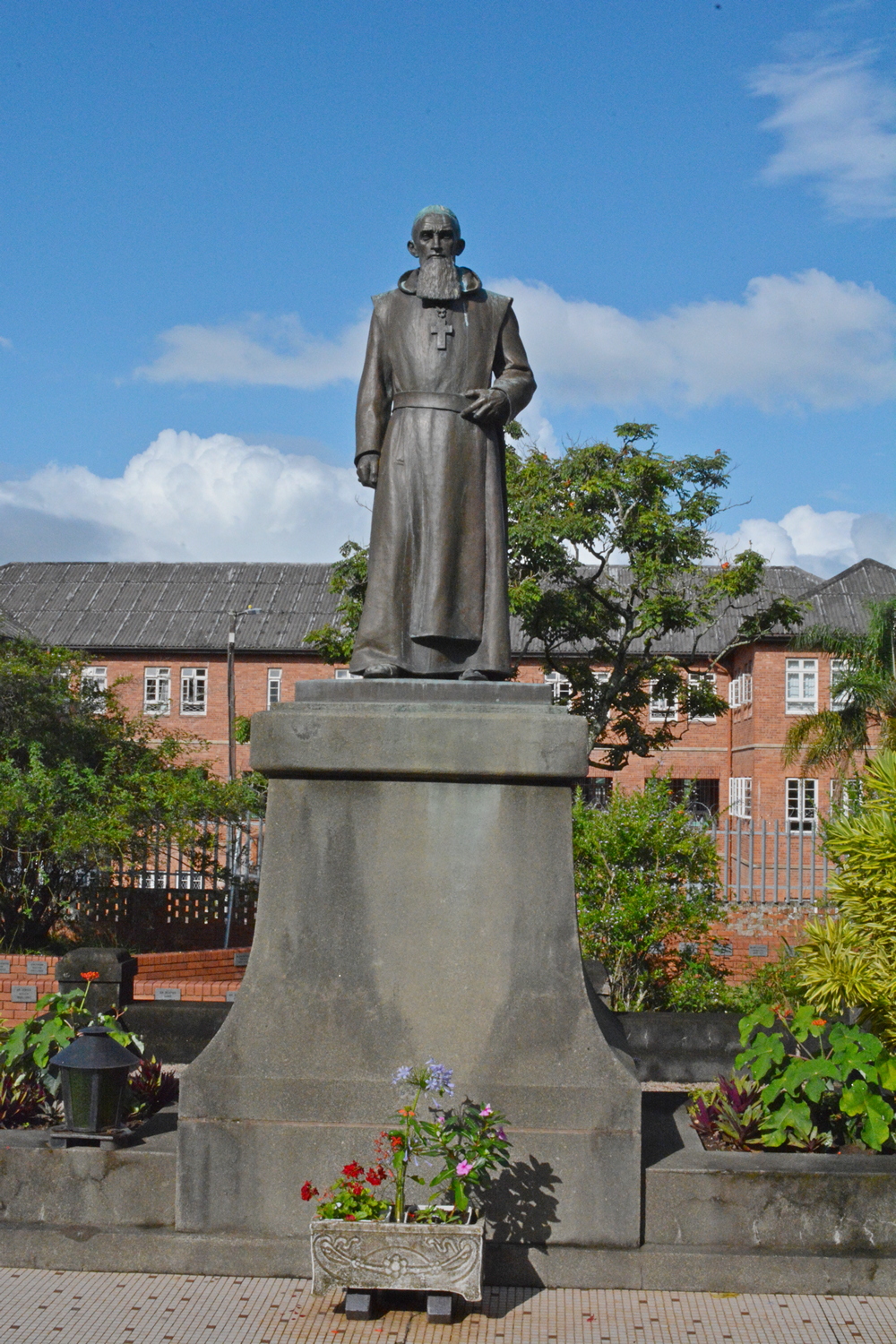
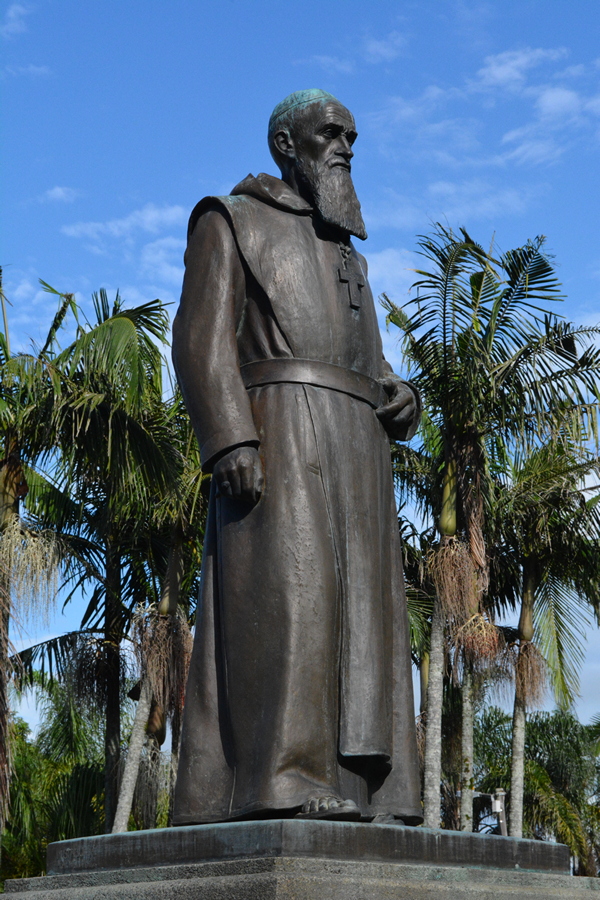
Abbot Pfanner statue in graveyard Mariannhill KZN

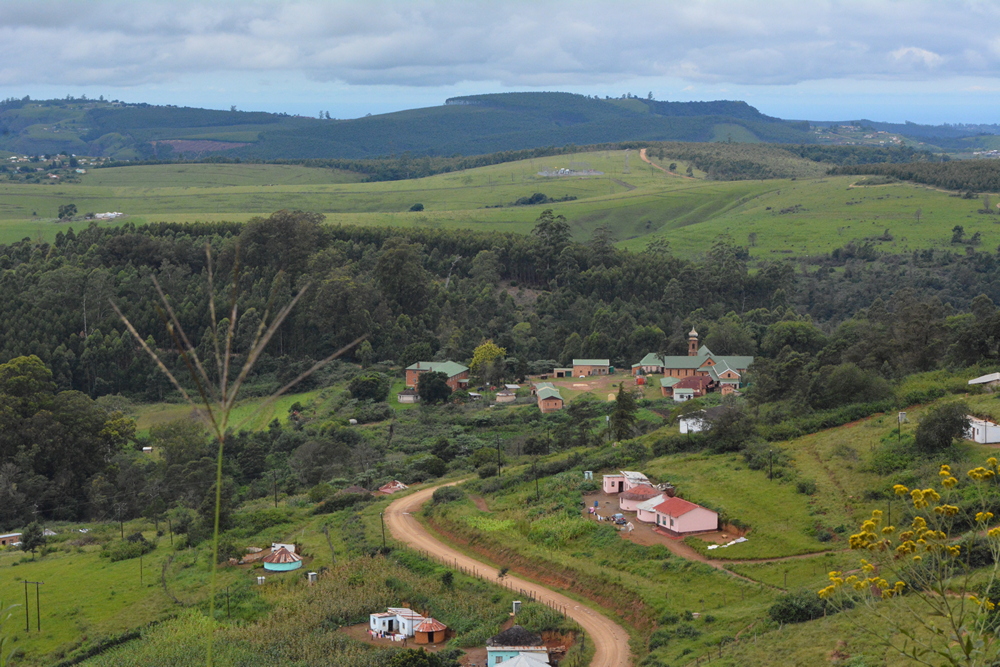
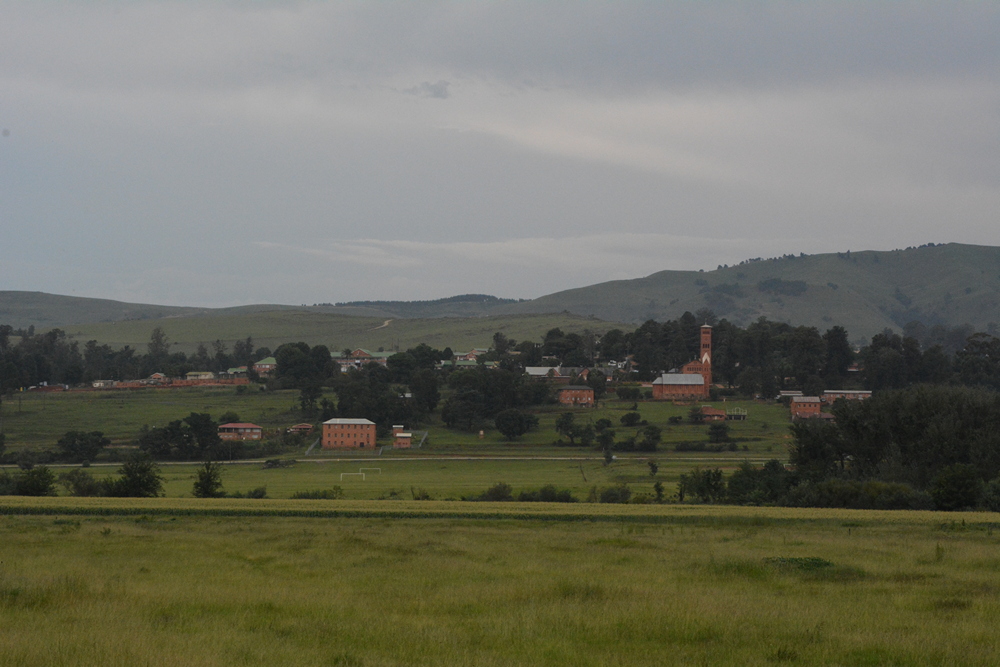
Mariannhill, deriving its name from that of Mary and St Anne, is where the story begins and has remained the focal point of devotion for those convinced of this Servant of God’s sanctity.


The stones, however, could remain silent no more and by the grace of Almighty God the process by which the Cause for his Canonization could be accepted by Rome, is well established.


The future Abbot was born a twin on 21 September 1825 of parents Franz Anton Pfanner and Anna Maria Fink. He was baptized Wendelin Pfanner and his childhood was characterized more by pranks and rascally actions than piety. Nevertheless, he was determined to become a priest and despite many challenges and ill health, was eventually ordained on 27 July 1850. He held a number of positions, including parish priest, but set his heart on joining a monastic order. In 1863, he made a pilgrimage to the Holy Land in search of guidance.


On returning from this pilgrimage and with his Bishop’s blessing, he “departed” the world for the Trappist Monastery, Mariawald, in Germany. Here he received the name which he would henceforth carry – Father Franz Pfanner! He had joined the Reformed Cistercians (Trappists), sons of Saint Bernard who was an ardent devotee of the Blessed Virgin Mary and author of the Memorare. In the tradition of St Bernard’s Cistercians, the monks honoured Mary in the most exalted way. They sang her praises, signed with her name, dedicated all their houses to her, and endeavoured to imitate her virtues. Fr Pfanner, developed a deeply Marian spirituality. Mary taught him to “do whatever He tells you,” (John 2:5). She guided him in unexpected ways.


Father Franz Pfanner excelled in this Monastery, becoming proficient and thoroughly adept at all sorts of occupations like tree felling for timber, road making, irrigation, etc. He also rose quickly to positions of authority. Fr Pfanner never claimed any refined diplomatic skills and was inclined to a somewhat volatile temperament. He could also be a trifle brusque and abrasive. He was generally a man in a hurry – he would run, not walk and soon became Sub-Prior, exacting from his fellow monks only as much as he would do – which was impossible to emulate! All these character traits played out in different ways and were to bedevil some of his actions and status in later life. He was a workaholic and tireless in enduring prolonged physical labour.

However, due to his somewhat impetuous nature, he was not long at Mariawald and soon found himself seeking a new home… It was then that he was sent to establish a Monastery in Turkish Bosnia in 1869, which chapter in his life would alone require a book…

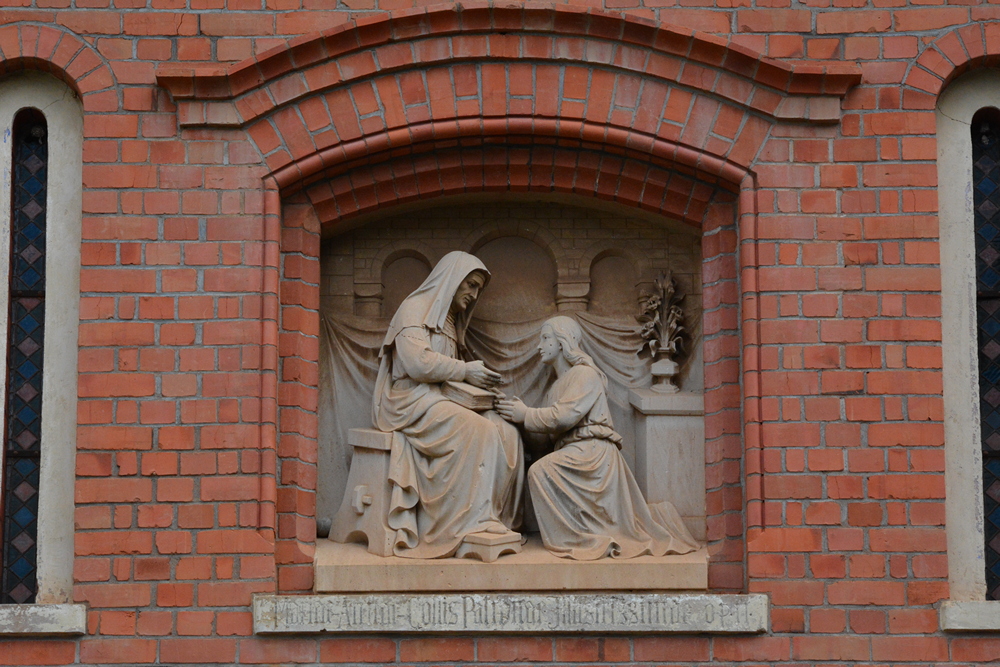
St Anne and Mary at Entrance to Mariannhill
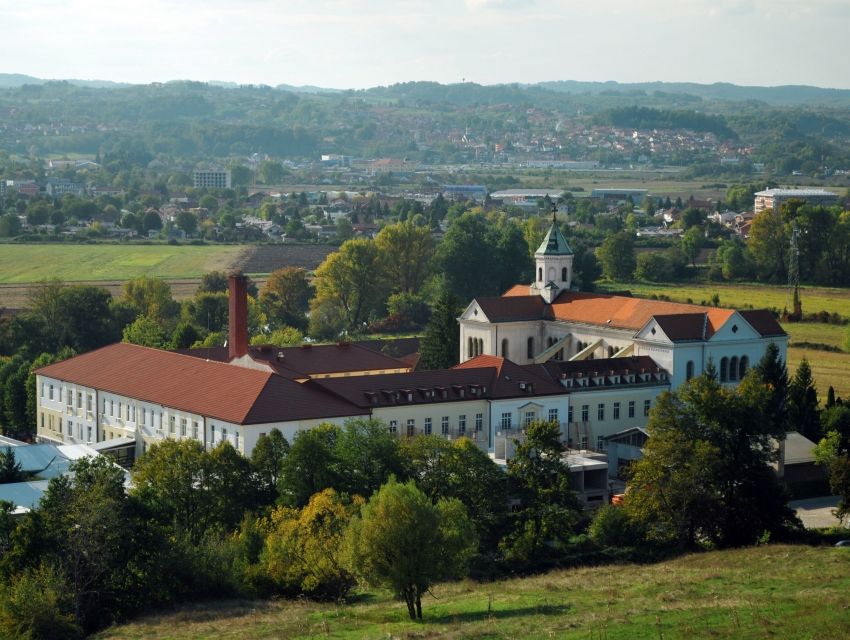
Mariastern Abbey
Mariastern Monastery built by Abbot Franz Pfanner in Bosnia

This was perhaps providential, because the absolutely magnificent Monastery called Mariastern, which he built from scratch, was perhaps the blueprint and invaluable pre-history for the work which would later be his crowning legacy in South Africa. It took ten years to establish a thriving monastery with all that this encompasses. 1872 saw the solemn profession and appointment of Fr Franz Pfanner as titular Prior of Mariastern.


Prior Pfanner later became aware of a peculiar event: It was reported that a seer in the Alsace region of Germany, though ignorant of his identity, told him that she saw the Mother of God blessing him with a star and holding a most beautiful crown above his head. He immediately understood that Mary was blessing Mariastern and inviting him personally to strive for the crown she offered. Prior Pfanner stated, “It seemed as if I had heard for the first time that our future reward will be a glorious crown. My resolution…never to spare myself but give even my blood… became like iron and steel.” If this story was indeed true (and Prior Pfanner had every reason to accept its authenticity), the crown for which he strove was destined to be a heavy one and marked with all kinds of trials, misunderstandings, deprivations and eventual exile…

In September 1879, at the General Chapter of the Trappist Order, he was informed that Mariastern was to be made an Abbey and he the first Abbot. It was also revealed that a South African Bishop, James David Ricards, would attend the Chapter in search of Trappist monks for the South African mission fields.

Franz Pfanner’s thoughts of mission work had long faded – his entire energy, focus and future was now fixed on his beloved Monastery, Mariastern. Bishop Ricards’ stirring plea at the Chapter was greeted by the assembled monks with silence; the distance, uncertainty and fear of the unknown was intimidating and inhibited a positive response. Then one voice broke the silence with an enigmatic “If no one is willing to go, I will go.” It was the clear quiet voice of calm, certainly inspired by the Holy Ghost, and evidencing the smile of Providence on the fertile mission soil of our dear country. These few words would undoubtedly haunt the great Abbot many times down the line when his actions, aspirations and intentions were misconstrued and misunderstood, resulting in rejection and exile – and that long, dark night of the soul to which so many of the Elect are subjected…

Thus it was that these few words catapulted Abbot Franz Pfanner into South Africa on an odyssey that would rightly see him considered the “Apostle to the Zulus.”

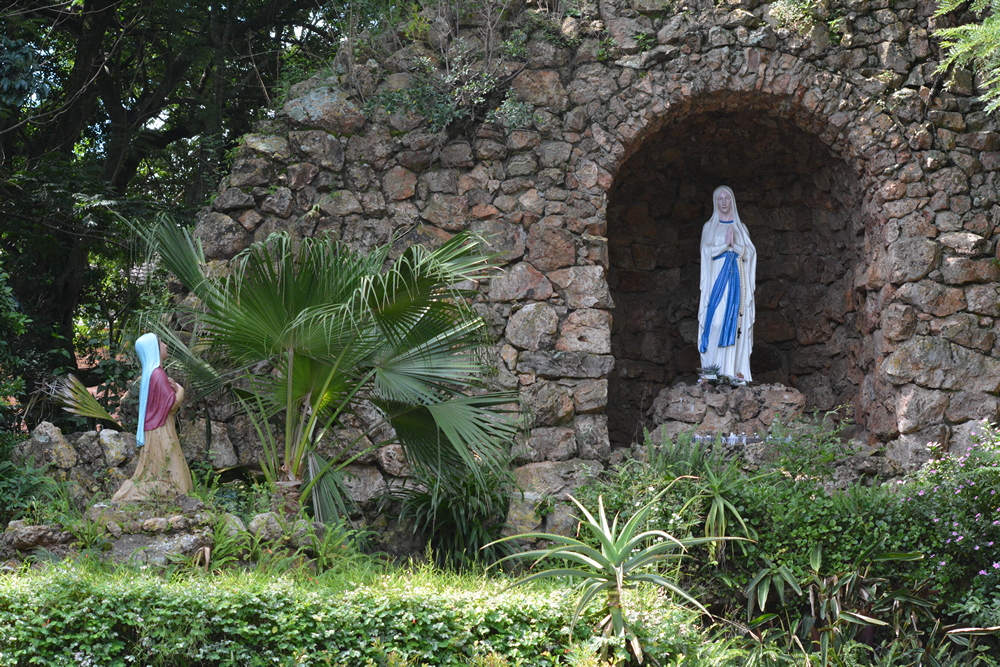
Our Lady of Lourdes Shrine at Mariannhill
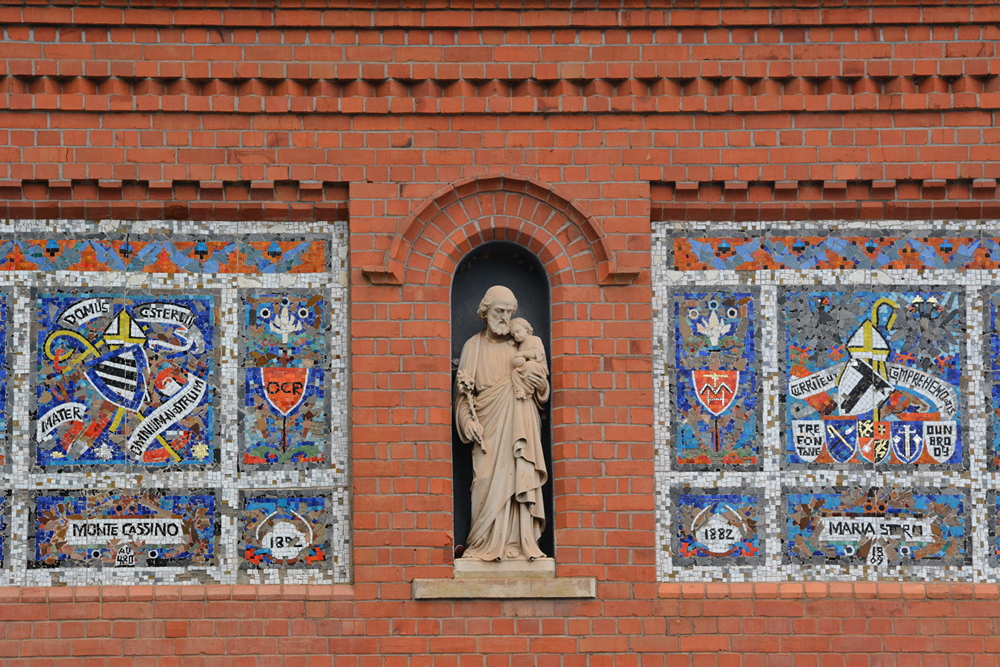
St Joseph at the entrance to Mariannhill


Besides the evidently extraordinary natural capacities with which Abbot Pfanner was endowed, we can surmise that he had some other great spiritual sustenance which nourished his zeal for the spread of God’s Kingdom. Much seems to suggest that the great drive he evidenced for the conversion, education and salvation of those whom Providence placed in his path, stemmed from his great devotion to the Sacred Heart of Jesus Christ and a tender devotion to Our Lady, St Joseph and St Anne.

Indeed, amongst his cherished devotions, the love for the sweet Mother of Christ was prominent. It was a deep, childlike and profound love, one of admiration and also gratitude – a love he was not afraid to share. He was a lifelong devotee of the Holy Rosary, having grown up with this as a family devotion. Sister Pacifica, a pioneer sister, testifies, “I always saw him praying the Rosary.”

He also enjoyed frequent excursions to the various European Marian Shrines near and far. Indeed, before entering the Seminary the young man paid a visit to Our Lady of Einsiedeln, asking her to make him a good priest. Many of these shrines and Marian places of interest would later see their names adopted in dedicating new Missions in South Africa to the service of God under the protection of Our Lady. In Haselstauden he acquired and nourished a profound love of Our Lady of the Visitation; He made his vows on the Feast of the Presentation; volunteered to go to Africa on the Feast of the Most Holy Name of Mary; and died under the protection of Mary, Help of Christians. In addition, the faithful Spouse of Our Lady, St Joseph, was everything to him: treasurer, building supervisor, pilot, novice director, and guardian. Like the Egyptian Pharaoh to Joseph in the Old Testament: “he entrusted his entire household to him.”

It was a Trappist custom to dedicate all their establishments to Mary with the ardent desire of St Bernard’s “De Maria numquam satis.” (Of Mary, never enough.) Indeed, turning to Our Lady in his every need and urging others to love her, was a direct result of Abbot Pfanner’s profound love for Our Blessed Mother. In his early years as a regular parish priest, he would encourage the mothers to model their lives on Mary and tried to inculcate in the youth a real devotion to Our Lady. Indeed, his efforts culminated in a real and vibrant rejuvenation of parish life for which success he credited the maternal intercession of Our Lady…

This period of history was marked by a beautiful Marian revival which was short-lived, but nevertheless had ramifications in many countries. It was the time of the great 1854 proclamation of Pius IX which declared the Immaculate Conception a dogma of our Faith. This dogma was shortly afterwards confirmed by the apparitions of Our Lady of the Immaculate Conception at Lourdes in 1858!

In Abbot Pfanner’s own words: “That Mary was immaculately conceived was not her merit, but pure grace. That she kept this grace spotless was her virtue and her personal merit. She preserved the grace of being immaculate with her unblemished love.

“When tempted by bad thoughts, impatience or anger, one should immediately renew one’s awareness of the presence of God or picture Our Lady. This helps one to think and act differently. If we were to live now as if we would actually see her, we would do nothing to displease her. She will surely come to us in the last decisive hour. What a blessing it would be, if on the verge of death Mary entered one’s last thought.”

Reichenau Mission
Oetting Mission
Centecow Mission

Abbot Pfanner named all the missions he founded after Mary, many of which derived in turn from miraculous shrines in various parts of Europe. These found their origin in the massive legacy and wealth of titles and attributes given to Our Lady over the course of history: Maria Hilf (Mary Help), Maria Trost (Mary Comfort), or from the names of shrines built in her honour: Kevelaer and Reichenau (Germany), Einsiedeln (Switzerland), Mariazell (Austria), Lourdes, Clairvaux, Citeaux (France) and Centocow (Poland), to name but a few. The establishment of this vast complex of Missions in South Africa, dedicated almost entirely to the local people, initiated a major breakthrough in the evangelization of South Africa and imprinted a Catholic stamp on parts of our country which would never be erased. It also established a major part of the pioneering Church in our country on Trappist foundations and, therefore, rooted entirely in Marian spirituality. May this foundation be rediscovered and reignited, opening the road to the conversion of our country to the Immaculate Heart of Mary – from whence all good will flow!


Sr Angela Michel and Sr Euphrosine Rothacker, who lived with the Founder at Emaus during his long exile, witnessed his spiritual life grow in depth at the hand of Our Lady. They record for example that returning from praying his beloved Stations of the Cross it was his custom to spend time at the Grotto dedicated to Our Lady of Lourdes – his eyes filling with tears while meditating on the Way of the Cross or the Sorrowful Mysteries of the Rosary. The sisters could tell the subject of his meditation from his facial expression: “Oh, how his eyes shone when he meditated on the Glorious Mysteries!”

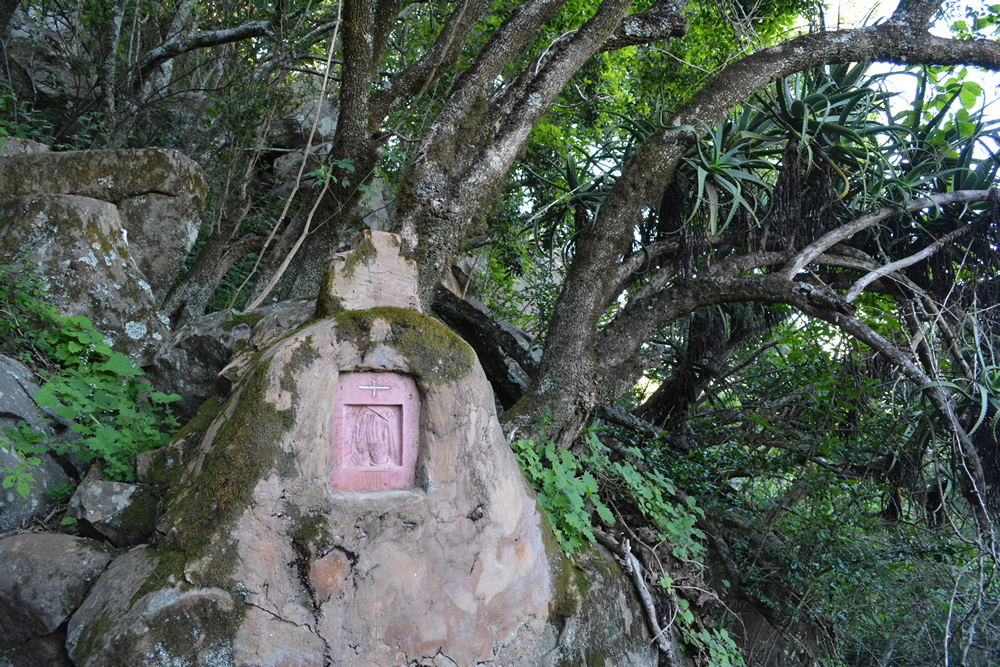
One of Abbot Pfanner's Stations of the Cross on the hill at Emaus

Having striven for the crown that was promised him, it would be a pious thought to imagine Our Lady awaiting him at the Heavenly Gate… Abbot Pfanner once remarked to the same Sr Angela, “Oh, how glad I am that the Good Lord allowed me to be humiliated, disgraced, misjudged and relieved of all responsibilities! Oh, how much I must thank God for being despised and slandered by all!” In his last days his eyes remained closed, but at the moment of his death, as Sr Angela records, a change came over him. “For a few moments Reverend Father looked heavenwards with devoutly attentive gaze, as if the Queen of Heaven and the many souls he had helped to save were inviting him in.”


Abbot Pfanner died at two o’clock in the morning on 24 May 1909, the Feast of Mary, Help of Christians. He left behind an incredible legacy – a veritable monument to his zeal, love of the Cross and faithful devotion to the Blessed Virgin. This Work continued its growth and perfection after his death and today counts in his crown of glory a thriving and dedicated Congregation of Mariannhill Missionaries and the Missionary Order of Sisters of the Precious Blood, of which he is the Founder.


May his words and example spur us to emulate his apostolic and missionary zeal for the greater glory of God and the conversion of our dear land. And may the prayers of the Faithful hasten the Cause for this great apostle’s sublime virtue to be officially recognized – and Abbot Pfanner raised to the altars for our veneration!

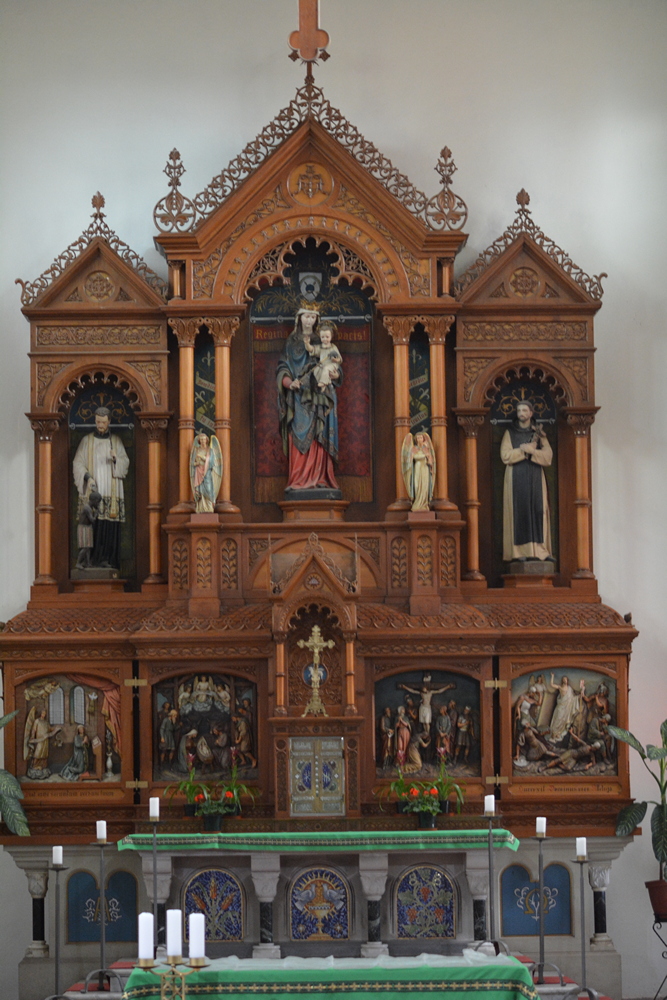
Main Altar at Mariannhill
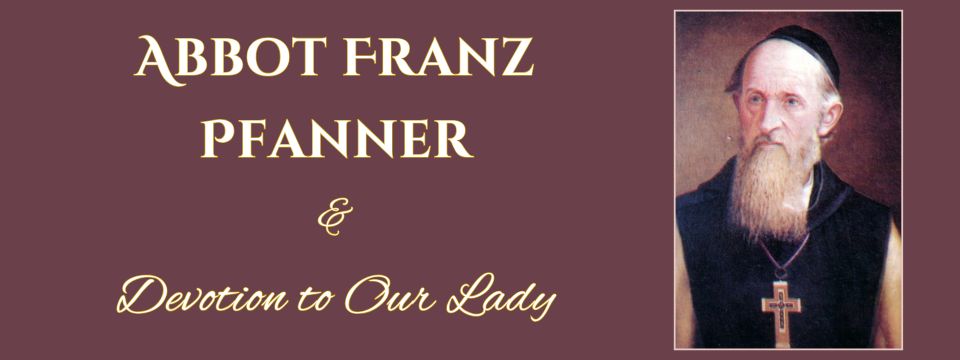
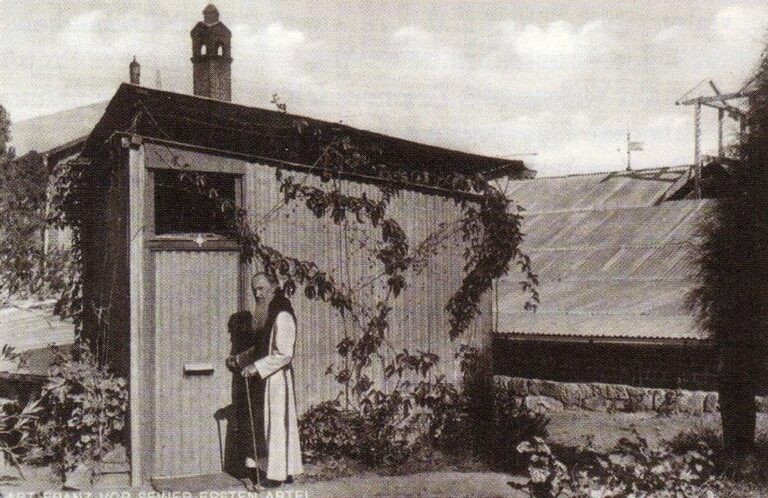
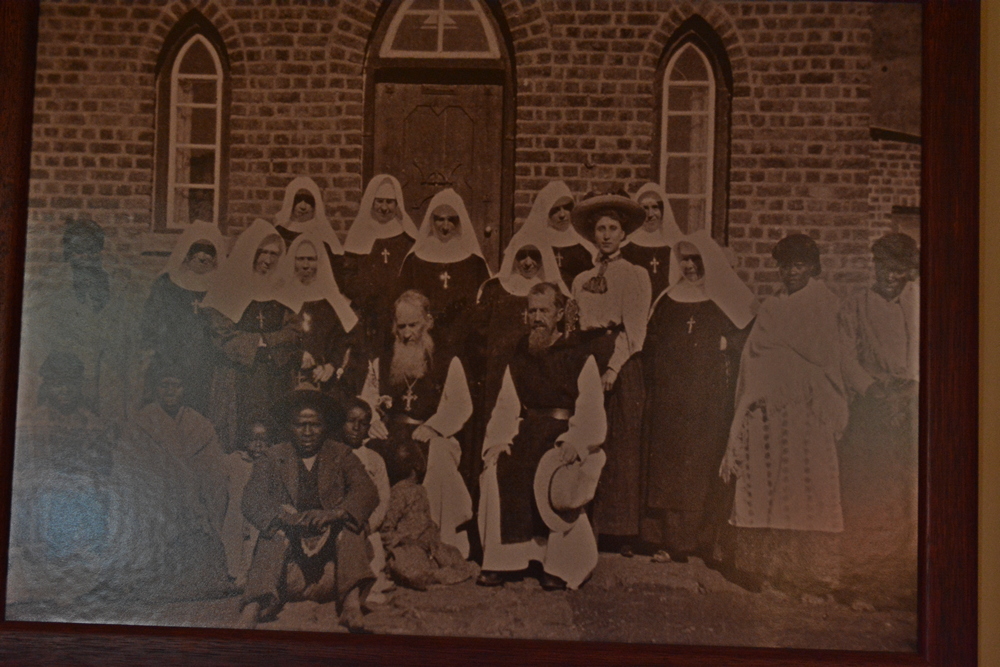
Abbot Franz Pfanner
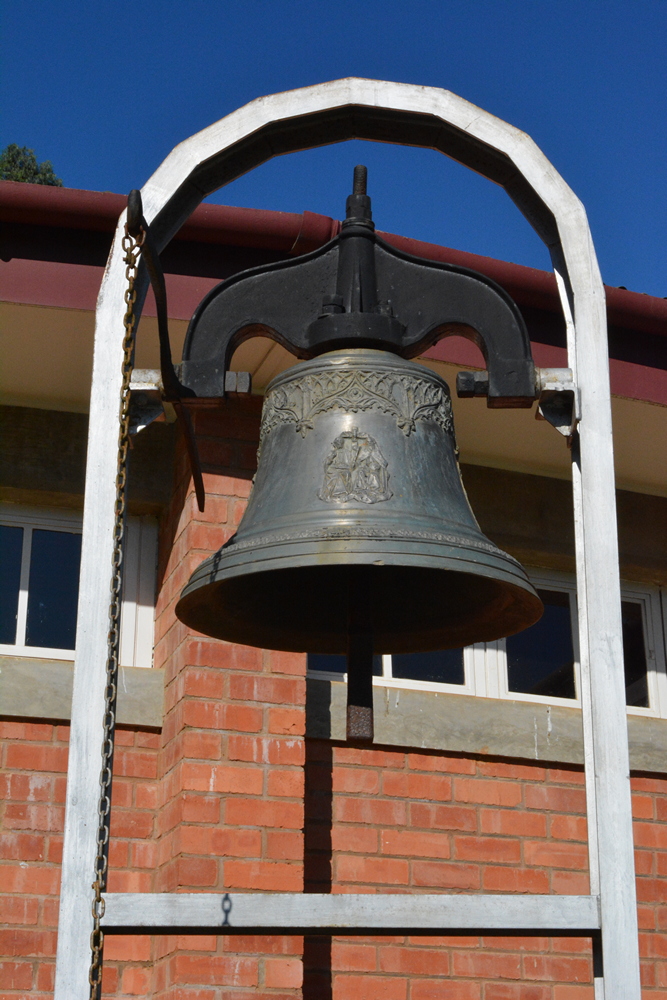
Bell at Emaus Mission

Our Lady of Puig

The fortress and the church of Our Lady of Puig are a short distance out of Valencia; both date from Roman times, when a temple of Venus stood on the hill overlooking the pleasant valley. At the coming of Christians, it was turned into a monastery.

Early in history they acquired the image of Our Lady of Puig, in bas-relief, carved on a slab of marble, which was said to have formed part of the tomb of the Blessed Virgin Mary. How it got to Spain is not known with certainty, though the pious insist that it was brought there by angels. It was the principal object of devotion at the shrine, which thrived and became more beautiful until the ancient kingdom of the Visigoths fell to the Muslim invaders in the 8th Century.

The Battle of Puig

In the year 712 AD the monks sadly buried their treasure to hide it from desecration, along with the church bell, under the floor of the monastery, and fled for their lives. After five centuries the Moors were expelled from Valencia, and the plaque of Our Lady of Puig played a part in its liberation.

King Jamie I of Aragon, victorious in other parts of Spain, moved on Valencia with his armies. The Moors, in an effort to trick the Christians into sending their troops to the wrong place, moved to attack the ancient fortress of Puig. This was done with great secrecy, but Our Lady warned the Christians and helped them to win the desperate battle.

image
St Peter Nolasco discovers the image of Our Lady of Puig under a bell (Photo credit: Carmen Alarco Rubina)

Saint Peter Nolasco, who helped to found the Society for the Redemption of Captives under Our Lady’s guidance, was in Puig when the battle took place. One of the soldiers came to him and reported that when he had been on night guard he had seen strange lights over the old ruined church of Our Lady of Puig; sometimes the stars seemed to come down from the sky and circle around the building. Especially on Saturday nights there were bright lights around the mount of the church.

Saint Peter suggested to the king that all the soldiers should receive the Sacraments and pray to know what God was trying to tell them. After this had been done, he led them to the top of the hill and directed them to dig under the floor of the old monastery. Here they found the plaque and the bell, buried for 500 years, but unharmed.

The plaque was first carried to the chapel of the castle fortress. As soon as possible a new church was built on the mountain and given into the charge of the Mercedarians under Saint Peter Nolasco.

The ancient bell which was dated as being cast in 660, and was placed in the tower of the church. This bell was said to be powerful against storms and always rung of its own accord in time of trouble. In 1550 the bell broke and a new one was cast from the fragments of the old one.

The church built by Saint Peter Nolasco was called “the angelic chamber” because angels were often heard singing there in the night, especially on Saturdays.

Our Lady of Puig has been the patroness of Valencia for hundreds of years, and as recently as 1935 when she was honoured by the Spanish Armies who have carried her image in so many successful battles. She was at this time named as a General in the Army and invoked as Patroness in the Christian War against Communism.

Saint Vincent Ferrer

Patron Saint of Builders, Prisoners, Construction Workers, Plumbers, Fishermen and Spanish Orphanages

Feast Day 5 April

Vincent Ferrer, although born in Valencia in Spain, was from Scotch-English descent on his father’s side.

His parents instilled in him a deep devotion to Our Lord and Our Lady and a tremendous love for the poor.

In 1367 he entered the Dominican Order, and before he reached the age of twenty-one was already teaching philosophy at Lérida, the most famous university in Catalonia.

Transferred to Barcelona to preach to the public, he arrived in the coastal city to find the citizens ravaged by hunger. A famine was raging through that region and the people were desperate for the arrival of a ship of corn. Vincent foretold that the ship would be in harbour before nightfall, and so it happened, at which the people acclaimed the young Dominican preacher a prophet and his superiors cautiously moved him to Toulouse.

Vincent inflamed souls with the ardour of his preaching, rousing sinners to penance, lax Catholics to fervour, and converting a number of Jews to the Faith, one of them the Rabbi of Burgos who went on to become a bishop.

It was the time of the great schism with a pope in Rome and another in Avignon, a time when even saints were confused. For a time Vincent favoured Benedict XIII, or Peter de Luna, as he was popularly known, who ruled from the French city of Avignon. Vincent was also de Luna’s confessor.

But as the Church began moving to rule against the claim of Peter de Luna, and the latter remained obstinate, Vincent distanced himself from the claimant, and, eventually, played a major role in Benedict XIII’s abdication in favour of Church unity.

Vincent Ferrer preached throughout Europe as far north as the Netherlands, and his learning, ardent preaching and miracles worked numerous conversions.

Vincent Ferrer

In one location Vincent worked so many miracles that an hour was reserved every day for healing the sick. At Liguria in Italy he convinced the ladies to modify their fantastic headdress, which one of his biographers calls “the greatest of all his marvellous deeds”.

In Granada in Spain, then under Moorish rule, 8000 Muslims asked for Baptism after hearing him preach.

Vincent spent the last three years of his life in France, where he became ill after preaching a sermon in 1419, and died on Wednesday of Passion Week.

He was canonized in 1455 by Pope Calixtus III.

St Jean-Baptiste de la Salle

Patron Saint of Teachers

FEAST APRIL 7

Jean-Baptiste de la Salle, the famous founder of the Brothers of the Christian Schools, or the Christian Brothers, was born in Rheims of the noble family of la Salle.

Showing signs of a rare piety from an early age, Jean-Baptiste was destined for the priesthood, which fit well with his own inclinations regarding the future. He entered the seminary in 1670 at nineteen and was ordained in 1678.

A young man of refinement and good connections, he seemed to be destined for high office in the Church. But in 1679 he met a layman, Adrian Nyel, who had the idea of starting a school for poor boys in Rheims.

The newly-ordained Fr. Jean-Baptiste became engrossed in the project and began to guide Nyel and seven schoolmasters in the high educational ideals taking shape in his own mind. He even invited the group into his paternal home to live. But there, unwilling to submit to the discipline for which they had not bargained, they took leave.


Undaunted, the reformer waited patiently. Soon, he was joined by another group of interested men. To these Fr. Jean-Baptiste imparted a new method of teaching, which revolutionized the elementary schooling of the day.

Until then, children had been taught on an individual basis. Jean-Baptiste introduced into education the classroom setting, silence during lessons, and teaching in the vernacular rather than in Latin.

Soon requests began to arrive for teachers trained in the new method. Parish priests also began to send young men to the institute to be trained as masters for their own parish schools.

In time, Fr. Jean-Baptiste formed a novitiate and a rule of religious life.

After much prayer, he also established that his teaching institute would be constituted of lay brothers and not priests. From France the Christian Brothers spread throughout Europe and the world.

In 1717 the founder resigned as superior of his institute and lived like the humblest of brothers.

Suffering from asthma and rheumatism, Fr. Jean- Baptiste gave up none of his austerities.

Early in 1719 he met with an accident which ultimately led to his death on Good Friday of that year. He was sixty-eight years of age.

The Catholic Church set her seal of approval upon the life and apostolate of this man, a reformer and innovator of primary importance in the history of education, by canonizing him in 1900.

In 1950, Pope Pius XII declared him patron of all school teachers.

Our Lady of Soissons

Our Lady of Soissons

Feast Day 26 March

In this Abbey one of the shoes of Our Lady was believed to have been preserved. It was destroyed during the French Revolution.

In the year 1128, a plague afflicted the city of Soissons, in France. For six consecutive days the victims went to the shrine of Our Lady and called out to her for help. The Blessed Virgin Mary appeared to them, accompanied by heavenly hosts of angels. Immediately the people who witnessed the miracle and believed were healed. The Bishop asked all who were healed to make a novena of thanks and to kiss the slipper of the Holy Virgin kept in the church.

A rustic servant of one of the knights of Soissons, a man named Boso, came to the church for the festival which was to follow the novena. While his companions gave gifts and talked of the slipper of Our Lady, he gave nothing and scoffed at the idea, muttering, “You are very foolish to believe this to be the Virgin’s slipper. It would have rotted long ago.” At these words Boso’s blasphemous mouth was drawn toward his ear with such sharp pain that his eyes seemed to slip out of his head. A tumour appeared and covered his face, making it unfit for human use. Roaring and writhing, he threw himself before the altar of Mary, begging for help, as he had offended the Mother of God, and he knew there was no one else who could heal him.

The abbess, a woman named Mathilda, took the slipper and made the sign of the cross over the victim. Immediately he began to heal. The punished scoffer repented and gave himself up to the service of the Church of Soissons.

Many – the lame, the blind, the deaf, the dumb, the paralytics, were healed at the shrine.

The Abbey was once the largest in France, famous for its rich collection of relics, including the “Lady Slipper,” but all that remains today of the abbey is a ruined wall with two arches, as the rest was methodically razed by the eager hands of the devotees of the French Revolution.


*from The Woman in Orbit as seen on www.roman-catholic-saints.com

2025 Roses to Our Lady of Guadalupe

Roses for Our Lady of Guadalupe

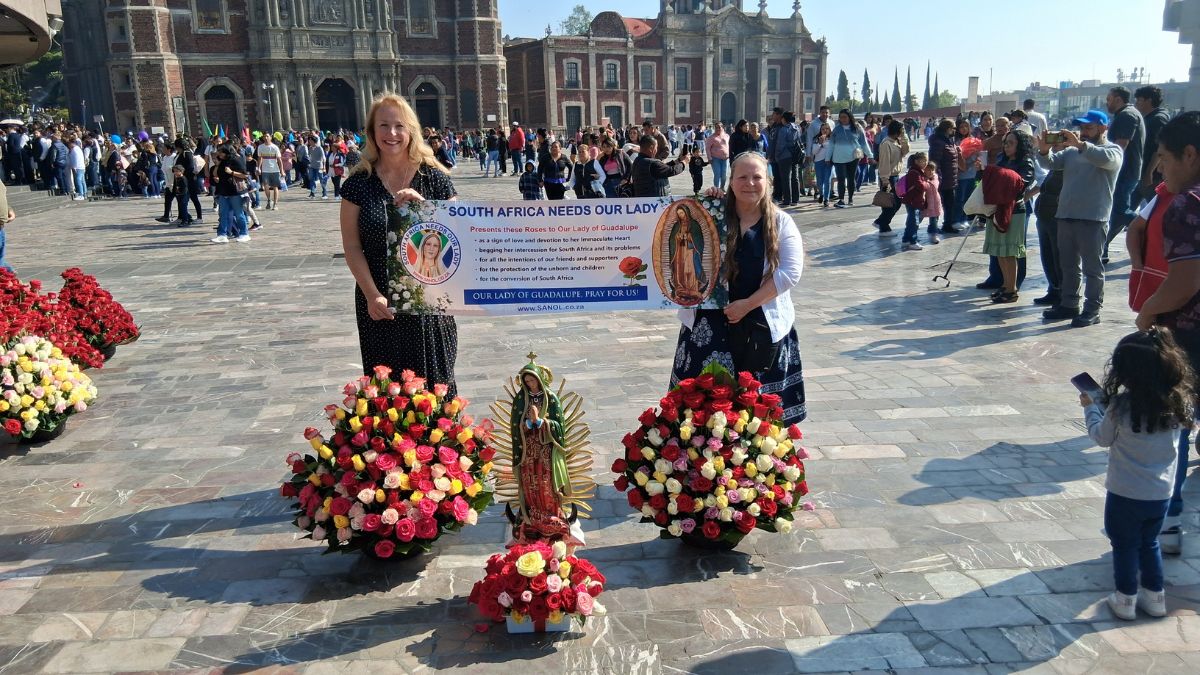
14 dozen beautiful roses to were delivered to Our Lady of Guadalupe this year on 22 February, Feast of the Chair of St Peter, on behalf of South Africa Needs Our Lady.

Our friends from America Needs Fatima, kindly organised this for us together with all their roses.

Below we share their feedback about the event:

 A worthy mention to the florist Dona Ara, who had to source these roses from all across Mexico as the national supply had been depleted by Valentine’s Day. Unlike past years when it was sunny and hot, this year we were graced with cooler temperatures, rain and thunderstorms throughout the day. Yet, as our Blessed Mother often does, she smiled upon us, the clouds parted, the sun shone forth, and the brilliant roses dazzled the crowds of pilgrims making their Jubilee pilgrimage of Hope.

As is our custom, along with the presentation of the roses to Our Lady, we light a candle for each state in the U.S., beseeching La Virgen de Guadalupe, Patroness of the Unborn, for the total and complete victory over the sin of abortion in every state, from New York to California, and from Minnesota to New Mexico. Masses were also requested for the intentions of all ANF members and supporters.

Something Extra

In 1921, a young man named Luciano Perez Carpio placed a bouquet of flowers concealing a bomb before the miraculous image of Our Lady of Guadalupe. The subsequent explosion destroyed the marble altar and damaged a large crucifix. The miraculous image of Our Lady was completely unscathed. Following this event, a great devotion started, honouring Our Lord Jesus Christ under the invocation of “Santo Cristo Del Atentado” (roughly translated as Jesus Christ, Victim of the Violent Attack). This devotion consists of writing one’s intentions and placing them along with a stipend below the damaged crucifix. Many graces and miracles have been attributed to this devotion.

So, we took a moment to entrust all the ANF and SANOL supporters who sent roses to Our Lady of Guadalupe, asking Our Lord Jesus Christ to protect them, just as He protected His Holy Mother.

Damaged Crucifix at the Shrine of Our Lady of Guadalupe

Holy Hour

After presenting the roses and intentions to the Virgin of Guadalupe, ANF representatives were able to spend a holy hour in adoration before the Blessed Sacrament in the old Basilica for the intentions of ANF and SANOL members and supporters.

The Jubilee Year of HOPE

A special part of this year’s Roses to Our Lady of Guadalupe presentation is that it is a Jubilee Year.

Jubilee years have a long and rich history rooted in religious tradition and biblical precedent. The term “Jubilee” comes from the Hebrew word Yobel, which refers to the ram’s horn used in ancient Israel to announce the year of release and return.

Over the centuries, the Catholic Church began to regularize the practice of Jubilee years, though not every year was declared one. Beginning in the 15th century under Pope Sixtus IV, the Church decided to celebrate a Jubilee every 25 years. Later, Pope Urban VIII (1625) established the rule that Jubilees would occur at 25-year intervals unless a special Jubilee was declared.

The shrine of Our Lady of Guadalupe in Mexico City has been established as a Jubilee pilgrimage site for the 2025 Jubilee Year. We were able to walk through the Door of Hope as we presented the roses to Our Lady.

Portico at the Shrine of OLG in Mexico-Jubilee Year Door 2025

A Mother gathering her children

As pilgrims gathered at the Shrine from all over the world, it was beautiful to see and sense their unity in the love and protection of Our Blessed Mother. For example, it was beautiful to see a small family of Aztec Indians dressed in their traditional cultural attire to pay homage to their Mother, who so many centuries ago brought their people to the True Faith.

Another beautiful sight was the group from the Colegio Guadalupe Victoria Monclova, Coahuila, that had come from hundreds of miles away on pilgrimage along with about 450 000 other people from different parts of Mexico. It is hard to describe the experience of seeing so many devotees honouring Our Lady with prayer, penance, song and dance.

During our days at the Shrine, we saw many priests, nuns and religious. The devotion of the laity and clergy was inspiring.

Indigenous family and the group from Colegio Guadalupe Victoria Monclova, Coahuila
Nuns at the Shrine

Roses were not only sent from devotees in the United States; the devotion of sending roses to Our Lady of Guadalupe is starting to spread. This year, roses and intentions came from Canada and as far away as South Africa. We hope there will be many, many more next year.

Thank You

We want to thank each and every one of you who sent roses and entrusted us with your special intentions to Our Lady of Guadalupe. Without your support and prayers, none of this would have been possible.

We would also like to extend a heartfelt thank you to Dona Ara and her family team of florists for their dedicated work in creating the magnificent floral tribute to La Virgen de Guadalupe.

Dona Ara and her family of workers who put together all the beautiful rose arrangements.

Dona Ara and her family of workers

Going forward….

The struggle to protect the unborn continues; now, let’s end abortion everywhere, now and forever! Let’s intensify our prayers to the Virgin of Guadalupe, Patroness of the Americas, Empress of Latin America, Queen of Mexico, Protectress of the Unborn, and demonstrate our profound desire to safeguard the unborn and end abortion once and for all.

So, if you would like to be one of the first to present roses to Our Lady on behalf of the unborn and place your intentions at the top of the list for 2026, click here now!

Fatima and the Necessity of Suffering

Nothing great is done without suffering

Two of the three Fatima seers, Saints Jacinta and Francisco, died young because of the need for victim souls to give necessary fecundity to Our Lady’s plan. Their lives were proof that nothing great is done without suffering.

Indeed, suffering helps those souls who are absorbed with themselves and unwilling to open up. We should see suffering as normal for man and we should practice it with courage and daring. The acceptance of sacrifice is necessary to combat the Hollywood myth of the “happy end.”

Jacinta and Francisco died as children by Our Lady’s design as she had foretold. The third seer, Lucia, lived for many more years. What was the reason why Jacinta and Francisco died so early? This was obvious for they spoke openly about it.

The reason was that Our Lady at Fatima asked people to offer up their sufferings. She called for victim souls to associate themselves with the entire mystery of the Fatima Message, and through their sufferings and pains help bring about all the supernatural fecundity Our Lady wanted to give to the events at Fatima. This is exactly what happened to both children who died in extraordinarily difficult and arduous circumstances that caused them much suffering.

Such sufferings are needed because when it comes to the salvation of souls, all great works of God are done with the participation of souls. In general, this is only accomplished with people willing to fight, suffer and pray for God’s work to be brought to its fruition.

In other words, sacrifice is necessary. Otherwise, nothing great is done.

Jacinta Marto

The Importance of Suffering

The importance of this principle stood out especially at Fatima.

Our Lady directly intervened there by performing stupendous miracles especially the “miracle of the sun.” She did this to underscore the fact that Fatima is one of the most important if not the most important message she has ever given in history.

On that occasion and in those circumstances, Our Lady wanted the sacrifice of two souls who would offer themselves up for the fulfilment of the plan of Divine Providence. This clearly shows how the apostolate of suffering is truly irreplaceable and how it opens up the way for the Church to act upon souls.

A German painter once painted Our Lord as the Good Shepherd knocking on the door of a simple house. Afterwards someone told him: “You made a mistake, for the door has no outside knob to get in.” He answered: “That’s true, but it is not a mistake. This door symbolizes the human heart. Our Lord knocks on it, but there is no knob outside, only inside. There are certain souls that open up only to themselves and to no one else, and in that case no one can intervene, they are really closed.”

Prayer and sacrifice are precisely the way to influence this type of person. They open up to the grace and find life when they suffer and carry the Cross of Our Lord Jesus Christ lovingly. They come to understand how normal it is to suffer. A person acquires greatness to the degree that he suffers. The great men in history are those who bear great sufferings for the love of God.

Clearly, this includes not only passive suffering like, for example, allowing another to strike us. It also means active suffering that is, taking the initiative in find suffering. This can be done by confronting bad public opinion or overcoming human respect. In short, it means accepting suffering entirely, embracing it fearlessly and daringly, and taking the initiative to look for ways to sacrifice for an ideal. This is what it means to suffer par excellence and we should seek to do this.

The Lies of the World

The Hollywood myth of the “happy ending” is a great obstacle to accepting suffering and sacrifice. Not all things turn out well in the end as in the movies.

Not everything is joy and success. Thus, we should not look at suffering as a kind of seven-headed monster that invades people’s lives uninvited. To the contrary, we should realize that everyone suffers and a life without crosses is worthless. Saint Louis Marie Grignion de Montfort goes so far as to say that when a person does not suffer, he should ask for crosses. For a person to whom God gives no sufferings should be wary of his eternal salvation.

All this comes across very clearly in the sacrifice made by Saints Jacinta and Francisco.

In this sense, we should frequently pray to them to ask Our Lady of Fatima to obtain for us this true sense of suffering that is indispensable for all those faithful who want to become generous and dedicated Catholics.

Novena of Grace to St Francis Xavier

Novena-of-Grace

Attributed to Father Marcello Mastrilli, S.J., 17th century.

St. Francis Xavier appeared to Fr. Mastrilli and bidding him renew the vow to go to Japan, said to him:

“All those who implore my help daily for nine consecutive days, from the fourth to the twelfth of March inclusive and worthily receive the Sacraments of Penance and Holy Communion on one of the nine days will experience my protection and may hope with entire assurance to obtain from God any Grace they ask that is for the good of their souls and the glory of God.”

This Novena prayer was passed down through the ages:

“Most amiable and most loving Saint Francis Xavier, in union with thee I reverently adore the Divine Majesty. I rejoice exceedingly on account of the marvellous gifts which God bestowed upon thee. I thank God for the special graces He gave thee during thy life on earth and for the great glory that came to thee after thy death. I implore thee to obtain for me, through thy powerful intercession, the greatest of all blessings — that of living and dying in the state of grace. I also beg of thee to secure for me the special favour I ask in this novena.

Mention requests here…

In asking this favour, I am fully resigned to the Divine Will. I pray and desire only to obtain that which is most conducive to the greater glory of God and the greater good of my soul.”

V. Pray for us, Saint Francis Xavier.

R. That we may be made worthy of the promises of Christ.

O God, Who didst vouchsafe, by the preaching and miracles of Saint Francis Xavier, to join unto Thy Church the nations of the Indies, grant, we beseech Thee, that we who reverence his glorious merits may also imitate his example, through Jesus Christ Our Lord. Amen.

Add 3 Our Father’s and 3 Hail Mary’s in memory of Saint Francis Xavier’s devotion to the Most Holy Trinity, and

Glory be 10 times in thanksgiving for the graces received during his 10 years of apostleship.


Though St. Francis Xavier mentioned the time when the Novena should be made, yet its efficacy is not restricted to those days, but it may be made any time, and forms a fitting preparation for the feast of the saint, 24 November to 2 December, with his feast being on December 3.


Read:  Origins of the Novena of Grace

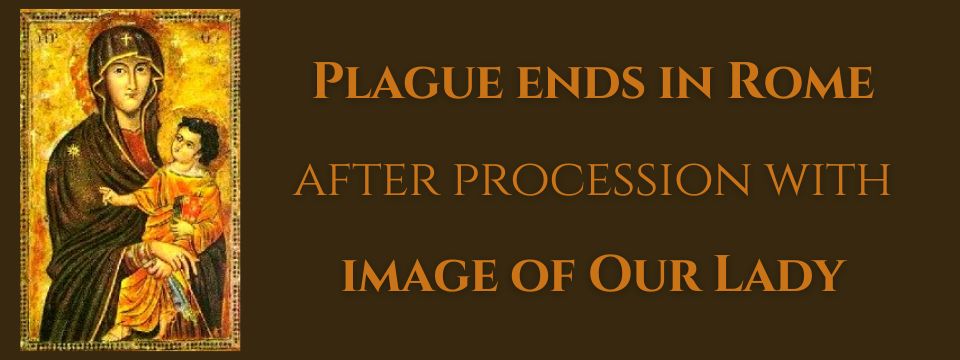
Plague in Rome 591

The Abbot Orsini wrote: “On this day, in the year 591, St. Gregory the Great, having had the picture of Our Lady, which was painted by St. Luke, carried in procession, the plague ceased at Rome.”

The miseries that afflicted Rome in the year 591 were substantial. The Gothic War between the Byzantine Empire and the Goths had substantially depopulated Italy, so much so that a Germanic tribe of Lombards had entered the peninsula and established their own kingdom. They were pagans and Arians who did not respect Catholics, burning the famous Benedictine monastery of Monte Cassino and pillaging the land at will.

The instability and warfare caused famine in large regions, though Rome was still able to obtain grain by sea. Then came earthquakes and flooding to further the suffering, and from this plague Rome was not immune. The banks of the Tiber overflowed, and when the waters did not recede, all of the low-lying lands became swamps that brought death and plague. The disease struck with such rapidity that the victim would often die shortly after realizing he had contracted the disease, although there were some who sickened but recovered. Our custom of saying, “God Bless you,” to someone who sneezes came about at this time, for sneezing was one of the signs that someone had contracted the disease.

Even the Roman Pontiff died of the plague on 7 February 590. His successor was Pope Saint Gregory the Great, who was both a humble and pious man. It would be an understatement to say he did not want the honour of being the next pope, but he did do everything in his power to try to save his people. He understood that the plague was a chastisement from God, and encouraged the faithful to repent of their sins and pray for deliverance while he and the religious cared for the people of Rome.

Finally, Saint Gregory called for a procession to take place at dawn on April 25th. On that day the faithful first assembled in their groups throughout Rome and then walked through the streets of the city praying and singing as they approached the church of Saint Mary Major. The plague was so potent at that time that eighty people collapsed and died as they walked toward the meeting place.

Pope Saint Gregory met them upon their arrival, joining them in prayer as he took his place with them holding aloft the miraculous image of Our Lady painted by Saint Luke the Evangelist. As the procession neared the Vatican the participants all saw Saint Michael the archangel standing upon the cupola of Hadrian’s mausoleum as he sheathed his flaming sword. It was a sign that the chastisement had come to an end, and at once the heaviness in the air abated and the air itself seemed to freshen and clear. Indeed, at that moment the plague ended as the faithful rejoiced and lifted up their voices to thank the Mother of God.

“Regina Coeli laetare, Alleluia! (Queen of heaven, rejoice, Alleluia!)

Quia quem meruisti portare, Alleluia! (Son whom you merited to bear, Alleluia!)

Resurrexit sicut dixit, Alleluia! (He has risen as He said, Alleluia!)


As seen on https://www.roman-catholic-saints.com/plague-in-rome.html
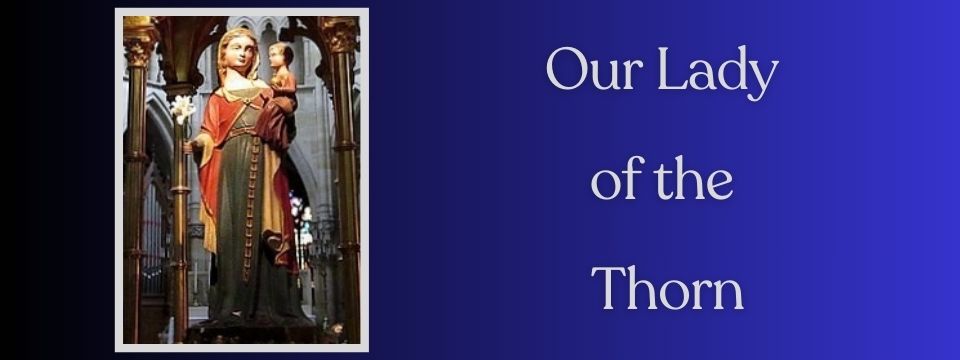
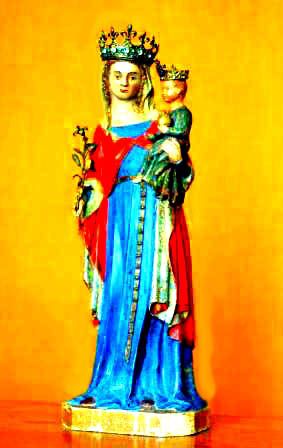
Our Lady of the Thorn

Feast Day 16 February

On the night of the Feast of the Annunciation, March 24 in the year 1400, some shepherds tending their flocks were attracted by a bright light coming from the Chapel of Saint John the Baptist near Chalons, France. As they approached the light they saw that it was actually a thorn bush fully engulfed in flames, and they discovered a statue of the Blessed Virgin standing unharmed in the midst of the flames. In fact, though the fire burned brightly, the branches and leaves of the thorn bush were unaffected by the flames.

The miracle continued all that night and into the next day, and news of the miracle spread quickly. Mobs of people crowded around the burning bush that was so reminiscent of the one witnessed by Moses on Mount Horeb. The Bishop of Chalons, Charles of Poiters, also witnessed the burning bush and the miraculous statue – both still unaffected by the fire.

When the flames finally did die down, the bishop reverently took the statue and carried it in his own hands to the nearby Chapel of Saint John. On the very site of the miracle, construction of a church was begun for the enshrinement of the miraculous statue. Since the church was built so rapidly – in a little over 24 years – a charming local legend claims that angels continued the work at night after the labourers had left for home.

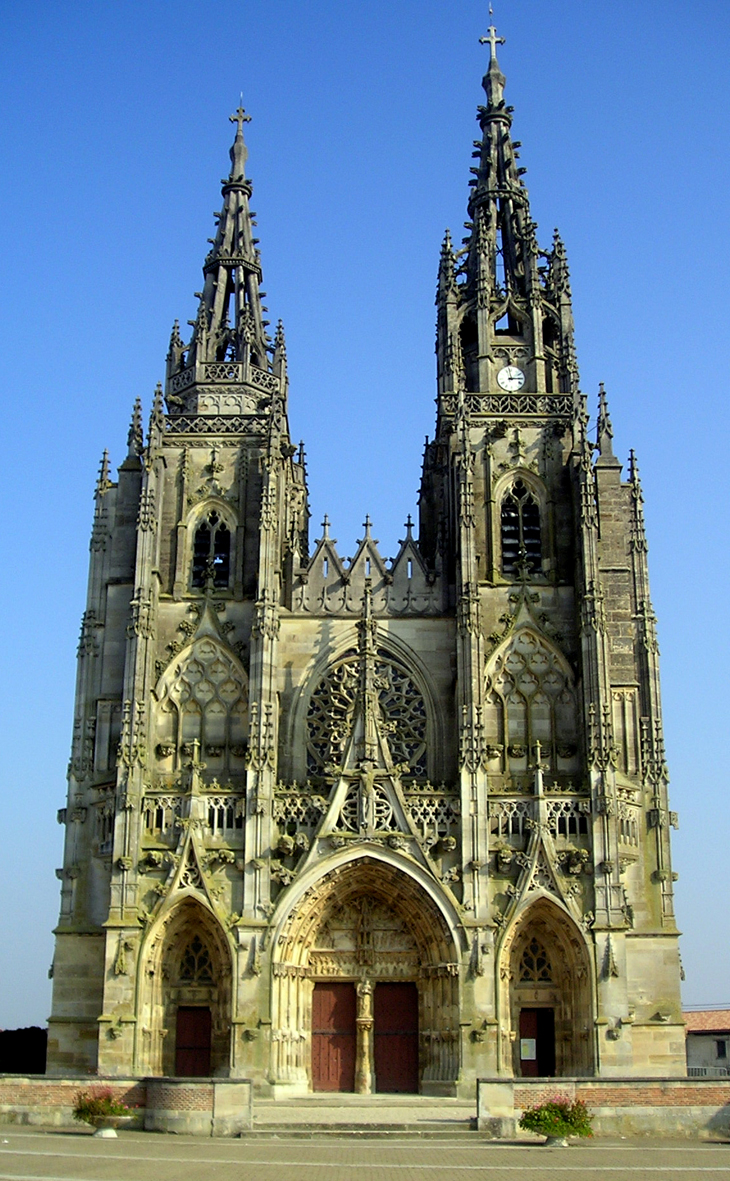
Our Lady of the Thorn (Notre Dame de l’ Epine) became a place of pilgrimage very rapidly. Today, a minor basilica, the shrine proved to be so beautiful that the people considered it a worthy place to venerate the Blessed Virgin. The flamboyant Gothic church boasts majestic great doors, a splendid rosette decorating the principle entrance and two chiselled stone spires, rises high and imposing on the plain in Champagne.
During the terrible French Revolution, the statue of Our Lady of Thorns was removed from the main altar and hidden for safekeeping. After it had ended, the statue was brought back out for veneration.

Many healings have also been reported at the shrine, many verified by physicians. The beautiful church of Our Lady of the Thorn has been recognized by several popes, including Pope Calixtis III, Pius II, and Gregory XV. Pope Leo XIII ordered the solemn coronation of the miraculous statue, saying, “Yes, Our Lady of the Thorn will be crowned in my name. Prepare for her a diadem worthy of the Mother of God and the people whom she protects…”

It is a place of grandeur where Christian souls can expand in adoration of the Son of God, and many are the pilgrims of all descriptions who have visited the shrine over the years, including Saint Joan of Arc in 1429.

As seen on https://www.roman-catholic-saints.com/our-lady-of-the-thorn.html