Winning the heart and soul of South Africa for Mary by spreading the Fatima Message

Winning the heart and soul of South Africa for Mary by spreading the Fatima Message

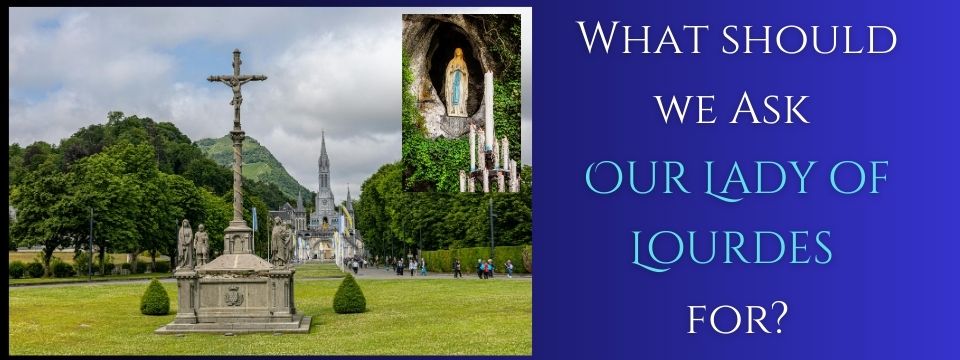
What should we ask Our Lady of Lourdes for?

As Our Lady of Lourdes wished to be known as supremely beneficent – but evidently this is merely a suggestion that should only be heeded if one has the inclination – I suggest the following: on Her feast day, think of a great grace to ask of Our Lady.

We must be bold in our prayers.

We should ask for bold things, but not foolish ones. Sensible and difficult graces, we should ask for them. And, at the same time, ask Our Lady with great insistence. Let each of us think of a spiritual grace and a temporal grace on this special Feast. A grace that pertains to sanctification and then something else that we may desire temporally, if it is for the good of our soul.

This leads to some reflection on life. It leads us to broaden our perspective on our spiritual life and, in this way, to have a more precise view of ourselves, our activities, and our paths, and to offer a grateful prayer to Our Lady. Therefore, I suggest that you do just that.

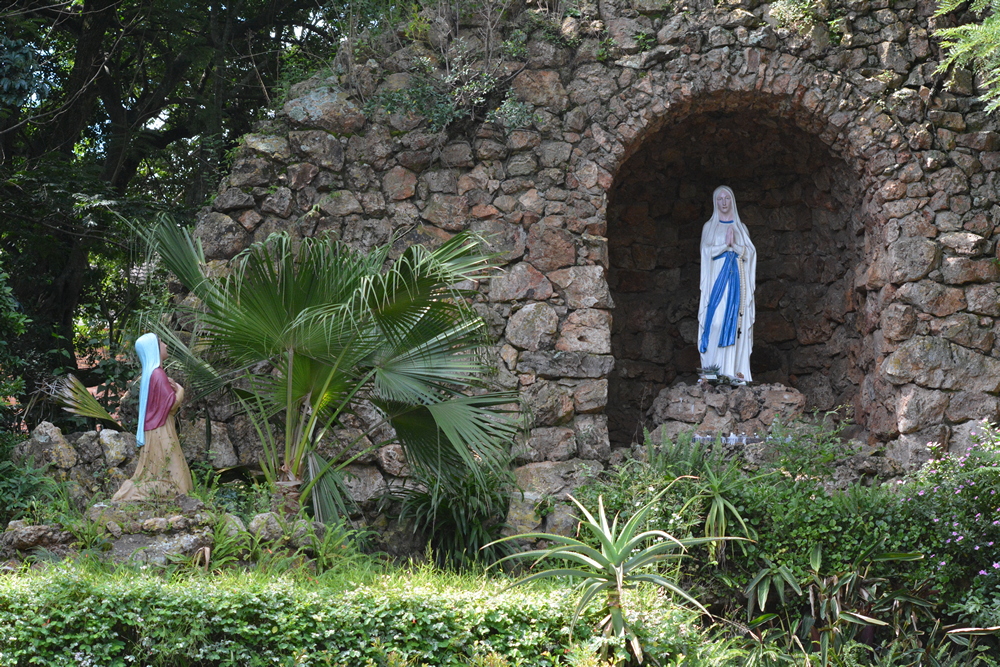
Lourdes Grotto at Marianhill, KZN

…However, we must never forget that in the Gospel, physical illnesses are treated as symbols of illnesses of the soul. Just as some suffer from physical paralysis, others suffer from spiritual paralysis; some suffer from physical blindness, others from spiritual blindness; deafness, muteness, and other things.

If we have defects of the soul that we would like to correct, this would be the appropriate time for us to bring them to the feet of Our Lady and ask Her to heal us. It is a request that has much validity, because if Our Lady so desires to heal perishable, mortal bodies, how much more will she desire to heal imperishable and immortal souls!

Our Lord Jesus Christ did not come to earth to save bodies; He came to earth to save souls, and therefore our requests cannot fail to be very pleasing to Him.

We should ask for ourselves or for someone we care about, someone for whom we do apostolate; for a soul whose difficulties frighten us; for a friend whose afflictions or temptations and dangers constitute a source of concern for us.

This is an extract of a talk given by Plinio Corrêa de Oliveira on 10 February 1965, on the  “Saint of the Day.” 

Footnotes:

  1. Source: https://www.pliniocorreadeoliveira.info/DIS_SD_650204_Lourdes_e_a_Mediacao_Universal.htm#.Y-b8XHbMJPY

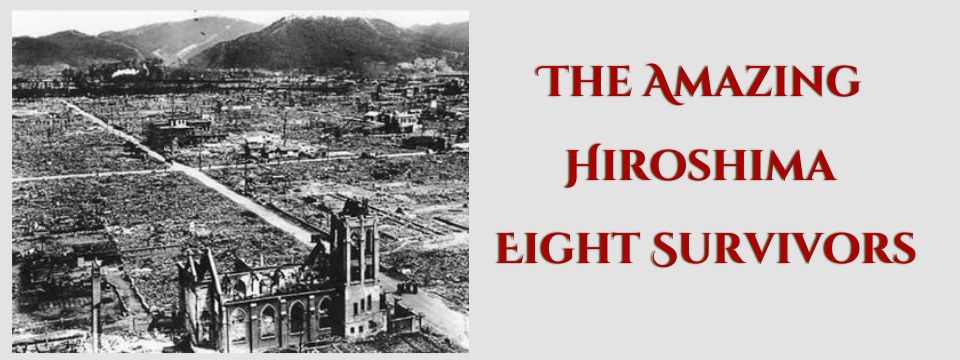
The Amazing Hiroshima Eight Survivors

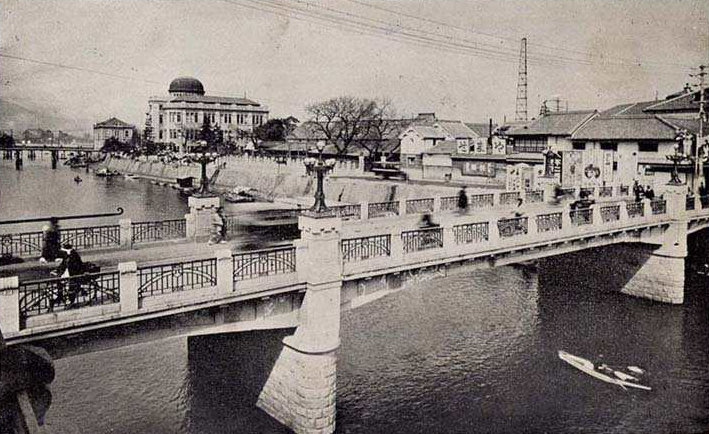
Early on 6 August 1945, a lone American B-29 Superfortress bomber circled in a vividly blue sky over the Japanese city of Hiroshima. The unsuspecting inhabitants on the ground barely glanced at the plane. They were unaware of the deadly payload it was about to unleash on them, ushering in the atomic age with unimaginable death and destruction.

Hiroshima before the bombing.

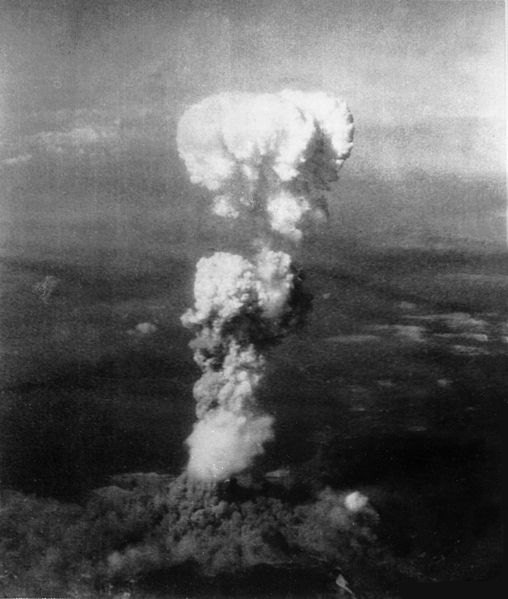
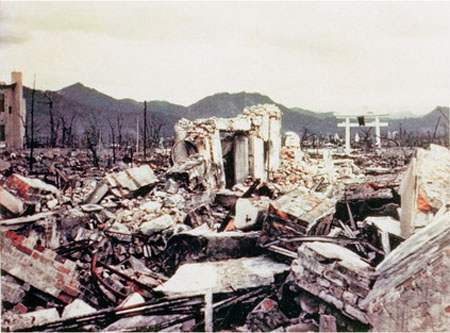
As one single bomb neared the ground, a city died in an instant. Houses crumbled, people evaporated, an immense ball of fire shot skywards, and a terrible wave of super-heated gas bulged out from ground zero, flattening buildings for miles.

Atomic cloud over Hiroshima. The cloud rose to over 18 300 metres in about ten minutes, while smoke from the burst of the first atomic bomb had spread over 3000 metres at the base of the rising column.

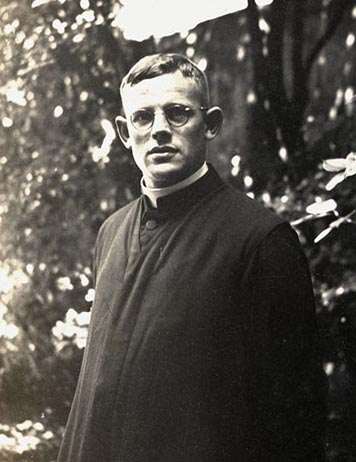
Amongst the unsuspecting inhabitants of Hiroshima was Fr. Schiffer, a Jesuit missionary assisting the many Catholics of that city. On the morning of 6 August 1945, he had just finished Mass and sat down at the breakfast table. As he plunged his spoon into a freshly sliced grapefruit, there was a bright flash of light. His first thought was that a fuel tanker had exploded in the harbour, as Hiroshima was a major port where the Japanese refuelled their submarines. Then, in the words of Fr. Schiffer: “Suddenly, a terrible explosion filled the air with one bursting thunder stroke. An invisible force lifted me from the chair, hurled me through the air, shook me, battered me, whirled me round and round like a leaf in a gust of autumn wind.” Next thing he remembered was that he opened his eyes and found himself on the ground. He looked around, and saw there was nothing left in any direction: the railroad station and buildings in all directions were gone. Yet, the only harm to him was a few slight cuts in the back of his neck from shards of grass. As far as he could tell, there was nothing else physically wrong with him.

Father John Seimes, S.J., one of the eight Jesuit Fathers that miraculously survived the atomic bombing.

The small community of Jesuits to which Fr. Schiffer belonged lived in a house near the parish church, situated only eight blocks from the centre of the blast. When Hiroshima was destroyed by the atomic bomb, all eight members of the small Jesuit community escaped unscathed, while every other person within a radius of one-and-a-half kilometres from ground zero died immediately. The house where the Jesuits lived was still standing, while buildings in every direction from it were levelled. Father Hubert Schiffer was 30 years old when the atomic bomb exploded right over his head at Hiroshima. He not only survived, but also lived a healthy life for another 33 years!

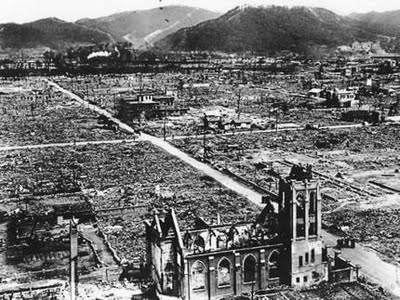
Our Lady of the Assumption Church and the Jesuit Rectory.

How did this group of men survive a nuclear blast that killed everyone else, even people over ten times further away from the blast? It is absolutely unexplainable by scientific means. An interesting detail is that this group of Catholic clergy was made up of ardent enthusiasts of the Message of Fatima. They lived the Message. Was their fidelity to Our Lady rewarded by this stupendous miracle of their survival?

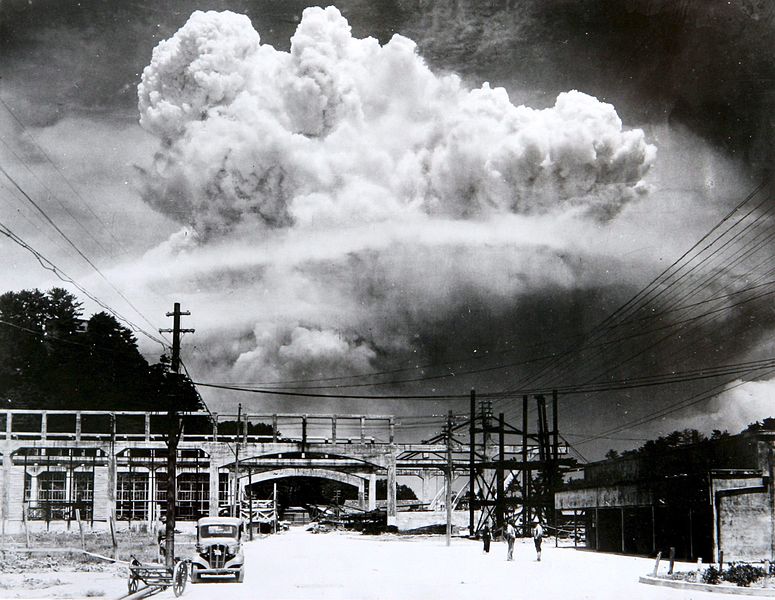
Atomic cloud over Nagasaki from Koyagi-jima on 9 August 1945.

Even more astonishing is that the story was to be repeated a few days later at Nagasaki, the second Japanese city to be hit by an atomic bomb. In both Hiroshima and Nagasaki, the survivors were Catholic religious. Most other buildings were levelled to the ground, even at 3 times the distance, but in both cases their houses stood – even with some windows intact! All other people, bar a handful of scattered mutilated survivors, even at thrice the distance from the explosion, died instantly. Those within a radius ten times the distance of the Jesuits from the explosion were exposed to fierce radiation and died within days.

After the American conquest of Japan, U.S. army doctors explained to Fr. Schiffer that his body would soon begin to deteriorate because of the radiation. To the doctors’ amazement, Fr. Schiffer’s body showed no radiation or ill effects from the bomb. All who were at this range from the epicentre should have received enough radiation to be dead within a matter of minutes. Scientists examined the group of Hiroshima Jesuits over 200 times during the next 30 years and no ill effects were ever found.

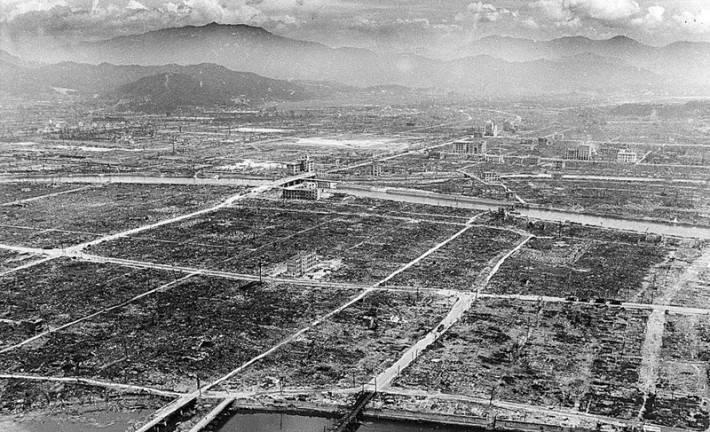
Hiroshima after the bombing.

Could it have been a fluke? Could the bomb’s makers have designed it to avoid killing U.S. citizens? There is no known way to design a uranium-235 atomic bomb so it could leave such a large discrete area intact while destroying everything around it. The Jesuits say: “We believe that we survived because we were living the message of Fatima. We lived and prayed the Rosary daily in that house.” Fr. Schiffer feels that he received a protective shield from the Blessed Virgin, which protected him from all radiation and ill effects. Fr. Schiffer attributes this to his devotion to Our Lady, and his daily Fatima Rosary: “In that house the Holy Rosary was recited together every day.” Secular scientists are dumbfounded and incredulous at his explanation. They are sure there is some ‘real’ explanation. However, over 60 years later the scientists still have not been able to explain it.

From a scientific standpoint, what happened to those Jesuits at Hiroshima still defies all the laws of physics. It must be concluded that some other force was present, whose power to transform energy and matter as it relates to humans is beyond our comprehension.

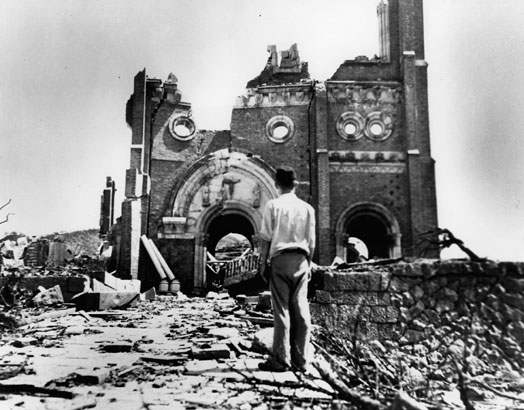
Urakami Cathedral after the bomb. Only 150 metres from the hypocentre of the blast stood the original Urakami Cathedral, a centre for Nagasaki’s Catholic community. Catholic missionaries first came to Nagasaki in the 16th century, and within several decades hundreds of thousands of people in South-western Japan were practicing Catholics.

Dr. Stephen Rinehart of the U.S. Department of Defence is widely recognized as an international expert in the field of atomic blasts. Says Rinehart: “A quick calculation says that at one kilometre the bulk temperature was in excess of 11 000 to 16 000 degrees C, and the blast wave would have hit at sonic velocity with pressures on buildings greater than 600 PSI. If the Jesuits, at one kilometre from the geometric epicentre, were outside the atomic bomb’s “plasma” their residence should still have been utterly destroyed. Un-reinforced masonry or brick walls, representative of commercial construction, are destroyed at 3 PSI, which will also cause ear damage and burst windows. At 10 PSI, a human being will experience severe lung and heart damage, burst eardrums and at 20 PSI limbs can be blown off. All the cotton clothing would be on fire at 176 degrees Celsius, and your lungs would be inoperative within a minute of breathing even one lungful of air at these temperatures.

Hypocentre of the blast in Hiroshima was Shima Hospital.

“No way could any human have survived nor should anything have been left standing at one kilometre. At ten times the distance, about ten to fifteen kilometres, I saw the brick walls standing from an elementary school and there were a few badly burned survivors; all died within fifteen years of some form of cancer. Reconnaissance pictures taken of a panoramic view from epicentre of the blast, at Shima Hospital looking towards the Jesuits’ house, did show some kind of two-story building totally intact, at least from what I could make out, and it looked to me the windows were in place. Also there was a church with walls still standing a few hundred yards away, but the roof was gone.

“The Department of Defence never commented officially on this and I suspect it was classified and never discussed in open literature. I think it is possible the Jesuits were asked not to say anything either at the time.”

For God, who made all matter and energy, it is simply a matter of willing it and the laws that govern them are suspended. This is what happened at Hiroshima and Nagasaki. It also happened in ancient times, to the loyal servants of God Sidrach, Misach, and Abdenago, as is related in the Book of Daniel (3:19-24):

    “Then was Nebuchodonosor filled with fury: and the countenance of his face was changed against Sidrach, Misach, and Abdenago, and he commanded that the furnace should be heated seven times more than it had been accustomed to be heated. And he commanded the strongest men that were in his army, to bind the feet of Sidrach, Misach, and Abdenago, and to cast them into the furnace of burning fire. And immediately these men were bound and were cast into the furnace of burning fire, with their coasts, and their caps, and their shoes, and their garments. For the king’s commandment was urgent, and the furnace was heated exceedingly. And the flame of the fire slew those men that had cast Sidrach, Misach, and Abdenago. But these three men, that is, Sidrach, Misach, and Abdenago, fell down bound in the midst of the furnace of burning fire. And they walked in the midst of the flame, praising God and blessing the Lord.”

As seen on: https://nobility.org/2015/08/hiroshima-70-years/

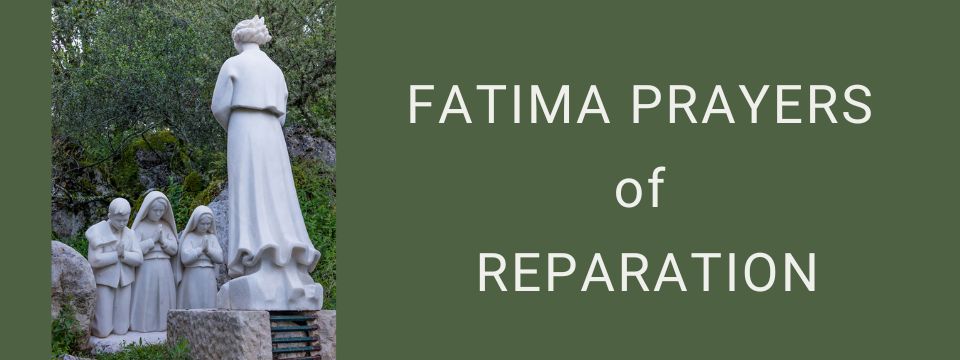
Fatima Prayers of Reparation

These prayers were revealed to the three shepherd children in Fatima during the apparitions of the Angel of Portugal.

Pray them as often as you can. Pray without ceasing.


  • O my Jesus, forgive us our sins, save us from the fires of hell, lead all souls to heaven, especially those in the most need of Thy mercy.


  • My God, I believe, I adore, I trust and I love Thee! I beg pardon for all those that do not believe, do not adore, do not trust and do not love Thee.


  • O Most Holy Trinity, Father, Son and Holy Spirit, I adore Thee profoundly. I offer Thee the most precious Body, Blood, Soul and Divinity of Jesus Christ present in all the tabernacles of the world, in reparation for the outrages, sacrileges and indifferences by which He is offended. By the infinite merits of the Sacred Heart of Jesus and the Immaculate Heart of Mary I beg the conversion of poor sinners.


  • Most Holy Trinity, I adore Thee! My God, my God, I love Thee in the Most Blessed Sacrament.


  • O Jesus, it is for the love of Thee, in reparation for the offences committed against the Immaculate Heart of Mary, and for the conversion of poor sinners.

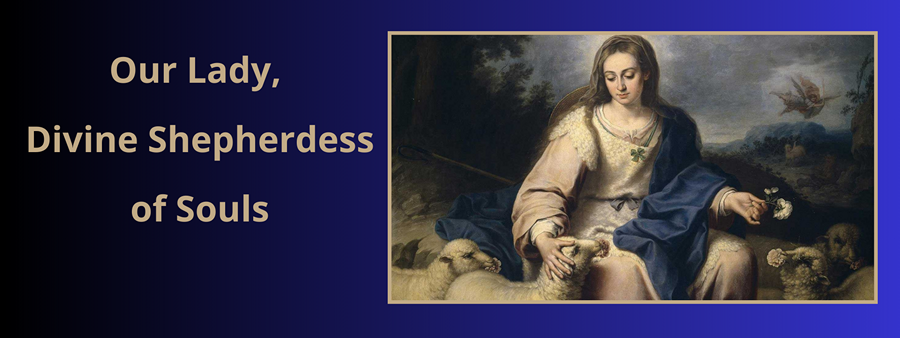
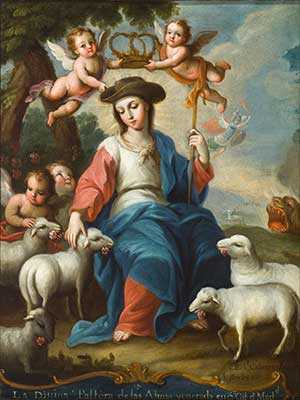
Our Lady, the Divine Shepherdess

Divine Shepherdess

FEAST 25 SEPTEMBER

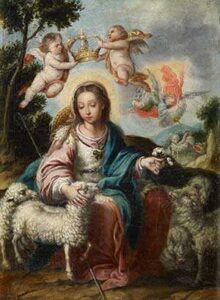
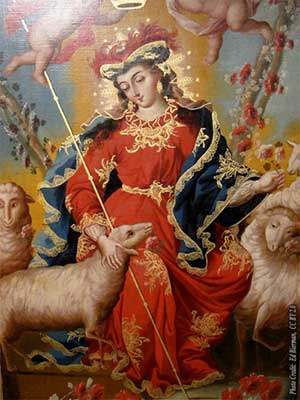
The devotion to the Divine Shepherdess dates back to 1703, when Capuchin Friar Isidoro of Seville, a scion of Spain’s most noble families, experienced a mystical illumination in which the Virgin Mary asked him to spread devotion to her as Shepherdess of Souls. He commissioned a painting, preached this devotion, and it is well-known today in Spain.

This Marian invocation came to mind while pondering the widespread moral corruption we are seeing in the Church.

The present situation is truly tragic. We need to put ourselves in the perspective of the Church that has long been in a process of self-destruction that is now in a very advanced stage.

The Action of Wolves

Ravenous wolves outside the flock are destroying Catholic morality and doctrine. Through media and the culture, they have undermined Catholic morals and practice. They have promoted heresy and error, which lay the foundation for the physical abuse of sheep. They have infiltrated the flock, in sheep’s clothing, and in all their undisguised hideousness, they made deals with certain shepherds.

As a result, the wolves have decimated the flock over the last few decades. The scandals served as catalysts that made the sheep feel unprotected by the shepherds. In face of the immensity of the crisis, the sheep are now exasperated and desperate. They are taking measures of self-defence which are entirely within their right. They are loudly complaining to the shepherds, some of which do not heed their cries.

Thus, many are now claiming the need to put the flock under the care of the sheep to fight off the wolves.

The Nature of Sheep

The good intentions of these sheep are praiseworthy. Indeed, some of these sheep are extremely competent and organized. They are movers and shakers that know how to get things done. However, they are limited in their ability to deal with this problem. This is because a sheep is always a sheep. When confronted with wolves, even the most competent sheep will inevitably lose. Sending sheep into the dens of wolves will not resolve the problem.

It is not the fault of the sheep, just the nature of the predators and all the resources of culture and society that support them.

The Role of Shepherds

There is no doubt that many shepherds have not protected the sheep as they should. However, to change the structure of the flock by giving functions of the shepherds to the sheep is a quick road to disaster.

In face of the immensity of the crisis, the sheep are now exasperated and desperate. This is because a shepherd is a shepherd. He is equipped with the authority, skills and knowledge to deal with wolves. The shepherd’s office is endowed by God with graces and charisms to teach, govern and sanctify.

Shepherds often have sheepdogs whose hatred of all things wolf is in their DNA. When a shepherd, even a weak one, seriously confronts a wolf, the wolf will almost always lose.

Dancing with Wolves

The worst thing about the present crisis is not that we are entrusting faithful sheep to other more competent sheep to stave off the wolves. Rather, many are proposing that the task be delegated to others who are not even part of the flock. They are asking independent observers, often friendly to the wolves, and who hate the flock, to oversee it. They are asking the government to get involved.

Yet worse, ex-members of the flock join the chorus asking that sheep oversee the flock. Wolves also demand that the Church be structured differently, and even promise their friendship should things change.

What Wolves Want

The objective of the wolves is always the same regarding sheep. Wolves want to kill and devour sheep. To accomplish this purpose, they need to get rid of shepherds—even bad shepherds. The very office of shepherd is a symbol that frightens wolves. He is also an obstacle, since the shepherd guarantees the continuity of sacramental life that strengthens the sheep. As long as shepherds exist, there will be the possibility of good shepherds that will rise up and kill wolves.

Thus, wolves want sheep without shepherds. They want weakened sheep without grace. That is why they would suggest that sheep and non-sheep oversee the flock. That way they might ravage more easily the Church of Christ with their false doctrines and immoral behaviour. They might also lead the faithful away from the verdant pastures which nurture the sheep.

The strategy of the wolves is to make the shepherds the common enemy of both wolves and sheep. The real common enemy of both shepherds and sheep should be the wolves.

The Separation and Mutual Hatred of Wolves and Sheep

A crisis like ours always happens when the Church tries to make a deal with the world—to peacefully co-exist with the wolves. In our particular case, it is much graver since we have sought to get along with the evils of the modern world with its denial of sin and adoration of progress.

Thus, we live in a world of intermingled sheep and wolves. It is a hypersexualized culture that destroys all morality and modesty. It is a relativist world in which there are no absolute truths, moral norms or certainties. We live in a broken society in which the family and community are coming apart. Our secular society has dethroned God as the centre of our lives.
That is why any real solution cannot be an administrative or regulatory fix. It will not be resolved simply with the dismissal or resignation of shepherds; however, corrupt they might be. It must be a moral solution. We must return to a hatred of sin. We must again establish that healthy separation and mutual hatred between wolves and sheep. We must condemn immorality by working against the corrupt world. God must return to the centre of our lives and be proclaimed in the public square.

We must return to orthodoxy at all levels inside the Church. It was not power, secrecy or authority that led to the scandals. It was the abandonment of orthodoxy in the Faith that created the conditions for abuse to happen. For without moral principles, the worst abuses and abominations are made possible—and indeed happened.

Indeed, this is a crisis of Faith for which we have been justly chastised. Saint John Eudes notes that “The most evident mark of God’s anger, and the most terrible castigation He can inflict upon the world, is manifest when He permits His people to fall into the hands of a clergy who are more in name than in deed, priests who practice the cruelty of ravening wolves rather than the charity and affection of devoted shepherds.”
 

An Appeal to the Divine Shepherdess

The first step to solving the crisis is to recognize that anything short of a moral reform is not serious. We need to humbly admit that for decades our problem has been unholy shepherds, unholy sheep and cunning wolves. To change the structure of the shepherd and the flock will only play into the hands of the wolves.

The second step is to realize that Catholics, both sheep and shepherds, must do all we can humanly do to make this moral reform happen—and eradicate the wolves in our midst. That means rallying behind the faithful shepherds that uphold Church teaching and resisting all who do not.

However, given the immensity of the crisis, an intervention is needed. That is why we must repair to that pasture where the Divine Shepherdess appeared. Our Lady at Fatima speaking to the three shepherd children brought a message of warning and hope. She warned us of the growing moral corruption and proposed solutions that we should take to heart. Above all, we must humbly appeal to the Divine Shepherdess that she intervenes as promised and restore shepherds and flock, bringing the triumph of her Immaculate Heart.

Our Lady, Divine Shepherdess of Souls, Pray for us!

Written by: John Horvat II

Hail, Holy Queen Prayer

Hail Holy Queen, Mother of Mercy.

Hail our life, our sweetness and our hope!

To thee do we cry, poor banished children of Eve;

to thee do we send up our sighs, mourning and weeping in this valley of tears.

Turn then, most gracious advocate, thine eyes of mercy toward us and after this our exile,

show unto us the blessed fruit of thy womb, Jesus.

O clement, O loving, O sweet Virgin Mary.

V. Pray for us, O holy Mother of God.

R. That we may be made worthy of the promises of Christ.
Our Lady of Buglose

Feast Day June 29

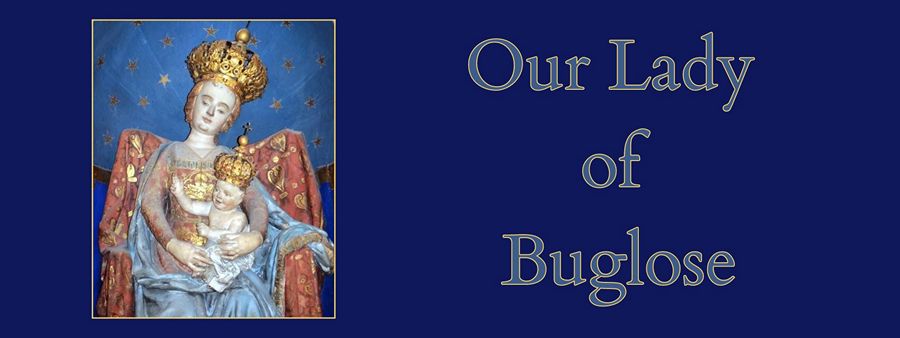
Located about two leagues from Acqe in Glascony is the shrine containing a miraculous image of Our Lady of Buglose. The original shrine of Notre Dame de Buglose was burned and completely destroyed by the Huguenots, and the statue of Our Lady was hidden in a marsh. The exact location of the statue was eventually forgotten, as was the memory even that the place had once been the location of a shrine in honour of the Blessed Virgin.

Years later, a shepherd led his herd into the marshes and observed that one of his oxen did not go with the others, but went into an area of the marsh alone and began to bellow in a strange manner. The shepherd climbed a tree to see what was happening, and saw the ox licking an unknown object that was half buried in the mud. Not understanding the mystery, he ran into town to bring others back with him to see what had happened.

When the shepherd returned, the statue of the Blessed Virgin holding the baby Jesus in her arms had been revealed. It was respectfully removed from the water, and the bishop of Dax desired to take the image to his church in Pouy. He placed the statue in a cart that was pulled by oxen to transport it back to Pouy. The procession began with hymns and prayers, but had only gone a short distance when the oxen stopped and would not move any further. It was understood that the Blessed Virgin desired that her image should stay near the fountain.

The bishop accepted the revelation as a divine order, and thanks to the zeal and enthusiastic support of the people living in the region, a new church was built with prodigious speed. The shrine was for a long time popular as a place of pilgrimage in France; now it is further renowned as the birthplace of Saint Vincent de Paul. The house where he was born and where he spent his boyhood is still shown.
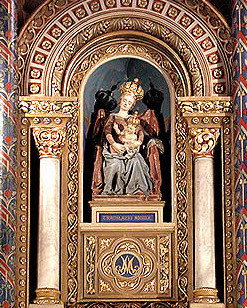
There have been many miracles at the shrine, as indeed Buglose had become known as a land of miracles. There were 19 miracles recorded in the year 1622 alone.

There is a fountain near the chapel marking the place where the statue of Our Lady of Buglose was found buried. In 1623, a man named Bernard Ducassou came to the shrine seeking a cure for the seven boils that covered his left leg. He spent the entire night in prayer, and the next day bathed at the fountain. The ulcers that would not heal were suddenly closed.

The above pilgrimage is merely a side issue for pilgrims on their way to the famous shrine of Our Lady where miracles are still granted to pious devotees.

*from The Woman in Orbit and other sources

James Fitzhenry, roman-catholic-saints.com, Marian Calendar

Our Lady of Pellevoisin

Feast Day: 13 February

Pellevoisin is a little village not far from Tours in France. In 1876, a young woman, Estelle Faguette, lay dying from tuberculosis – only five hours to live in the opinion of the doctors. But on 13 February, when all were expecting her death, Our Lady appeared near the sickbed. This occurred on three successive nights, and then, as Our Lady had promised, the sick woman was instantly cured on a Saturday.

Photograph of Estelle Faguette

During the visits, Our Lady of Pellevoisin frequently spoke to Estelle, her theme being that which she so often has expressed during the past hundred years:

“I am all-merciful and have great influence over my Son. What distresses me most is the lack of respect for my Son. Publish my glory.”

For some months after her miraculous cure, Estelle continued to live quietly at Pellevoisin. She was at a loss to find the means of fulfilling the mission entrusted to her by Our Lady. Her heavenly visitor, however, was watching over her, and Estelle was to see her again and receive more minute instructions as to what was required of her. On the feast of Our Lady’s visitation in the same year, 1876, as Estelle was praying in her room, she was granted another vision. Our Lady, robed in white and wearing on her breast a white scapular with the image of the Sacred Heart of Jesus, appeared to her favoured friend. This was the first of a series of wonderful visions enjoyed by Estelle, ten in all. Again and again Mary pointed to the great need for penance and expiation – a return to God.

During one of these apparitions, Our Lady of Pellevoisin, taking her white scapular in her hand, held it before Estelle saying,

“I love this devotion.”

Immediately Estelle knew that her life’s work was to propagate devotion to the Sacred Heart by means of a scapular modelled on Mary’s. On her last appearance, December 8th, Our Lady commanded Estelle to approach her Bishop and give him a copy of the new scapular.

“Tell him to help you with all his power, and that nothing would be more agreeable to me than to see this badge on each one of my children, in reparation for the outrages that my Son suffers in the Sacrament of His Love. See, the graces I pour upon those who wear it with confidence, and who help to make it known.”

The Prelate in question, the Archbishop of Bourges, gave Estelle a favourable hearing and immediately set up a commission to investigate the whole matter. The result of all this was the establishment at Pellevoisin in 1894 by Pope Leo XIII of an Archconfraternity under the title of Mother of Mercy, Our Lady of Pellevoisin. The membership of this Confraternity had gone on increasing year after year, while Pellevoisin itself has become a centre of pilgrimages for thousands of Mary’s friends.

Estelle lived her quiet and peaceful life at Pellevoisin, neither desiring nor receiving any personal credit. She died in 1929. Her miraculous cure was recognized in 1983 by Monsignor Paul Vignancour. Although no formal approval has been granted acknowledging the authenticity of the events at Pellevoisin either by the local bishop at Bourges or by the Holy See, numerous acts of secondary level of approval, including recognition of Mary’s scapular request, have been granted. Pope Leo XIII, by a Motu Proprio, granted indulgences to encourage the pilgrimage to Pellevoisin on 20 December 1892, and on 4 April 1900, The Congregation of Rites issued a decree granting approval to the Scapular of the Sacred Heart.
Photo: By Esves-37240

Our Lady of Argenteuil

The Abbot Orsini wrote: “This priory preserves a portion of the seamless garment of Our Lord.”

In about the year 500, Clovis was the King of the Franks, but he was not yet a Catholic. Years passed as his wife Clotilda prayed for her husband to convert, yet always King Clovis demurred. Then one fateful day Clovis was engaged in a desperate battle, finding himself sorely bested. At the point of ruin, he cried aloud to the Christian God to assist him, promising to forsake his pagan gods if he were granted a miraculous victory.

Looking up to heaven, Clovis cried:

“Jesus Christ, whom Clotilda declares to be the Son of the Living God, who it is said gives aid to the oppressed and victory to those who put their hope in Thee, I beseech the glory of Thy aid! If Thou shalt grant me victory over these enemies and I test that power which people consecrated to Thy name say they have proved concerning Thee, I will believe in Thee and be baptized in Thy name. For I have called upon my gods, but, as I have proved, they are far removed from my aid. So I believe that they have no power, for they do not succour those who serve them. Now I call upon Thee, and I long to believe in Thee – all the more that I may escape my enemies!”

God was pleased to answer Clovis’ petition immediately, for no sooner had he prayed than his enemies fled the field. Clovis won the battle, and he was a man of his word. Hating his former error, Clovis converted to the True Faith.

It is related in the Gospels that Christ’s executioners played dice over this tunic. According to legend, that tunic was found in the fourth century by Saint Helena, the mother of Emperor Constantine. It was then kept at Constantinople until the eighth century.

In the year 800, the Empress Irene of Byzantium offered Charlemagne the Holy Tunic at his coronation as Emperor of the West. The emperor then gave the relic to the priory of Argenteuil when his daughter, Theodrade, became abbess.

In the year 850 the Normans plundered the village of Argenteuil, including the Basilica of Saint Dennis, but the tunic was hidden in a wall before their arrival. When the abbey was rebuilt in 1003, the relic was restored. It was venerated until the 16th century when it was partially burned by Huguenots in 1567.

During the French Revolution the Benedictine priory was destroyed, and the relic then given to a parish church for safekeeping. In 1793, a priest found it necessary to cut it into pieces and bury them in his garden to protect them from profanation. In 1795, after the priest’s imprisonment had ended, the Holy Tunic appeared again and the different fragments were sewn back together.

The Holy Tunic was displayed again in the nineteenth century, and pilgrimages resumed. On the 13th of December in 1983, the parish priest of Saint Dennis discovered the tunic had been stolen. On 2 February 1984, Father Guyard received a phone call from a stranger promising to return the treasure on condition that their names would be kept secret. That same evening the tunic, with its case, was found in the Basilica of Saint Dennis.

The last solemn exposition of the tunic took place during the Easter holiday in 1984. In six days, approximately 80,000 people came to see the tunic.

The Holy Tunic measures nearly 152cm by 91cm in size. The fibres are wool and of a very regular size. It is a soft, lightweight fabric, and the weaving is uniform and regular with a twisted “Z,” made on a primitive loom. The tunic is remarkable for a tunic woven manually, as it is made without any seam, including the sleeves. The dark brown fabric is typical of the clothing in the early centuries of the Christian era. The fabric was dyed brown, using a method widely in practice at the time by people of modest means. The construction and dyeing show the tunic to date from the time of Christ. It is the garment worn by Christ after the Flagellation and along the road to Calvary as He carried His cross. Christ’s blood and sweat thus impregnate the fabric. In 1985 a test was done showing the blood was type AB. Pollen common to Palestine have also been found in the fabric.

as seen on Roman Catholic Saints

Our Lady of Kibeho: The only approved Marian apparition in Africa

Immaculee Ilibagiza survived the Rwandan genocide in 1994. She enjoys international fame today as a motivational speaker and proponent of the power of prayer, devotion to Our Lady and the Rosary. Her traumatic experience, holed up in a small bathroom with several other women for some three months, is painstakingly revealed in her best-seller “Left to Tell: Discovering God Amidst the Rwandan Holocaust,” where she documented her survival of the merciless slaughter that swept Rwanda in 1994. She attributes her survival to her firm Faith.

In her books and public appearances, Immaculee relates the appearance of Our Lady at Kibeho in 1981. As is so often the case with apparitions of Our Lady, there is always an appeal to pray the Rosary. As Immaculee attests, Our Lady requested that people pray the rosary “from the heart…”  About 10 years later Rwanda was plunged into an apocalyptic blood-letting that sent shock waves around the world. Was Our Lady preparing her children to face that aborning catastrophe? 

One of the seers was given the chaplet of the seven sorrows to help her spread it to the whole world, a devotion which is steadily gaining more ground.

The local Bishop, Augustin Misago of Gikongoro, where Kibeho is situated approved public devotion to the apparitions in 1988. It was not however until 2001 that he and the Holy See declared the testimonies of three witnesses authentic, regarding apparitions that began in 1981 and that continued in “the months that followed” through 1983. This was after the genocide, an event which also obviously led major credibility to the apparitions of Our Lady.

Interestingly, Our Lady of Kibeho is the only Vatican-approved apparition in Africa!

The Ordinary, His Excellency, Bishop Augustin Misago issued a declaration on June 29, 2001, regarding the Revelations in Kibeho. In it, he declared:

  1. It is true that the Mother of God appeared in Kibeho on the day of November 28, 1981 and during the following months. There are more well-founded reasons to believe in this than to deny it. For this reason, only three visionaries from the beginning of the revelations deserve to be recognized as authentic, namely Alphonsine Mumureke, Nathalie Mukamazimpaka, and Marie Claire Mukangano. The Virgin Mary appeared to them dedicated as “Nynia wa Jambo,” meaning “Mother of the Word,” which is a synonym for “Umubyeyi w’Imana,” which means “Mother of God,” as she explained it. The visionaries maintain that they saw her sometimes with hands folded, then other times unfolded.

He summed up the main points of the message thus:

  1. An urgent appeal to the repentance and conversion of hearts:

“Repent, repent, repent!”, “Convert while there is still time.”

  1. An assessment of the moral state of the world:

“The world conducts itself very badly,” “The world hastens to its ruin, it will fall into the abyss,” in other words, it is plunged into innumerable and unrelenting disasters. “The world is rebellious against God, it commits too many sins, it has neither love nor peace.” “If you do not repent and do not convert your hearts, you will fall into the abyss.”

  1. The deep sorrow of the Mother of God:

The visionaries claim to have seen Mary crying on August 15, 1982. The Mother of God was very saddened because of people’s unbelief and lack of repentance. She complained of our bad way of life, which is characterized by the slackness of customs, the likeness of evil, and continuous disobedience to God’s Commandments.

  1. “Faith and unbelief will come unseen”

These mysterious words were repeatedly spoken by Mary to Alfonsine at the beginning of the revelations. She was asked to repeat them to the other people.

  1. The suffering that saves:

This subject is among the most important among the revelations in Kibeho, particularly for Natalie Mukamazimpaka. Suffering, which is unavoidable in this life, is necessary for Christians to attain eternal glory. On May 15, 1982, Mary said to her visionaries, especially to Natalie, “No one will reach heaven without suffering,” or, “A child of Mary does not reject suffering.” Suffering is both a means of compensating for the sins of the world and participating in Jesus’ and Mary’s sufferings for the salvation of the world. The visionaries were invited through this address to live very specifically, accepting suffering through faith in love, mortifying themselves and denying themselves pleasures for the conversion of the world. Thus, Kibeho is a reminder of the role of the cross in the life of a Christian and the Church.

  1. “Pray always and single-heartedly”

People are not praying, and those who do pray, do not pray as they should. Mary begs the visionaries to pray in abundance for the whole world, to teach others to pray, and to pray for those who do not pray themselves. Mary begs us to pray with greater zeal and purity of heart.

  1. Marian devotion – expressed through sincere and regular praying of the rosary.
  2. The Rosary to the Seven Sorrows of the Mother of God:

The visionary Marie Claire Mukangano claims to have received revelations regarding this rosary. This rosary pleases the Mother of God. It was once well known, but now it has now been forgotten. The Mother of God of Kibeho desires for it to be renewed and spread in the Church. However, this prayer does not replace the Holy Rosary.

  1. Mary desires that a chapel be built for her – as a sign of the remembrance of her revelations in Kibeho. This subject appears in the revelations of January 16, 1982 and recurs many times in the course of the year with new supplements.
  2. Pray always for the Church, when many troubles are upon it in the times to come. Thus Mary said to Alfonsine on August 15, 1983 and November 28, 1983.

According to the alleged visionaries, Mary’s address in Kibeho “is not directed to only one person nor does it concern only the current time; it is directed to everyone in the entire world.”

The analysis of the conversations with the visionaries makes it clear that in their view, the Mother of God did not come to Kibeho with new teaching, but to remind us with full clarity of that which we had forgotten. She came to awaken us, to shake our consciences, to warn us, to remind us of our responsibilities as children of God, to lead us onto the right path, and to motivate us to correct our lives. In short, she came for the sake of our spiritual renewal and salvation. Mary, who is our mother, cannot abandon her children to their destruction. Even more saddening is the blindness and the hardening of our hearts.”

Lastly, he wrote:

I could not finish this declaration without giving a few practical tips regarding your behaviour in relation to the revelations in Kibeho.

  1. First I will to recall that in the Church of God and in the life of every Christian, the Bible – the Word of God – is and should remain the highest standard of our faith and our human action. I warmly recommend to each person to love the Word of God contained in the Holy Scriptures and to ceaselessly ponder it in order to better live according to it in faithfulness to the teaching of the Church. There we have everything necessary to know and practice to be a good Christian, and in this way merit entry into the heavenly kingdom. Consequently, it is not a good thing for the words of those who consider themselves visionaries, even if they are officially recognized, to be treated equally with the words of the Holy Scriptures.
  2. In Christian faith and prayer, one should be watchful in order to ensure priority to Jesus Christ, the only mediator between God and men (1 Tim 2:5-6). It is about him that the Holy Scriptures speak: “And there is salvation in no one else, for there is no other name under heaven given among men by which we must be saved” (Acts 4:12). No creation can be placed above Jesus Christ – the only Saviour of the world.
  3. In this context, I find it suitable to strongly emphasize the meaning of the bond that should exist between Marian devotion and an ever greater attachment to Jesus. Mary leads us to Him, for He is “the Way, the Truth, and the Life,” and “No one comes to the Father except through Him” (John 14:6).
  4. Our Christian life cannot be limited by such practices. It must also manifest itself in deeds expressing our love to our neighbours and in building around ourselves the kingdom of God, “the kingdom of truth and life, the kingdom of light and grace, the kingdom of love, justice, and peace” (preface from the celebration of Christ the King). The one who prays should commit without reluctance in serving his brothers. The life of a Christian should be in accordance with his faith. Nothing would be more in opposition to true Marian devotion than a Christian life that neglects the demands of truth, justice, peace, and love. This is true also for married and family life in accordance with the Gospel.
  5. I ask that the Rosary to the Seven Sorrows of the Mother of God become a part of the practices promoted in the sanctuary in Kibeho and elsewhere. Wherever this rosary is not yet well known, may Christians be taught it in the same way as the Holy Rosary. I ask my friends and benefactors the favour of helping us in seeking ways and means that allow for the acquisition and spread of this rosary at affordable prices to the faithful. It is forbidden to spread and pray other kinds of rosaries without written permission from the bishop of the place.
  6. As I have already said in my Address on September 15, 1996 regard the revelations in Kibeho, we must learn to be attached to what is most important in our Christian life. What the Mother of God of Kibeho expects from us first is not to build her a lavish sanctuary of brick or beautifully hewn stone. Rather, she expects spiritual temples to be created in our hearts by cleansing them of all filth and banishing all lust and dishonesty, hate and violence, pride and deceit in its many forms, vengeance, and all murderous ideas. What the Mother of God expects from us immediately is that we zealously accept the address directed to us by the intercession of her visionaries. This address is an urgent call to repentance and conversion, to a changed way of thinking, to a denial of everything that distances us from Christ. The address obligates us to a rediscovery of the Gospel of brotherly love and to giving proof of greater zeal in prayer and obedience to God’s commandments.

I give these recommendations to promote authentic Marian devotion in relation to the revelations in Kibeho and to preserve them from obscurity and distortion. I ask you to faithfully abide by them in the spirit of faith, trust, humility, and obedience, following the Virgin Mary as our example.

In this spirit, I beg the Lord to grant all of you His blessings in abundance.

Gikongoro, June 29, 2001

On the Feast of Saints Peter and Paul the Apostles

On the ninth anniversary of my pastoral work,

Augustin Misago, Bishop of Gikongoro, Rwanda

*****************************************************************************

For all practical purposes, the message of Our Lady at Kibeho repeats and reinforces the essentials of Fatima. Prayer, penance and amendment of life… Without conversion, we can expect only difficulties and trouble. This is the consistent and ever-more urgent message of a loving mother with her eye on her straying children.